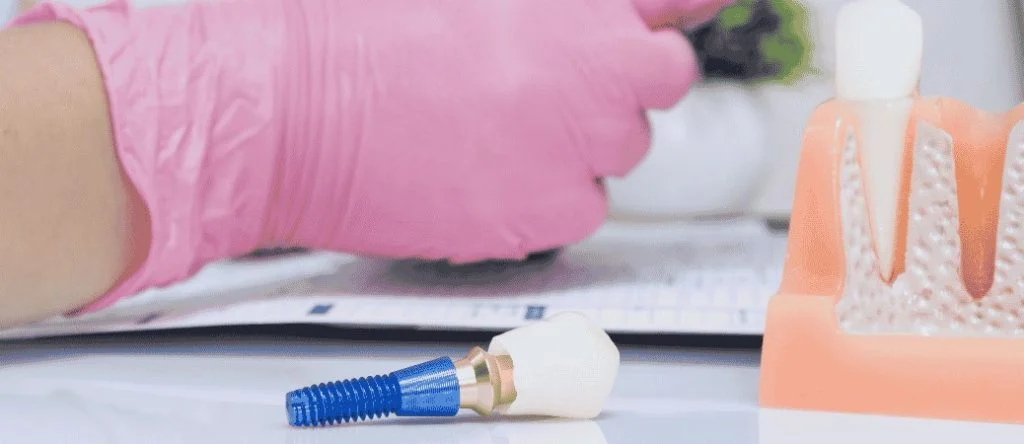
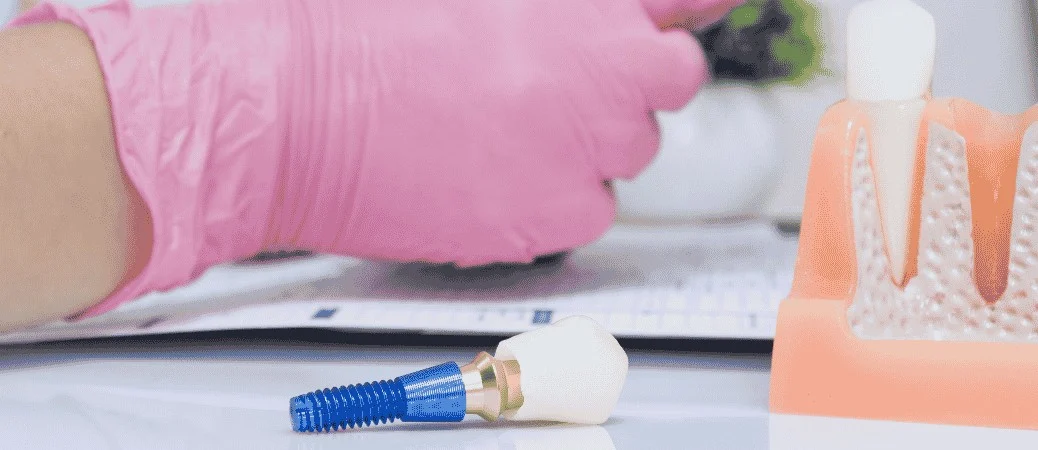
A single tooth implant for small gaps may be a suitable option when the space comes from one missing tooth and there is enough healthy bone and root clearance.
Unlike a traditional dental bridge, an implant can replace the missing tooth without reshaping healthy neighboring teeth.
The visible space tells only part of the story. Your dentist also needs to check the roots beneath the gums, the bone available for support, and how your teeth meet when you bite.
Replacing missing teeth also involves trade-offs. You gain a fixed tooth replacement with an implant, but you accept surgery, healing time, and ongoing maintenance.
A dental bridge deserves consideration when your neighboring teeth already need crowns.
When Does a Small Gap Need an Implant?
You have a reason to consider an implant when your gap represents a missing tooth and replacing it would improve your chewing, appearance, or bite stability. A small space alone does not establish a need for surgery.
Is a Tooth Missing, or Are Healthy Teeth Simply Spaced Apart?
Your first step is to confirm what caused the space. You might have a missing tooth, a naturally small tooth, or spacing between teeth that are otherwise healthy.
If all your teeth are present, your treatment centers on tooth position or shape. If a tooth is missing, single dental implants offer independent support for a replacement tooth.
You also have the option of monitoring a stable gap when your dentist finds little risk to function or nearby teeth.
Why Gap Width and Root Clearance Matter
Your visible gap might look wide enough while the roots beneath it tilt toward each other. Your dentist needs room for the dental implant plus a healthy layer of surrounding bone.
Your plan should account for the space available for both the implant and its restoration. If you lack root clearance, orthodontic treatment might be needed before surgery.
A narrow implant requires its own assessment of strength and bite forces; choosing a smaller post does not resolve every space problem.
How One Implant Replaces One Missing Tooth
A single-tooth implant restoration typically includes an implant post placed in the jawbone, a connecting abutment, and a crown that replaces the visible tooth.
Some implant systems combine components, depending on the restoration design.
Unlike a dental crown placed over a natural tooth, your implant crown attaches to an artificial foundation. Your adjacent teeth remain separate from the restoration.
How Do Implants Compare With Other Gap Treatments?
Your strongest alternatives are a bridge for a missing tooth and bonding or orthodontics for spacing between existing teeth. The condition of your neighboring teeth helps narrow your tooth replacement options.
Single Implant vs. Traditional Dental Bridge
With a traditional dental bridge, your replacement tooth, called a pontic, connects to crowns on supporting teeth. Those teeth need reshaping to hold the bridge.
A single implant leaves healthy neighboring teeth intact. A traditional bridge deserves closer consideration if those teeth already need substantial restoration and have sound roots.
| Decision point | Single implant | Traditional dental bridge |
| Support | Jawbone | Neighboring teeth |
| Tooth reshaping | Usually none nearby | Supporting teeth prepared |
| Surgery | Required | Usually unnecessary |
| Treatment pace | Includes bone healing | No implant-healing phase |
| Cleaning | Around separate crown | Under connected pontic |
You also need to consider what happens if a supporting structure develops trouble. With a bridge, decay or damage in one supporting tooth affects the connected restoration.
With an implant, your dentist monitors the implant’s own bone and gum support.
When Bonding or Orthodontics Makes More Sense
If your teeth are healthy but spaced apart, braces or clear aligners move them into a planned position. Bonding adds tooth-colored material to reshape small teeth or reduce a limited cosmetic space.
Your choice within cosmetic dentistry should account for tooth proportions and your bite. Widening teeth too much creates an unnatural shape or makes cleaning harder.
If your gap has recently widened, have the cause checked before covering it with bonding.
When Several Missing Teeth Need a Different Restoration
If you have several missing teeth together, your dentist might recommend an implant-supported bridge. Multiple dental implants support the connected replacement, so you do not automatically need one post for each missing tooth.
For extensive tooth loss, an implant-supported denture belongs in a broader treatment discussion. Multiple tooth implants and implant-supported dentures address different needs from one small gap.
You would consider full-arch implant treatment only when much more of your dental arch needs replacement.
What Makes You a Suitable Implant Candidate?
You are a stronger implant candidate when your jawbone provides enough support, your gums are healthy, and your medical conditions are well managed. Your ability to clean the finished restoration is also part of suitability.
How Bone Volume, Gum Health, and Bite Affect Suitability
Your dentist checks the height and width of your jawbone, along with bone quality. Bone density alone does not show whether the site has enough room for safe placement.
Active gum disease needs treatment before implant surgery. Your bite also needs assessment, especially if you grind or clench.
When exploring dental implants, ask whether your plan includes gum treatment, bite protection, or changes to improve access for cleaning.
When Bone Grafting or a Sinus Lift May Be Needed
If bone loss has reduced the available support at the missing-tooth site, your dentist may recommend bone grafting to help create suitable conditions for implant placement.
For an upper back tooth, limited bone below the sinus sometimes calls for a sinus lift. This procedure creates room for added bone beneath the sinus lining. Ask how each proposed procedure changes your treatment time and surgical risks.
Your discussion about when to get an implant after tooth loss should include the condition of the extraction site and any infection.
How Growth, Smoking, and Medical Conditions Affect Planning
Your jaw should have finished growing before a routine single-tooth implant is placed. If growth is continuing, your implant can become out of position as surrounding structures develop.
If you smoke, discuss stopping before surgery because smoking raises healing and long-term implant risks. Tell your dentist about diabetes, prior head or neck radiation, and every medication you take.
Controlled medical conditions do not automatically rule out treatment, but your plan needs to reflect your health history.
What Happens During Single-Tooth Implant Treatment?
Your dental implant treatment moves from assessment and placement to bone healing and a custom crown. Most of the waiting occurs between appointments while your tissues heal.
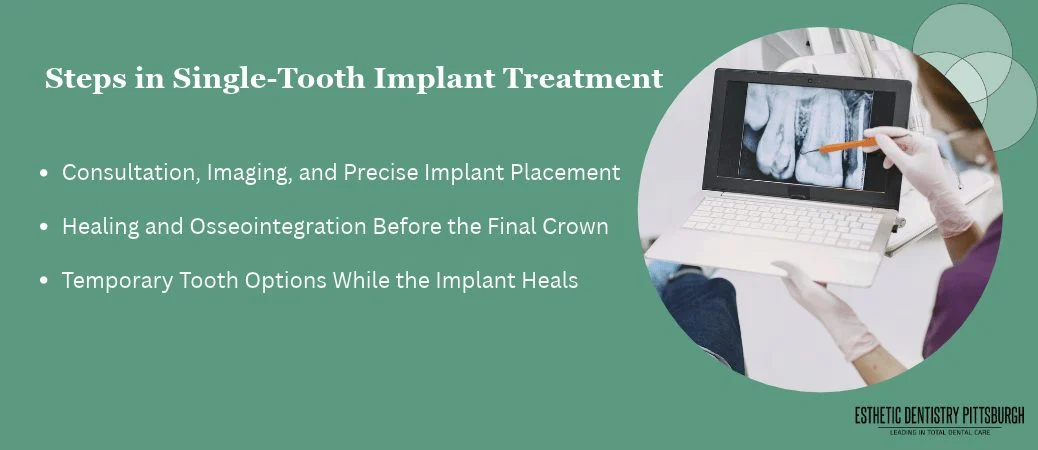
Consultation, Imaging, and Precise Implant Placement
At your implant consultation, you discuss your goals and medical history before your dentist examines the gap. X-rays and, when needed, a three-dimensional scan help locate nearby roots, nerves, and sinus spaces.
Your dentist or prosthodontist should plan the final crown before deciding the post’s position. During dental implant surgery, local anesthetic numbs the area; sedation is a separate discussion.
Ask who handles implant placement and who takes responsibility for the finished crown.
Healing and Osseointegration Before the Final Crown
During osseointegration, your bone grows into close contact with the implant surface. This biological attachment provides support for the crown.
Your implant healing schedule depends on initial stability and whether grafting was needed. You should expect a period of several months in many treatment plans.
Once your dentist confirms readiness, you have scans or impressions for the crown and a bite check when it is fitted.
Follow your written recovery instructions. Contact your treating office promptly if you develop worsening swelling, fever, persistent bleeding, or increasing pain.
Temporary Tooth Options While the Implant Heals
You have temporary tooth options if the gap affects your smile during healing. These include a removable partial tooth or a clear retainer containing a tooth-shaped replacement.
In selected cases, your dentist attaches a temporary crown to the implant soon after placement. That approach requires suitable stability and careful control of biting pressure.
Ask whether your temporary will be fixed or removable, what you can eat with it, and whether its cost is included.
What Are the Costs and Long-Term Trade-Offs?
You need to compare the complete treatment price and future maintenance, because an implant post and its crown have different repair needs. A lower starting quote is useful only when you know what it includes.
Compare the Complete Implant Quote With Bridge Costs
Ask for a written quote covering imaging, surgery, the abutment, and the final crown. Have any extraction, grafting, sedation, and temporary tooth listed separately.
When comparing implant and bridge costs, include the treatment required for neighboring teeth. Your bridge quote should identify each supporting crown and any additional work those teeth need.
Your location and treatment complexity are also factors in dental implant costs. Ask for a complete treatment estimate and clarify which expenses you would be responsible for before proceeding.
If you need dental implant financing, compare interest charges and total repayment before signing.
Understand Implant Longevity, Crown Repairs, and Failure Risks
Your implant post has the potential to serve for many years, while the crown remains exposed to daily wear. You should budget for possible crown repair or replacement even when the post stays healthy.
Implant failure includes failure to bond with bone or later loss of support. You also face separate mechanical problems, such as a loose screw or chipped crown.
Surgery carries risks that include infection and injury to nearby structures; careful imaging helps your clinician plan around your anatomy.
If you notice signs of implant failure, such as movement, persistent pain, or swelling, arrange an examination promptly. A loose crown and a loose implant require different treatment.
Maintain Healthy Gums and Bone Around the Implan

Your daily oral hygiene should include brushing and cleaning between the implant crown and neighboring teeth. Ask your hygienist to demonstrate the right floss or interdental brush for your gap.
An implant crown does not develop tooth decay, but plaque still causes inflammation around its supporting tissues. When that inflammation progresses to bone loss, you need professional treatment.
A dental implant transfers chewing forces to the surrounding jawbone and may help maintain bone around the implant. However, it cannot guarantee that bone loss will never occur.
Choose the Treatment That Fits Your Gap and Oral Health
A single tooth implant is a strong choice when you have one missing tooth, suitable bone, and enough room for safe placement.
Your tooth replacement options should also reflect the health of the teeth beside the gap and your willingness to undergo surgery.
If your teeth are intact, focus your discussion on spacing and tooth shape. If neighboring teeth already need crowns, give a bridge fair consideration.
At your implant consultation with Esthetic Dentistry Pittsburgh, ask for an explanation of your root clearance and bone support.
Request a written comparison of the recommended treatment and its most suitable alternative, including total costs and temporary tooth arrangements.
Frequently Asked Questions
Your most useful implant answers connect the size of your gap with the condition of the structures underneath it.
Is a single tooth implant worth it for a small gap?
A single tooth implant is worth considering if you are replacing one missing tooth and want to preserve healthy neighboring teeth.
Your assessment should confirm enough root clearance and bone support to justify the surgery and expense.
Can a gap be too narrow for a dental implant?
Yes, your gap is too narrow if an implant would crowd neighboring roots or leave inadequate surrounding bone. Your dentist will assess whether orthodontic space opening, a suitable narrow implant, or a bridge offers a safe solution.
Can an implant close a gap if no tooth is missing?
An implant is not an appropriate routine treatment for your gap when all the teeth in that area are present. Your options include orthodontic movement or bonding, after your dentist checks why the space exists.
Is there an upper age limit for a single tooth implant?
You have no fixed upper age cutoff for a single tooth implant. Your general health, healing ability, bone support, and ability to maintain daily care guide the decision.
What should I ask before choosing an implant over a bridge?
Ask whether your neighboring teeth need crowns and whether your bone and root spacing support a dental implant.
Request complete prices for both treatments, their expected timelines, and the maintenance each dental bridge or implant restoration would require.