
You catch a glimpse of your smile in a store window and something looks off. One veneer looks different from the rest, appearing darker, grayer, or slightly mismatched next to the surrounding teeth.
It is a strange moment, especially if your veneers have looked fine for years.
Most of the time, this is not a sign that something has failed. Light, small surface changes, and the natural aging of your other teeth can all make one veneer stand out even when nothing is actually wrong with it.
But sometimes the difference points to a real, local change that your dentist should look at.
If one veneer looks different, check it in natural daylight first, then watch for a change at the edge, gumline, or surface shine before assuming the worst.
Dental veneers are generally resistant to discoloration, but changes in the veneer, surrounding teeth, or underlying tooth structure can sometimes explain why one looks different.
Key Takeaways
- A veneer that looks different in one room but not another is often a lighting effect, not a material problem.
- A real change usually shows up as a stained edge, a dull or chipped surface, gum recession, or a replacement veneer that never matched the original set.
- Avoid DIY whitening or scrubbing and call your dentist promptly if you notice pain, looseness, or a dark line at the gumline.
Is the Difference Real or Just the Lighting?
The difference you are seeing might not be in the veneer at all. It could be the room you are standing in.
Dental porcelain and composite are designed to mimic the way natural tooth enamel reflects light, and that makes them sensitive to the type of bulb overhead.
A veneer can look slightly grayer under fluorescent office lighting and warmer under incandescent bulbs, even though nothing about it has changed.
Check the Veneer Beside Its Neighbors in Natural Daylight
Step near a window or go outside before deciding anything looks wrong. Natural daylight gives the most balanced, accurate light for judging true tooth color, since it contains a full range of wavelengths that indoor bulbs often lack.
Compare the veneer directly against the teeth next to it in that light. If the difference shrinks or disappears outside but shows up again under your bathroom or office lighting, you are likely seeing a lighting effect rather than a true color shift.
Look for a Change in Color, Shine, Edge, or Gumline
A lighting effect tends to shift the whole tooth evenly and change depending on where you stand. A real change usually stays put no matter the light and often shows up in one specific spot.
Look closely at four things: the overall color, the surface shine, the biting edge, and the line where the veneer meets your gum.
A dull patch, a rough edge, or a dark line along the gum tends to mean something has changed physically, not just optically.
What Can Make a Single Veneer Stand Out?
A single veneer usually stands out for one of four reasons: a stained margin, a change underneath the veneer, surface damage, or a replacement piece that was never matched to the original set.
Porcelain veneers and composite veneers age differently, which matters if your restorations were placed at different times.
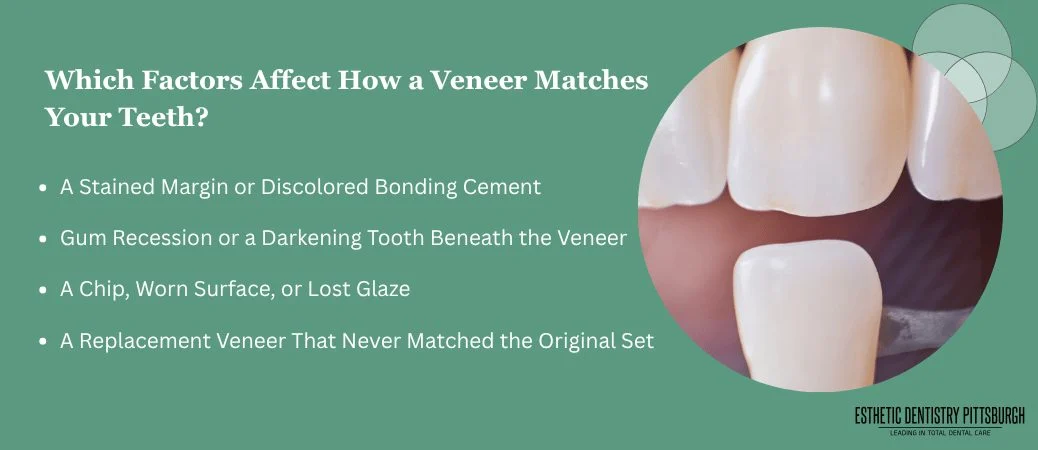
A Stained Margin or Discolored Bonding Cement
The thin line of cement at the edge of a veneer can pick up stain over time, especially if the margin sits slightly below the gum or has worn at the surface.
This shows up as a brownish or grayish line right at the border of the tooth, not across the whole surface.
Discoloration at the edges often happens when an imperfect fit lets staining agents from coffee, tea, or wine seep in underneath.
Some surface or margin staining can be improved through professional cleaning or polishing, while deeper discoloration or problems with the veneer’s seal may require repair or replacement.
Gum Recession or a Darkening Tooth Beneath the Veneer
If your gum has pulled back slightly from one tooth, you may be seeing the natural root surface or the edge of the veneer that was never meant to be visible. This is a gum change, not a flaw in the porcelain itself.
A tooth can also darken from the inside, often following an old injury or a root canal, which changes how light passes back through the veneer sitting on top of it.
When the problem originates in the tooth rather than the restoration, covering it again does not address the real cause.
A Chip, Worn Surface, or Lost Glaze
A chipped or dull veneer scatters light differently than a smooth one, which can make the whole tooth look like a different shade even if the underlying color never changed.
Composite veneers may lose their polish or develop surface wear sooner than porcelain veneers, depending on oral habits, maintenance, and the condition of the restoration.
A rough or chipped surface also tends to pick up stain more easily, compounding the color difference over time.
If you run your tongue over the tooth and notice a rough patch or sharp edge, that texture change is likely part of what you are seeing.
A Replacement Veneer That Never Matched the Original Set
If you had one veneer redone after the others were placed, a slight mismatch is common, even with careful work.
Matching a brand-new veneer to older ones is genuinely difficult, since surrounding veneers shift subtly in surface texture and appearance over years of use.
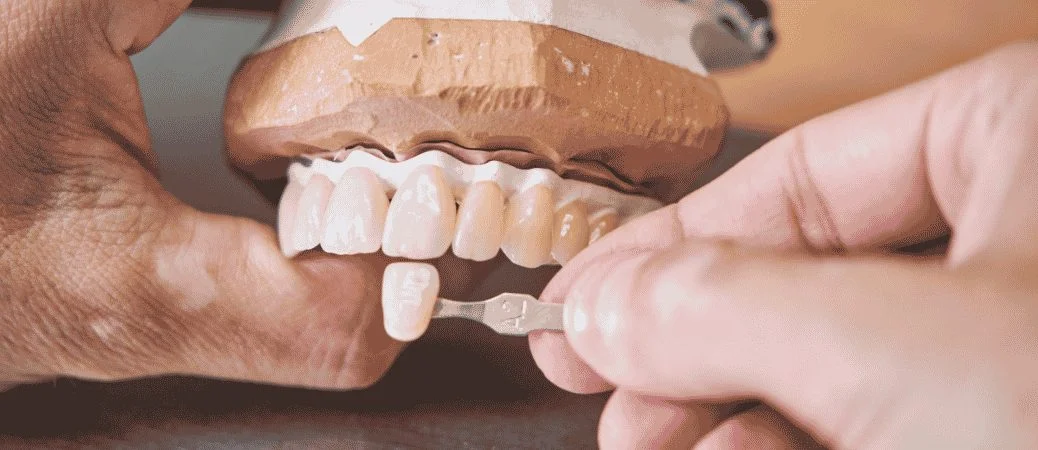
Material differences play a role too. A replacement made from a different porcelain formula than the original can reflect light differently even when the shade guide reading looks identical, and older existing veneers are typically harder to match the longer they have been in place.
This is one reason patients may notice that a veneer looks different years after treatment, even when the veneer itself has not changed.
Understanding when to replace veneers can help you determine whether the mismatch needs correction or whether your existing veneers are still in good condition.
What Should You Do While You Wait for a Dental Visit?
Keep your normal oral hygiene routine, document what you are seeing, and avoid trying to fix the color yourself. Most veneer color changes are not urgent, but a few specific signs deserve a faster call to your dentist.
Document When the Change Appeared
Take a photo in natural daylight as soon as you notice the difference, and take another a few days later.
Note what you were doing right before you noticed it, whether that was drinking red wine, grinding your teeth at night, or simply catching your reflection differently than usual.
This record helps your dentist tell whether the change is new and sudden or something that crept in slowly. It also gives you a baseline to compare against at your appointment.
Avoid DIY Whitening and Abrasive Cleaning
Skip whitening strips, baking soda scrubs, or charcoal powders on a veneer. Whitening products work on natural enamel, not on porcelain or composite, so they will not lighten the veneer and can wear down or dull its surface instead.
Scrubbing with abrasive pastes can scratch the glaze on porcelain or the polished surface of composite, which actually makes staining worse over time.
Stick to a soft-bristled brush and your regular, non-abrasive toothpaste until you see your dentist.
Call Promptly if You Notice Pain, Looseness, or a Darkening Edge
Most mismatched veneers are cosmetic, not urgent, but a few signs change that. Sensitivity around the tooth can mean the seal at the margin has broken down, letting bacteria or temperature reach the tooth underneath.
A veneer that feels loose or has partly come away from the tooth needs prompt attention, since an exposed edge is more vulnerable to damage and the piece itself could come off unexpectedly.
Call your dentist the same week rather than waiting for a routine cleaning if you notice any of these along with the color change.
How Can a Dentist Make It Match Again?
A dentist examines whether the problem is on the surface, at the margin, or underneath the veneer before recommending cleaning, repair, or replacement.
Depending on the cause, professional dental veneers treatment may help restore a more consistent appearance.
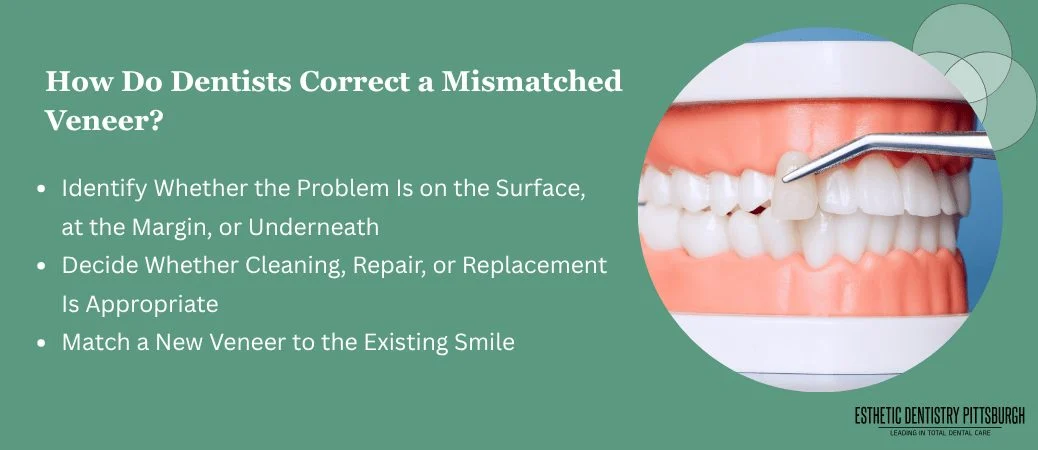
Identify Whether the Problem Is on the Surface, at the Margin, or Underneath
Your dentist will look closely at the veneer under good lighting and may use magnification to spot surface wear, margin staining, or signs of a change in the tooth beneath it.
A quick check of your bite and gum health around the tooth rounds out the picture.
This step matters because each cause points to a different fix.
Surface stain responds to polishing, margin problems may need a re-seal or small repair, and a change inside the tooth usually needs its own treatment before the veneer is addressed again.
Decide Whether Cleaning, Repair, or Replacement Is Appropriate
Light surface staining often responds to a professional polish, while a chipped edge can sometimes be smoothed or patched with composite bonding.
A veneer with deeper staining, a lost glaze, or a poor margin fit usually needs full replacement to look right again.
Your dentist will also weigh how old the veneer is and how it was made. Porcelain veneers generally last 10 to 20 years with good care, while composite veneers often need attention sooner, closer to the five-to-seven-year mark.
Match a New Veneer to the Existing Smile
When a cosmetic dentist plans a new or replacement veneer, the goal is not just the right color but the right translucency, shape, and finish compared to your existing teeth.
During the dental veneers process, a skilled ceramist can build the veneer in layers to recreate the depth and translucency of natural enamel under different lighting.
Good veneer design also factors in your skin tone and facial features, since a tooth that is technically the “right” shade can still look slightly off if its shape doesn’t suit your smile.
This attention to detail helps create natural looking veneers that blend with your existing teeth rather than standing out.
Getting One Veneer Back in Harmony with Your Smile
A single veneer that looks different is rarely a crisis, but it is worth a real look rather than a guess.
Lighting can trick the eye, while stained margins, worn surfaces, gum changes, and old replacement veneers are all fixable once identified correctly.
A dental examination can help identify why your veneer looks different and whether polishing, repair, or replacement may be appropriate.
If you’re in the Pittsburgh area and want that answer sooner rather than later, Esthetic Dentistry Pittsburgh can examine the tooth and walk you through exactly what will bring your smile back into balance.
Frequently Asked Questions
Why is one veneer suddenly darker than the others?
A sudden darker veneer is often caused by staining at the margin, a chip that changes how light reflects off the surface, or a change in the natural tooth underneath it.
Gum recession can also expose areas that were not visible before. A dental exam can pinpoint which of these is happening in your case.
Can one veneer stop matching after years?
Yes, this happens even when the veneer itself has not changed. Surrounding veneers and natural teeth shift subtly in surface texture and shade over years, so a veneer placed later or made with a slightly different porcelain can start to look mismatched without any flaw in the original work.
Can a chipped veneer look like a different color?
Yes, a chip or lost glaze changes how light scatters across the surface, which can make the whole tooth appear duller or grayer even if the actual shade underneath is unchanged.
This is a texture problem more than a color problem, and polishing or repair often resolves it.
Will whitening fix a veneer that stands out?
No, whitening products work on natural enamel and have no effect on porcelain or composite material. Trying to whiten a veneer will not lighten it and can dull or scratch its surface instead.
If the veneer looks darker than your other teeth, a dentist needs to address it directly.
Does a mismatched replacement veneer need to be remade?
Not always. Sometimes a professional polish or minor adjustment improves the match enough to blend in, but a noticeable difference in shade or translucency usually calls for remaking the veneer with updated shade records and a closer look at the surrounding teeth.