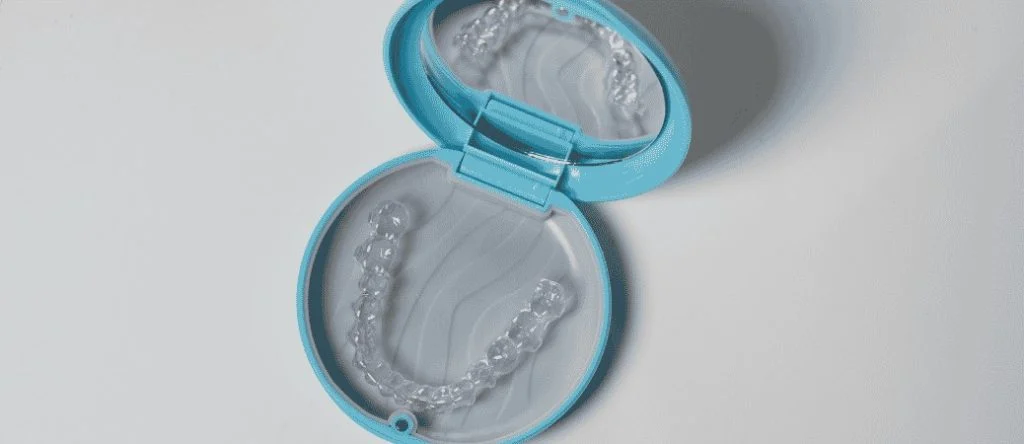

Yes, you can usually wear clear aligners with crowns, as long as each crown is stable, the tooth under it is healthy, and your gums and bone are in good shape.
A crown is a cap that covers the visible part of a tooth. The root below it still sits in your jawbone, so a capped tooth can move much like its natural neighbors.
Your crown was an investment, so wanting to protect it with a clear aligner makes sense. Many patients find that existing dental work changes certain details of their treatment plan, but a straighter smile may still be possible.
The things that shape your plan are specific: how old the crown is, what it’s made of, whether small aligner “attachments” will stick to it, and when any crown work should happen.
Key Takeaways
- A stable crown on a healthy natural tooth moves with that tooth.
- Crown material, fit, and gum health decide how smoothly treatment goes.
- Bridges and implants need a different plan than single crowns.
Do Crowns Prevent Tooth Movement?
No, a crown on its own does not stop a tooth from moving. Movement happens at the root, deep in the bone, and the crown rides along on top. A few situations can slow or limit that movement.
Why Can a Crowned Tooth Still Move?
Teeth move because of the periodontal ligament. This thin layer of tissue holds each root in its socket.
When an aligner presses gently and steadily on a tooth, the ligament and nearby bone slowly reshape, and the tooth shifts a tiny amount.
A crowned tooth still has its natural root and its ligament. That means the biology works the same way. The aligner grips the outside of the crown, pushes, and the root responds.
Think of the crown as a well-fitted hat. When the head turns, the hat turns too. As long as the crown is firmly cemented, it moves as one unit with the tooth.
When Might a Crown Limit Treatment?
Shape plays a part here. Aligners need enough surface to hold onto. Research on aligner retention when clinical crowns are short notes that short or smooth teeth are harder for trays to grip.
Some crowns are made slightly shorter or rounder than a natural tooth, which gives the plastic less to grab.
Certain movements are tougher for aligners on any tooth. A systematic review in The Angle Orthodontist found that aligners tip crowns easily but have less control over roots, and it suggests attachments when rotations go past 15 degrees.
If your capped tooth needs a big twist, expect your dentist to plan extra help.
A loose crown, decay under the edge, or a cracked root are the bigger concerns. Those need fixing before any tooth is moved.
What Determines Whether Aligners Will Work with Crowns?
Three things decide it: the health of the capped tooth and gums, where your crowns sit, and whether attachments can bond to the crown surface. Your dentist checks each one at your exam with X-rays and a digital scan.

Are the Crown, Tooth, and Gums Healthy?
Healthy support comes first. Orthodontic movement puts mild stress on gums and bone, so active gum disease must be calmed down before you start.
Bleeding gums, deep pockets, or bone loss around a crowned tooth are red flags.
The crown itself gets a close look. Your dentist will check:
- Whether the edges (margins) sit tight against the tooth
- Signs of decay or leakage under the crown
- Chips or cracks in the porcelain
- Whether the tooth had a root canal and how the root looks on X-ray
An older crown with open margins or signs of decay needs evaluation before treatment. Your dentist may recommend repair or replacement depending on its condition, while a well-fitted crown may not need any changes.
How Do the Number and Location of Crowns Matter?
A single crown on a back molar may have little effect on treatment, depending on the tooth movements needed. Your dentist will evaluate its position, stability, and how the aligner fits around it.
Several crowns, or crowns on front teeth, take more planning. Front teeth show the most and need the finest control.
If many of your teeth are capped, the aligner has fewer natural enamel surfaces to hold, so your dentist may plan smaller steps per tray.
| Situation | What it usually means |
| One crown on a back tooth | Little change to your plan |
| One crown on a front tooth | Closer planning for looks and fit |
| Several crowns in one arch | Smaller steps, more check-ins |
| Loose or leaking crown | Fix it before starting |
Can Attachments Bond to Crown Materials?
Attachments are small tooth-colored bumps made of composite resin. They give the aligner a “handle” to push against. On natural enamel they stick well with standard bonding.
Crown surfaces are trickier. Glazed porcelain and zirconia are smooth and glassy, and metal is different again. Your dentist can rough up a small spot and use special primers made for ceramic or metal.
This works well in practice, though an attachment on a crown sometimes pops off and needs to be redone.
If bonding to a crown looks unreliable, your plan can shift the work to nearby teeth that hold attachments better. You can ask your dentist which teeth will carry attachments before you sign off on the plan.
What Happens During Treatment with Crowned Teeth?
Treatment with crowns feels much like standard aligner care: you wear trays about 20 to 22 hours a day and switch to new ones on schedule.
The differences show up in planning, in how crown work is timed, and in your retainer.
How Are Crowns Included in the Treatment Plan?
Your plan starts with a digital scan of your teeth. The software builds a 3D model, and your dentist maps each tiny move.
Crowns show up on the scan just like natural teeth, so the trays fit them closely.
Your dentist marks which teeth are capped and adjusts how hard and how fast those teeth move. Systems such as Invisalign and SureSmile both let your dentist fine-tune staging tooth by tooth.
Check-ins matter a little more with crowns. Remote options like Pro Monitoring let your dentist spot a lifted attachment or a tray that isn’t seating well between visits.
What If a Crown Needs Repair or Replacement?
Timing makes a big difference. If a crown is failing, it’s best to replace it before your scan so the trays are built around the new shape.
If a crown chips or comes loose mid-treatment, call your dentist right away. A new crown changes the tooth’s outline, and your current trays may stop fitting. You’ll likely need a fresh scan and a few new trays for that area.
Some people wait to replace an older crown until after alignment. Once teeth are in new spots, the bite and spacing are different, and a crown made afterward can match them.
Not every crown needs replacing after treatment, so your dentist should judge each one on its own.
Will You Need a Retainer After Treatment?
Yes, every aligner patient needs a retainer, crowns or not. Teeth tend to drift back toward their old spots, and a retainer holds them in place.
Clear retainers fit over crowns the same way aligners do. If you grind your teeth at night, ask whether one appliance can work as both a retainer and a night guard.
That protects your porcelain and keeps your teeth steady.
How Do Other Restorations Change the Plan?
Bridges and implants change the plan more than single crowns do, because they can’t move like a lone natural tooth. Veneers and fillings usually fit right into a normal plan.

Can Aligners Work Around a Dental Bridge?
A bridge joins two or more teeth into one solid piece. The teeth on each end hold up a fake tooth in the middle. Since the pieces are connected, they can’t move separately.
Clear aligners may still be an option when you have a dental bridge, but connected teeth cannot be moved independently without modifying the restoration.
Your dentist will evaluate whether aligners, braces, or restorative changes are appropriate for your situation.
If the bridge sits right where big changes are needed, your dentist may suggest cutting it, moving the teeth, and making a new bridge or implant later. That choice depends on how much movement you need.
What If You Have an Implant or Veneers?
Dental implants fuse directly to the jawbone. They have no ligament, so they don’t move at all. Your dentist plans around the implant and moves the other teeth.
In some orthodontic treatment plans, a dental implant may provide a stable anchorage point, although the implant itself cannot move.
Veneers are thin shells bonded to the front of teeth. A secure veneer moves with its tooth, much like a crown.
If you’re still planning veneers, it’s often smarter to straighten first; see Invisalign before veneers for how that order works.
Do Fillings Affect Aligner Treatment?
Small, healthy fillings rarely affect aligners. They restore only part of a tooth, so the shape barely changes.
Large or old fillings deserve a check. A worn filling can crack under steady pressure. Finishing any needed fillings or dental bonding before your scan keeps your trays matched to your final tooth shape.
Choosing a Safe Plan for Your Restored Smile

A safe plan for clear aligner treatment with crowns starts with a full exam and ends with a retainer. Crowns on healthy natural teeth move with those teeth, and the details of fit and bonding decide how smooth the ride is.
Before you commit, ask your dentist these questions:
- Are all my crowns sealed and free of decay?
- Will attachments go on any crowns, and how will they be bonded?
- Should any crown be replaced before my scan or after treatment?
- How will my bridge or implant affect which teeth move?
- How often will you check my progress?
Bring any records you have about when and where your crowns were placed. Knowing a crown’s age and material helps your dentist choose bonding methods and staging.
With a careful plan, your orthodontics care can work alongside the dental work you already have.
Frequently Asked Questions
Can you get clear aligners with a crown on a root canal–treated tooth?
Yes, a root canal–treated tooth with a solid crown can move with aligners. The root and ligament still respond to pressure.
Your dentist will check the X-ray to confirm the root is healthy and free of infection first.
Can clear aligners straighten crowned front teeth?
Yes, crowned front teeth can be moved. They need careful planning because small shifts show up in your smile. If the crown’s shape no longer looks right after alignment, your dentist may discuss a new one.
Will clear aligners loosen or damage a crown?
A stable, well-fitted crown can often tolerate normal orthodontic forces. However, your dentist should check its condition before treatment and monitor for loosening, discomfort, or damage.
What happens if you need a new crown during aligner treatment?
Tell your dentist before the crown is made. The new shape changes how your trays fit, so you’ll usually need a new scan and updated aligners. Options like same day crowns can shorten the pause.
Can you use clear aligners if you also have a dental implant?
Yes, aligners work with implants. The implant stays put, and your dentist moves the teeth around it. Plans are built so the trays fit snugly over the implant crown without pushing it.
What could make you ineligible for clear aligners despite having a stable crown?
Active gum disease, untreated decay, or serious bone loss can rule you out until fixed. Some complex bite problems also need braces or surgery. A full exam can show which of these apply to you and what to treat first.