

Dental implants have a high success rate, but problems can still happen. If you ignore early signs, a small issue can turn into bone loss or infection.
You can often stop dental implant failure by spotting early warning signs and acting quickly to prevent complications.
You should pay attention to pain that does not improve, swelling around the gums, bleeding when you brush, or any feeling that the implant feels loose.
These signs of dental implant failure may point to infection, poor healing, or too much pressure on the implant. When you understand what causes these problems, you can take simple steps to protect your oral health.
Good daily care, regular dental visits, and healthy habits lower your risk. If a problem does develop, early treatment can often save the implant and avoid more complex procedures.
Key Takeaways
- Watch for pain, swelling, bleeding, or looseness around your implant.
- Act early to prevent infection and bone loss.
- Support long-term success with good hygiene and regular dental care.
Recognizing Early Warning Signs of Dental Implant Failure
Dental implants usually feel stable and natural once they heal. When problems start, your body often gives clear signals like pain, swelling, or movement that should not be ignored.
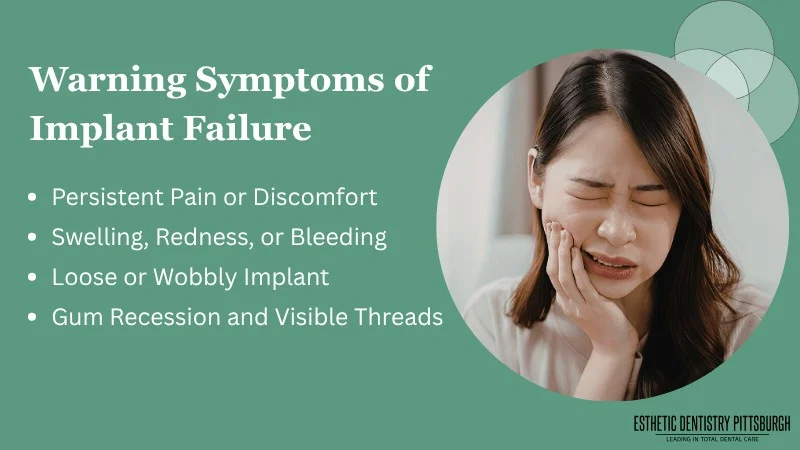
Persistent Pain or Discomfort
Some soreness is normal for a few days after implant surgery. Persistent pain that lasts weeks or starts after healing is not normal.
You may feel a dull ache, sharp pain when you bite, or pressure around the implant. Pain that gets worse instead of better can point to infection, poor bone bonding, or excess bite force. These are common signs of implant failure.
As an early warning sign of dental implant failure, ongoing pain after the healing period deserves a dental exam. A failed dental implant often hurts when you chew or press on it.
Do not wait for severe pain. Early treatment can protect the bone around your dental implant and prevent full implant failure.
Swelling, Redness, or Bleeding
Healthy gums around dental implants should look pink and firm. Swelling, redness, or bleeding are warning signs that something is wrong.
You might notice bleeding when you brush or floss. Gums may look puffy or feel tender. These symptoms of implant failure often point to infection around the implant, called peri-implantitis.
Bacteria can collect around the implant if plaque builds up. Over time, infection can damage the bone that holds the implant in place. This increases your risk of a failed dental implant.
Experts stress that early gum inflammation should never be ignored. Quick care can stop the infection before it spreads deeper.
If swelling lasts more than a few days or you see pus or taste something bad, call your dentist right away.
Loose or Wobbly Implant
A healthy implant should not move at all. If you feel any shift, you may have a loose implant.
You might notice movement when chewing or touching the crown with your tongue. Even slight motion, known as implant mobility, is a serious sign of implant failure.
A wobbly implant often means the titanium post did not bond fully with your jawbone, or it has lost bone support. Articles on dental implant failure: signs and causes note that implant movement is one of the clearest signs that the implant is failing.
Do not try to test the implant yourself. Extra pressure can worsen the damage. See your dentist as soon as you notice a wobbly implant to protect the surrounding bone.
Gum Recession and Visible Threads
Your gums should fit snugly around your dental implant. Gum recession exposes more of the metal post and may reveal visible implant threads.
You may see the edge of the implant near the gumline. Your tooth may look longer than before. This change often means bone loss is happening under the surface.
Bone loss weakens support for the implant. As the bone shrinks, the risk of implant mobility and full implant failure rises.
If you notice visible implant threads or shrinking gums, schedule an exam. Early action can slow bone loss and improve your chances of saving the implant.
Common and Risk Factors for Implant ComplicationsCauses
Dental implants fail for clear biological or technical reasons. Most implant complications start with poor healing, infection, or placement errors that affect the bone and surrounding tissue.
Poor Osseointegration and Bone Quality
Your implant must bond tightly with your jawbone. This process, called osseointegration, creates a stable base that lets you chew without movement.
When you have poor bone quality or low bone density, the implant may not fuse well. This can lead to failed osseointegration, early loosening, or ongoing bone loss around the implant.
Several factors raise this risk:
- Smoking
- Uncontrolled diabetes
- Osteoporosis
- Long-term steroid use
- Radiation to the jaw
Research on risks and complications associated with dental implant failure shows that smoking and systemic disease increase failure rates. Smoking also lowers blood flow, which slows healing.
If your jaw lacks enough bone height or width, your dentist may suggest bone grafting. A bone graft rebuilds support before implant placement.
In severe upper jaw cases, some surgeons may use zygomatic implants, which anchor into the cheekbone instead of weak maxillary bone.
Infection and Peri-Implantitis
Infection remains one of the most common causes of implant failure. Bacteria collect around the implant and irritate the tissue.
Early signs include:
- Swollen gums
- Bleeding when brushing
- Bad taste or odor
- Increasing pocket depth
If untreated, this can progress to peri-implantitis. This condition causes inflammation and bone loss around the implant. Bone loss weakens support and may lead to implant removal.
You lower your risk by brushing twice daily, cleaning between teeth, and attending regular dental visits. Professional monitoring helps catch implant infection before it damages bone.
Improper Placement and Surgical Issues
Correct position and angle matter. Improper implant placement can overload the bone or damage nearby teeth and nerves.
Common surgical problems include:
- Placing the implant in thin or overheated bone
- Using an implant that is too large
- Poor angulation
- Contamination during surgery
Overheating bone during drilling can cause bone cell death. This stops proper healing and leads to failed osseointegration. Immediate placement into unstable bone also increases risk.
You protect yourself by choosing an experienced implant dentist who uses detailed imaging and careful planning. Accurate placement supports long-term stability and reduces future implant complications.
Types and Stages: Early vs. Late Dental Implant Failure
Dental implant failure can happen soon after surgery or years later. The timing affects your symptoms, treatment options, and the chances of saving the implant.
Signs of Early Implant Failure
Early implant failure usually occurs in the first few weeks or months after placement. During this stage, the implant does not bond well with your jawbone.
This problem often relates to infection, poor bone quality, or healing issues. Some research on risk factors for early and late dental implant failure shows that both patient health and surgical factors can play a role.
You may notice:
- Persistent pain that does not improve
- Swelling or bleeding around the implant
- Implant movement or looseness
- Trouble chewing on that side
Implant movement is a key warning sign. A healthy implant should feel stable, like a natural tooth. If it shifts, you likely have poor implant stability.
Your dentist may need to stop the process and plan for implant removal. Acting fast can protect your bone and improve your chances of trying again later.
Signs of Late Implant Failure
Late implant failure happens after the implant has already fused with your bone. It may appear years later and often links to bone loss or gum infection around the implant.
Common causes include inflammation, excess bite pressure, and teeth grinding. Some clinics explain the difference between early and late dental implant failure, noting that late problems often develop after a period of normal function.
Watch for:
- Gum recession around the implant
- Bleeding when brushing
- Bad taste or pus near the site
- Gradual implant movement
Bone loss reduces implant stability and threatens implant longevity. You may not feel pain at first, which makes regular checkups important.
If caught early, your dentist may treat the infection and protect the implant. In advanced cases, implant removal may still be necessary to stop further bone damage.
Infections Around Implants: Symptoms and Management
Infections around dental implants can damage gum and bone if you ignore them. You need to spot early signs and act fast to protect your implant.
Signs of Infection and Inflammation
An implant infection, also called peri-implantitis, affects the gum and bone around your implant. It often starts with mild gum inflammation but can worsen over time.
Watch for these signs of infection:
- Red, swollen, or tender gums
- Bleeding when you brush or floss
- Pus near the implant
- A bad taste or unpleasant taste in your mouth
- Ongoing bad breath
- Pain when you chew
- Facial swelling in more serious cases
Some people also develop a fever, though this is less common and usually means the infection has spread.
Do not ignore small changes. Early inflammation can progress and lead to bone loss and implant failure if you delay care.
Treatment and When to Contact Your Dentist
Call your dentist as soon as you notice swelling, pus, bleeding, or a loose feeling around the implant. Quick action can prevent long-term damage.
Your dentist will examine the area and may take X-rays to check bone levels. Treatment often includes deep cleaning around the implant to remove bacteria.
In many cases, your dentist will prescribe antibiotic therapy to control infection. If the infection is advanced, you may need a minor surgical procedure to clean the area and repair damaged tissue.
Do not try to manage symptoms on your own. Waiting can allow the infection to spread and increase the risk of implant failure.
Prevention Tips: How to Reduce the Risk of Implant Failure
You can lower your risk of implant problems by keeping your mouth clean and staying on top of your health. Daily care and regular dental visits protect the bone and gums that support your implant.
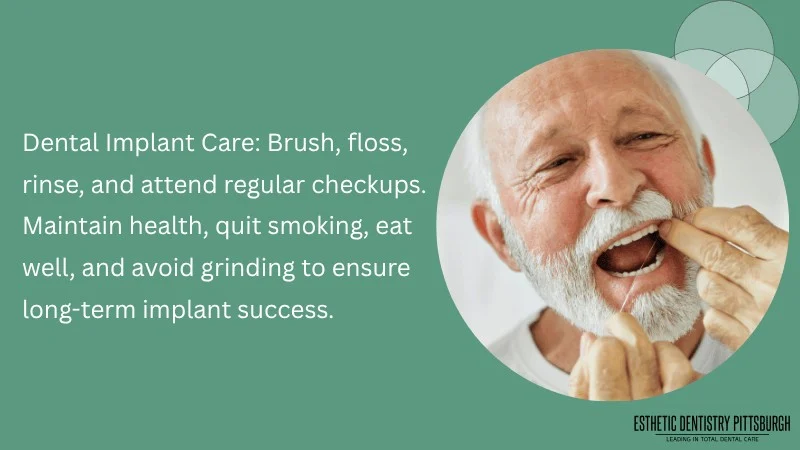
Oral Hygiene and Maintenance
You need strong oral hygiene habits to protect your implant from infection. Plaque buildup around the implant can lead to bone loss called peri-implantitis, which is a major cause of failure, as explained in this review on the causes of dental implant failure.
Brush twice a day with a soft toothbrush. Clean along the gumline with care.
Floss every day. If string floss feels hard to use, try a water flosser to flush out food and bacteria around the implant post.
You can also use an antimicrobial mouthwash if your dentist recommends it. This helps lower bacteria levels but does not replace brushing and flossing.
Schedule dental checkups and professional cleaning every 3–6 months. Regular visits allow early detection of swelling, bleeding, or bone changes, which supports long-term implant longevity.
Keep all follow-up appointments so your dentist can monitor healing and bone support.
Lifestyle and Health Factors
Your overall health affects how well your implant bonds to bone. Conditions like uncontrolled diabetes or osteoporosis can slow healing and weaken bone support.
If you smoke, take steps to quit. Smoking reduces blood flow to the gums and raises the risk of infection and implant loss. Many dental offices explain how smoking affects healing in guides about preventing dental implant failure.
Eat a balanced diet with enough calcium and vitamin D to support bone strength. Follow your dentist’s instructions after surgery, especially during the early healing phase when the implant is fusing with bone.
Avoid grinding your teeth. If you clench at night, ask about a night guard to protect your implant from excess pressure.
Consistent dental implant maintenance and healthy daily choices lower your risk of complications and support stable bone and gum tissue over time.
Aftercare, Treatment, and Long-Term Solutions
Fast action protects your bone and lowers the risk of long-term damage. Your dentist will focus on stopping infection, saving healthy tissue, and planning a stable replacement if needed.

What to Do if Your Implant is Failing
Call your dentist as soon as you notice pain, swelling, looseness, or numbness. Do not wait for symptoms to get worse.
Your dentist will check the implant for movement and take x-rays to look for bone loss. In some cases, they may diagnose infection around the implant, often called peri-implantitis.
Treatment depends on the cause:
- Infection: Deep cleaning, antibiotics, and close follow-up
- Loose implant: Implant removal to stop further bone loss
- Nerve symptoms: Careful exam if you feel tingling or numbness
If you grind your teeth at night, your dentist may suggest a night guard. Bruxism puts heavy force on implants and can lead to failure.
If you had radiation therapy, healing may take longer. Your dentist will plan care with caution to reduce risk.
When the implant cannot heal, prompt implant removal prevents more damage. Quick action protects the area for future treatment.
Replacement Options and Bone Regeneration
After implant removal and replacement planning, your dentist will assess how much bone remains. Healthy bone supports long-term success.
If bone loss has occurred, you may need a bone graft. Bone grafting rebuilds lost structure and supports future implant placement. In some cases, guided tissue regeneration helps restore the area.
Replacement options include:
| Option | When It’s Used |
| Immediate implant replacement | If infection is controlled and bone is stable |
| Delayed implant replacement | After healing and bone grafting |
| Dental bridges | If you prefer a fixed option without another implant |
| Partial dentures | If bone is limited or surgery is not ideal |
Your dentist may stage treatment. First comes bone grafting, then healing, then implant placement.
Careful planning, updated x-rays, and control of teeth grinding reduce the risk of repeat failure.
Frequently Asked Questions
Dental implants can fail when you ignore early symptoms like pain, swelling, or looseness. Quick action, strong daily hygiene, and care from a trained dental professional can often protect your implant and limit bone loss.
What are the early signs that a dental implant may not be successful?
You may notice pain that does not fade after the normal healing period. The area might feel tender when you bite or chew.
Swelling, redness, or bleeding around the implant are also warning signs. Some people report a bad taste, pus, or mild discharge near the site.
If the implant feels loose or shifts when you touch it, seek care right away. Mobility often signals a failure in bone support.
How can one ensure proper oral hygiene to prevent implant complications?
Brush at least twice a day using a soft toothbrush. Angle the bristles toward the gumline to clean the area where the implant meets the gum.
Clean between teeth and around the implant with floss, interdental brushes, or a water flosser. Plaque buildup around implants can lead to infection and bone loss.
Schedule regular dental cleanings and exams. Your dentist may take X-rays to check bone levels around the implant.
Consistent home care and routine visits lower your risk of infection and mechanical problems. Small daily habits make a clear difference.
What steps should be taken if you suspect your dental implant is failing?
Call your dentist as soon as you notice pain, swelling, or looseness. Do not wait for the problem to improve on its own.
Your dentist will examine the area and may take X-rays to check for bone loss or infection. Early problems like gum inflammation may respond to deep cleaning and antibacterial treatment.
More advanced cases may require removal of the implant and bone grafting. Acting early gives you more treatment options and may protect nearby bone.
Who can you consult for advice if you’re experiencing issues with your implant?
Start with the dentist who placed your implant. They know your case and can assess healing, bite pressure, and bone support.
You may also see a periodontist or oral surgeon. These specialists focus on gum health, bone structure, and surgical repair.
What is peri-implantitis and how can it affect dental implant health?
Peri-implantitis is an infection that affects the gum and bone around an implant. Bacteria build up and trigger inflammation.
You may see red or swollen gums, bleeding when brushing, and deeper pockets around the implant. Over time, the bone that supports the implant can shrink. Without treatment, the implant can loosen and fail.
Can you share some images or descriptions of what a failed implant looks like?
A failed implant often shows red, swollen gum tissue around the metal post. You may see pus or notice the gum pulling away from the implant.
In more advanced cases, the implant may appear longer because bone has receded. The crown may feel unstable or shift when you chew.
Dental X-rays often reveal dark areas around the implant threads. These spaces show bone loss that you cannot see with the naked eye.