
Your new crown feels a little strange, and you’re wondering if that’s normal or a sign something went wrong.
Take a breath. Most patients notice some tenderness, sensitivity, or bite awareness right after getting a same-day crown, and much of that settles within the first two days.
If your same day crown feels wrong, the tricky part is telling the difference between ordinary adjustment and a real problem that needs attention.
A crown that sits too high, feels loose, or causes sharp pain when you bite isn’t something to wait out for a week and hope it fixes itself.
Knowing what’s typical during crown recovery, and what signals you should call your dentist, protects both your comfort and the long-term health of the tooth underneath.
At Esthetic Dentistry Pittsburgh, patients ask about this often after leaving with a permanent crown the same day it was prepared.
This guide walks through what to expect hour by hour, how to check your own bite at home, and when a quick adjustment visit makes all the difference.
Key Takeaways
- Mild soreness, gum tenderness, and cold sensitivity are common in the first 48 hours after crown placement.
- A crown that hits your bite first, feels loose, or causes sharp pain when chewing needs a prompt check, not a wait-and-see approach.
- Soft foods, gentle brushing, and avoiding extreme temperatures help your mouth adjust while you wait for any needed fix.
Table of Content
- What Is Normal During the First 48 Hours?
- How to Tell Whether Your Bite Is Too High
- What to Do at Home Until You Can Be Checked
- Same-Day and Traditional Crown Recovery Differences
- A Prompt Bite Check Protects Your New Crown
- Conclusion
- Frequently Asked Questions
What Is Normal During the First 48 Hours?
Some soreness, sensitivity, and bite awareness are expected after same-day dental crowns are placed, and most of it fades within two to three days.
Your tooth and gums went through real work, even in a single visit, so a little irritation is your mouth’s normal response.
Mild Tenderness, Gum Soreness, and Bite Awareness
Tenderness around the gum line and a slightly odd bite are common right after treatment.
Your gums may have been touched during the fitting, and it takes time to stop noticing a crown that’s now part of your bite.
Most patients report things feeling close to normal by day three or four.
Cold and Heat Sensitivity After Treatment
Cold sensitivity and mild heat sensitivity are common for the first few days after crown recovery begins.
The tooth’s inner layer, called dentin, gets exposed briefly during preparation, and it takes time to calm down.
This kind of temperature sensitivity often eases within three to five days with the help of a desensitizing toothpaste.
Why Numbness Changes What You Feel and Eat
Numbness from the local anesthetic can mask how your bite actually feels for two to four hours after your appointment. Chewing while numb also raises your risk of biting your cheek or tongue without noticing.
Wait until feeling fully returns before testing your bite or eating, since a crown that seems fine while numb can feel completely different an hour later.
How to Tell Whether Your Bite Is Too High
A crown that’s too high will make contact with your opposing tooth before your other teeth touch, and you’ll usually notice it within the first bite or two. This isn’t something you have to guess about.
Your mouth is good at picking up on tiny differences in biting pressure, often within fractions of a millimeter.

Signs the Crown Contacts Before Your Other Teeth
Tap your teeth together gently and pay attention to which tooth touches first. If the new crown meets its opposing tooth before your back molars come together evenly, that’s a sign your bite sits high on that side.
Some patients describe it as feeling like they’re “chewing on one tooth” instead of a full, even bite.
Sharp Pain When Biting Is Not Something to Wait Out
Sharp pain when biting down is a signal to call your dentist within 24 to 48 hours, not a symptom to push through.
Ongoing pressure on a high spot can irritate the ligament holding the tooth in place, and that irritation tends to get worse with each meal, not better.
A five-minute adjustment usually resolves it completely, so there’s little reason to tolerate days of discomfort.
How an Uneven Bite Can Cause Jaw Soreness
An uneven bite forces your jaw muscles to work harder on one side, and that imbalance can show up as jaw soreness or even a dull headache within a day or two.
Your jaw naturally tries to compensate for a high contact point, and that extra effort adds up fast if it isn’t corrected.
Clenching around the new crown can make this worse, especially if you already grind your teeth at night.
When a Crown Feels Loose or Clicks
A crown that feels loose, clicks when you bite, or shifts slightly under pressure needs attention right away, since a dental crown that isn’t fully seated can let bacteria in underneath it. This is different from mild bite awareness.
If you notice actual movement, or if the crown falls off completely, call your dentist and bring the crown with you if you still have it.

What to Do at Home Until You Can Be Checked
Sticking to soft foods, gentle brushing, and mild pain relief will get you comfortably through the first two days while you wait for any needed adjustment.
None of these steps fix a genuine bite problem, but they reduce strain on the tooth and keep you comfortable in the meantime.
Choose Soft Foods and Chew Carefully
Stick to soft foods like eggs, yogurt, mashed potatoes, and soup for the first 24 hours, and chew on the opposite side of your mouth when possible.
This gives the crown time to settle without added pressure while any lingering numbness fully wears off.
Avoid Sticky, Hard, and Crunchy Foods
Skip sticky foods like caramel and taffy, along with hard or crunchy foods like ice, nuts, and hard candy, for at least the first 48 hours.
These foods put uneven force on a crown that hasn’t fully adjusted yet, and sticky textures can pull at the margins where the crown meets your tooth.
Brush and Floss Gently Around the Crown
Use a soft-bristled toothbrush and fluoride toothpaste, brushing gently around the crown and gum line rather than skipping the area entirely.
Flossing matters here too. Thread floss carefully around the crown rather than snapping it down hard, since the margin where the crown meets your gum is prone to plaque buildup if it’s neglected.
Ease Sensitivity and Soreness Safely
Over-the-counter pain relievers like ibuprofen or acetaminophen handle mild soreness well in the first day or two.
A desensitizing toothpaste applied directly to the tooth can calm cold sensitivity faster than toothpaste alone.
It also helps to hold off on tea, coffee, and red wine for a day or so, since both temperature extremes and staining liquids can aggravate a tooth that’s still settling.
Same-Day and Traditional Crown Recovery Differences
A same-day crown skips the temporary crown stage entirely, which changes what you need to watch for compared to a traditional crown.
Understanding this difference helps you know which precautions actually apply to your situation.
| Factor | Same-Day Crown | Traditional Crown |
| Number of visits | One | Two |
| Interim restoration | None | Temporary crown for 1-2 weeks |
| Crown status after visit | Permanent | Temporary, then permanent |
| Common material | Ceramic (milled) | Various, lab-fabricated |
| Food restrictions period | First 24-48 hours only | Ongoing during temporary phase |
Why a Same-Day Crown Is Usually a Permanent Crown
A same day crown is typically your final permanent crown, designed and placed during the same visit.
Same day crowns are among the cosmetic dentistry services available for restoring damaged teeth while considering both appearance and function.
How Digital Design and Milling Support Crown Fit
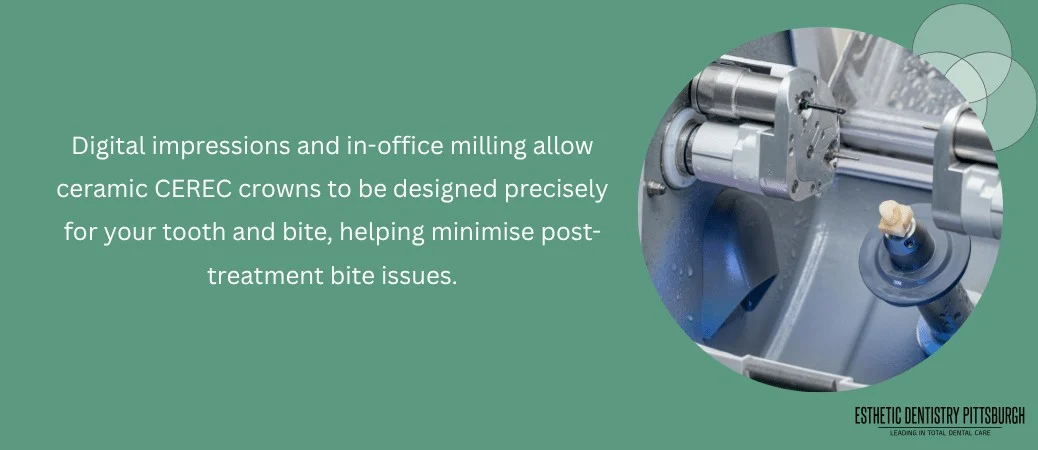
Computer-aided design and in-office milling let your dentist create a ceramic crown using digital impressions instead of the old putty molds.
This process, often called a CEREC crown, captures precise measurements of your tooth and opposing bite in minutes.
The result is a crown built to fit your mouth’s exact contours from the start, which is part of why bite issues after same-day dental crowns tend to be minor when they happen at all.
Why Temporary Crowns Need Extra Food Precautions
Temporary crowns are more fragile than permanent ones, so patients wearing them need to be more careful with sticky and hard foods for the full one to two weeks before the permanent crown arrives.
If you had a temporary crown placed as part of a traditional crown procedure, avoid chewing gum, caramel, and anything crunchy on that side entirely.
A same-day crown skips this extended precaution period since you leave with the finished restoration.
When a Ceramic Crown May Need a Simple Adjustment
A ceramic crown occasionally needs a small adjustment even with digital design.
When appropriate, a minimally invasive approach to dentistry focuses on making only the changes needed to improve the crown’s fit, comfort, and function.
If you search for same-day crowns near you and get treatment, know that a follow-up bite check is a normal part of the process for some patients, not a sign anything was done incorrectly.
If you’re exploring options for restoring a damaged tooth, our same-day crowns page explains how the process works from start to finish.
A Prompt Bite Check Protects Your New Crown
Getting your bite checked quickly protects both your comfort and the lifespan of your crown. Left uncorrected, a high bite can strain the tissues around the tooth and create uneven pressure.
If the crown is part of treatment for several damaged or worn teeth, your dentist may also discuss whether a broader dental reconstruction plan is appropriate.
This is especially true if you already clench or grind at night. Added pressure on a crown that’s sitting slightly high can increase stress on the restoration.
If you regularly experience teeth grinding, ask your dentist whether a night guard could help protect your natural teeth and your new crown long term.
Routine dental checkups also matter. Ongoing general dentistry care gives your dentist an opportunity to check the crown’s fit, look for wear, and watch for early decay around the crown margin.
Good crown care isn’t just about the first 48 hours. It’s an ongoing part of protecting your oral health.
At Esthetic Dentistry Pittsburgh, patients are encouraged to call within a day or two of noticing bite discomfort rather than waiting for their next scheduled cleaning.
A quick adjustment now is far simpler than treating jaw pain or crown damage that develops from months of biting unevenly.
Conclusion
A little soreness, sensitivity, or bite awareness in the first 48 hours after a same-day crown is expected, and it usually fades on its own within a few days.
Sharp pain when biting, a crown that feels loose, or a bite that clearly lands wrong are different matters, and they deserve a prompt call rather than a wait-and-see approach.
Sticking to soft foods, brushing gently, and giving your mouth time to adjust will carry you through most of the ordinary discomfort.
If something still feels off after two or three days, Esthetic Dentistry Pittsburgh can check the bite and make any needed adjustment quickly, protecting the tooth, your jaw, and the crown itself for years to come.
Frequently Asked Questions
Is it normal for a same-day crown to feel weird on the first day?
Yes, feeling a bit strange on the first day is common, since your mouth needs time to adjust to the new shape and height of the crown.
Mild bite awareness, tongue-checking the tooth constantly, and slight tenderness around the gum are all typical. This usually smooths out within two to three days.
How long should sensitivity last after a permanent crown is placed?
Cold and pressure sensitivity typically lasts one to five days after a permanent crown is placed, easing gradually each day.
If sensitivity is still strong or getting worse after a full week, call your dentist to rule out a bite issue or other cause.
What does a crown that is too high feel like?
A crown that’s too high usually makes contact with your opposing tooth before your other teeth touch when you bite down.
It can feel like you’re chewing on one spot only, and it may cause soreness, pressure, or a dull ache in the tooth or jaw.
Why does my new crown hurt when I bite down?
Pain when biting down often means the crown sits slightly higher than your natural bite, putting extra pressure on the tooth’s ligament.
This is usually fixed with a short adjustment appointment where your dentist reshapes the contact point.
What should I do if my crown feels loose in the first 48 hours?
Call your dentist right away if your crown feels loose, clicks, or shifts under pressure, since this can allow bacteria to reach the tooth underneath.
Avoid chewing on that side until you’re seen, and bring the crown with you if it comes off completely.