
Getting full mouth implants is a big decision that can change your smile and your life. After the procedure is done, you probably want to know when you can get back to eating your favorite foods and feeling like yourself again.
Most people need about 3 to 6 months for complete recovery from full mouth implants, though the initial healing phase only takes a few weeks.
The recovery process happens in stages. You will notice big improvements in the first couple of weeks as swelling goes down and you get used to your temporary teeth.
The longer timeline is because your jawbone needs time to fuse with the implant posts in a process called osseointegration. This critical phase, where titanium posts integrate with the jawbone, creates a strong base for your new teeth.
Understanding full mouth dental implant recovery time helps you prepare and stay on track. This guide breaks down the healing timeline so you know what is normal, when you can return to your regular activities, and how to take care of your implants at each stage.
Key Takeaways
- Full mouth implant recovery takes 3 to 6 months for complete healing, with the first 1 to 2 weeks being the most intense
- Your jawbone needs several months to fuse with the implant posts before you can get your permanent teeth
- Following your dentist’s instructions and maintaining good oral hygiene helps speed up recovery and prevent complications
Understanding Full Mouth Implants and the Recovery Process
Full mouth dental implants replace all your missing teeth using titanium posts anchored into your jawbone. The recovery process involves multiple healing stages that affect both your soft tissue and bone integration over several months.
What Are Full Mouth Implants?
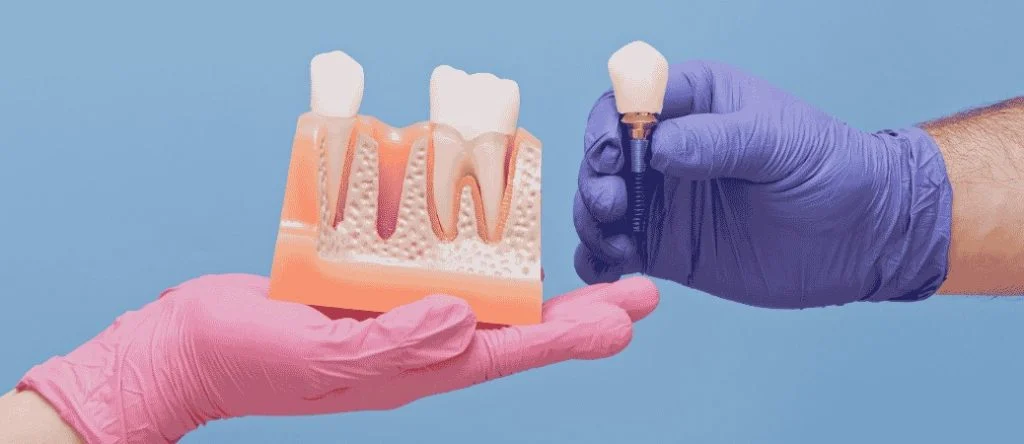
Full mouth implants are a permanent solution for replacing all your teeth in one or both arches of your mouth. Unlike traditional dentures that sit on top of your gums, these implants involve surgical placement of titanium posts directly into your jawbone.
These posts act as artificial tooth roots that support a full set of replacement teeth.
The most common approach is All-on-4, which uses four strategically placed implants to support an entire arch of teeth.
This technique often requires less bone than traditional methods and can sometimes allow you to receive temporary teeth on the same day as your surgery.
Full-arch restoration can be done on your upper jaw, lower jaw, or both, depending on your needs. The implants fuse with your jawbone through a process called osseointegration, which creates a stable foundation for your new teeth.
This fusion is what makes full mouth implants feel and function more like natural teeth compared to removable dentures.
Who Is a Candidate for Full Mouth Dental Implants?
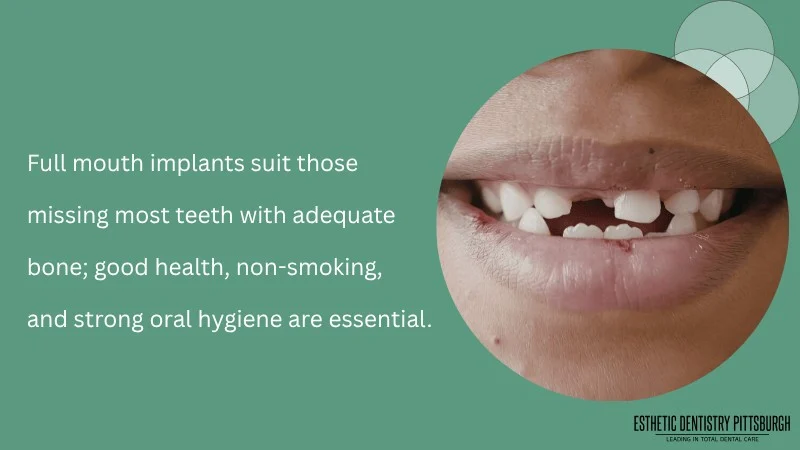
You may be a good candidate for full mouth implants if you’re missing most or all of your teeth in one or both arches. Your jawbone needs to have enough density and volume to support the implant placement, though bone grafting procedures can help if you don’t have sufficient bone.
Good overall health is important for successful healing. Conditions like uncontrolled diabetes or active gum disease may need to be managed before you can proceed with surgery.
You should also be committed to maintaining good oral hygiene after your procedure. Non-smokers typically have better success rates, as smoking can interfere with healing and osseointegration.
Your dentist will evaluate your specific situation through X-rays, CT scans, and a physical examination to determine if you’re a suitable candidate for this treatment.
Benefits of Full Mouth Implants Compared to Other Options
Full mouth implants offer significant advantages over traditional dentures and bridges. They don’t slip or move when you eat or speak, which gives you more confidence in social situations.
You can eat a wider variety of foods without worrying about your teeth shifting or falling out.
Unlike dentures, dental implants help preserve your jawbone by stimulating it like natural tooth roots. This prevents the bone loss that typically occurs with missing teeth and helps maintain your facial structure.
Full-mouth restoration with implants doesn’t require you to remove your teeth at night for cleaning. You brush and care for them just like natural teeth. They also last much longer than dentures, often lasting 20 years or more with proper care.
While the upfront cost is higher, the durability and improved quality of life make them a worthwhile investment for many people dealing with extensive tooth loss.
Phases of Full Mouth Implant Recovery: Timeline Breakdown
Recovery from full mouth implants happens in distinct stages, starting with immediate post-surgery care and extending through several months as your bone fuses with the implants. Each phase brings specific changes and requires different care approaches.
Initial Healing Period: First 72 Hours
The first three days after your surgery mark the most critical part of your initial healing phase. You’ll experience swelling, minor bleeding, and discomfort during this time. These reactions are normal responses to the procedure.
Your dentist will prescribe pain medication to manage discomfort. Apply ice packs to your face for 20 minutes on and 20 minutes off during the first 48 hours to reduce swelling.
Stick to cold liquids and very soft foods like smoothies, yogurt, and broth. Avoid using straws because the suction can disrupt healing. Rest as much as possible and keep your head elevated, even while sleeping.
Don’t brush near the surgical sites yet. Instead, gently rinse with warm salt water starting 24 hours after surgery. Avoid smoking, alcohol, and any strenuous activity that could raise your blood pressure and cause bleeding.
Week 1: Managing Swelling, Pain, and Soft Tissue Recovery
Your soft tissue healing progresses significantly during the first week. Swelling typically peaks around day three, then gradually decreases. Some bruising may appear on your face or neck as the swelling moves downward.
Pain should become more manageable each day. Many patients can switch from prescription pain medication to over-the-counter options by days four or five. Continue eating only soft foods like mashed potatoes, scrambled eggs, and pudding.
Your dentist may place a healing cap over each implant to protect it and shape the gum tissue properly. Keep the surgical area clean with gentle salt water rinses after meals. Avoid touching the implant sites with your tongue or fingers.
Most people can return to work within three to five days if their job doesn’t involve heavy physical labor. Continue avoiding smoking, alcohol, and vigorous exercise throughout this week.
Weeks 2–4: Early Healing and Gum Stabilization
During weeks two through four, your gums begin to firm up around the implants. The early healing phase shows visible progress as swelling subsides and your mouth feels more comfortable. Most discomfort should be gone by week three.
You’ll have a follow-up appointment around day 10 to 14. Your dentist will check your healing progress and may remove stitches if they’re not the dissolvable type. They’ll also evaluate how well your gums are stabilizing around the implants.
You can gradually add more foods to your diet, but stick with softer options like pasta, cooked vegetables, and ground meat. Chew carefully and avoid putting direct pressure on the implant sites. Your temporary teeth should feel more stable and natural by week four.
Start brushing more normally around the implant areas using a soft-bristled toothbrush. Continue salt water rinses to keep the area clean. Your gums may still look slightly pink or puffy, which is normal at this stage.
Months 1–3: Osseointegration and Bone Healing
Osseointegration is the process where your jawbone grows around and fuses with the titanium implants. This phase takes three to six months and determines the long-term success of your implants.
While you won’t see external changes, important healing is happening beneath your gums.
During this healing period, the bone cells gradually attach to the implant surface, creating a strong foundation. You should feel completely normal during most of this time. Your temporary teeth allow you to eat, speak, and smile while osseointegration occurs.
Your dentist will schedule check-ups to monitor bone integration through X-rays and physical examinations. These appointments ensure the implants are stable and properly positioned.
Most patients resume their regular diet during this phase, though you should still avoid extremely hard or sticky foods.
The dental implant healing timeline varies by person. Factors like your age, overall health, bone density, and whether you need bone grafting affect how quickly osseointegration completes.
Once your dentist confirms the implants are fully integrated, you’ll be ready for your permanent teeth.
Final Stages: Placing the Permanent Restoration
After months of healing, you reach the final phase where temporary teeth are replaced with your permanent restoration. The permanent bridge and crowns are designed to last for decades and function just like natural teeth.
Temporary Bridge and Prosthetics
You’ll wear temporary prosthetics during the healing period while your implants fuse with your jawbone. These temporary crowns or a temporary bridge protect the surgical sites and let you eat, speak, and smile during recovery.
Your dentist places these temporaries shortly after surgery or within the first few weeks. They’re lighter and less durable than your final teeth, so you need to stick to softer foods.
Temporary prosthetics serve several purposes:
- Keep you looking normal during the 3-6 month healing period
- Maintain proper spacing for your final restorations
- Allow your gums to shape naturally around the implant posts
- Help you adjust to your new bite gradually
You’ll have follow-up visits where your dentist checks how the temporaries fit and makes adjustments if needed.
Final Bridge and Crowns
The final placement happens once your implants are fully integrated with your jawbone. This typically occurs between 3-6 months after the initial surgery.
Your dentist takes detailed impressions and measurements to create custom crowns or bridges. These final restorations are carefully designed to match your bite, facial structure, and desired appearance.
The dentist attaches small connector pieces called abutments to each implant post. Your permanent bridge or individual crowns then secure to these abutments.
You’ll have a fitting appointment where your dentist checks the fit, bite, and comfort before permanently cementing them in place.
Materials Used: Zirconia and Alternatives
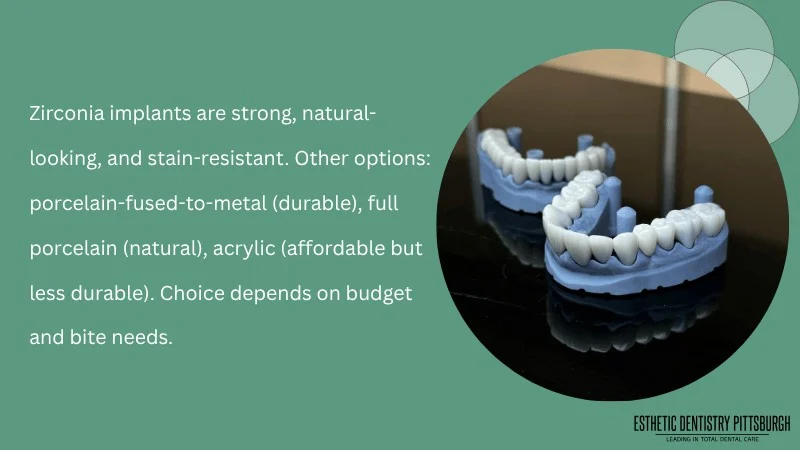
Zirconia has become the most popular material for permanent dental implants. This ceramic material is incredibly strong and looks almost identical to natural tooth enamel.
Zirconia resists staining from coffee, tea, and other foods. It also doesn’t conduct temperature like metal, so you won’t experience sensitivity to hot or cold foods.
Other material options include:
| Material | Benefits | Considerations |
| Porcelain-fused-to-metal | Strong and proven track record | Metal may show at gum line |
| Full porcelain | Natural appearance | Less durable than zirconia |
| Acrylic | Lower cost option | Wears faster, needs replacement |
Your dentist will recommend the best material based on your budget, the location of your implants, and how much biting force they’ll handle.
Key Factors That Influence Your Healing Timeline
Your recovery from full mouth implants depends on several important factors that can either speed up or slow down the healing process.
Your bone quality, how well you follow care instructions, your overall health habits, and potential complications all play a role in determining when you’ll be fully healed.
Bone Grafting and Jawbone Health
If you need bone grafting before your dental implant procedure, your healing timeline will be longer. Bone grafting adds 3 to 6 months to your recovery because your body needs time to create new bone tissue that can support the implants.
The strength and density of your jawbone directly affects how fast osseointegration happens. This is the process where your implant fuses with your bone. Your upper jaw typically heals more slowly than your lower jaw because the bone is less dense.
People with healthy, strong jawbones often heal faster than those with bone loss from missing teeth or gum disease. Your dentist will check your bone quality during planning to create a realistic treatment plan for your specific situation.
Oral Hygiene and Post-Operative Care
Following your post-operative instructions carefully makes a huge difference in how quickly you heal. You need to keep your mouth clean without disturbing the surgical sites during the first few weeks.
Important care steps include:
- Using prescribed pain medication and cold compresses as directed
- Eating only soft foods that don’t require much chewing
- Brushing gently around the implant sites
- Avoiding the surgical areas when flossing initially
- Rinsing with salt water or prescribed mouthwash
Your oral hygiene routine during recovery directly impacts your success rate. Poor cleaning can lead to infection, which may cause implant failure and require additional treatment.
Patient Health and Lifestyle Habits
Your overall health and daily habits play a major role in your healing timeline. Smoking is one of the biggest risk factors because it reduces blood flow to your gums and slows down bone healing. Heavy smokers face much higher rates of complications.
Certain medical conditions affect your recovery speed. Diabetes can slow tissue healing and increase infection risk. Osteoporosis weakens bone structure and may interfere with how well implants integrate.
If you’re HIV-positive, your immune system may need more time to heal properly.
Your age, nutrition, and activity level also matter. Eating protein-rich foods supports tissue repair. Getting enough rest helps your body focus energy on healing instead of other activities.
Potential Risks and Implant Failure
While full mouth implants have high success rates, certain complications can extend your recovery or lead to implant failure. Infection at the implant site is the most common problem that requires immediate attention from your dentist.
Warning signs to watch for:
- Severe pain that doesn’t improve with medication
- Heavy bleeding that continues after the first day
- Swelling that gets worse after several days
- Fever or chills indicating possible infection
- Numbness that could signal nerve damage
If your implant doesn’t fuse properly with your jawbone, you may lose the implant and need additional surgery. This setback can add several months to your overall recovery timeline.
Catching problems early by following up with your dental team helps prevent serious complications that compromise healing.
Tips to Support a Smooth Recovery
Following proper care guidelines helps reduce pain and speeds up healing after your procedure. The right foods, cleaning methods, and dental check-ups all play important roles in your recovery success.
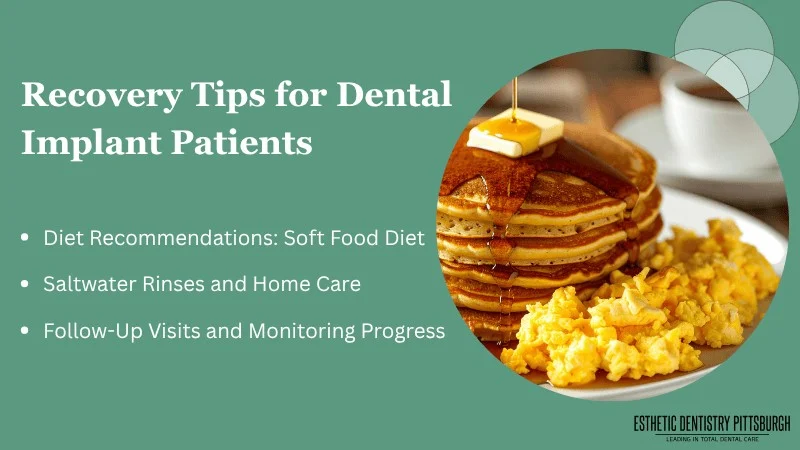
Diet Recommendations: Soft Food Diet
Your mouth needs time to heal, so stick to a soft food diet for the first few weeks. This protects your surgical sites and prevents damage to your new implants.
Good food choices include yogurt, mashed potatoes, scrambled eggs, smoothies, pudding, and cooked oatmeal. You can also eat soft pasta, steamed vegetables, and protein shakes.
Avoid hard, crunchy, or chewy foods like nuts, chips, raw vegetables, and tough meats.
Stay away from extremely hot foods and drinks during the first few days. These can increase swelling and discomfort. Cold foods like ice cream or chilled applesauce can actually help reduce swelling.
As you progress through your treatment timeline, you’ll gradually add more solid foods back into your diet. Most patients return to normal eating within four to six weeks, though dental implants need several months to fully bond with your jawbone.
Saltwater Rinses and Home Care
Saltwater rinses help keep your mouth clean and promote healing without harsh chemicals. Mix half a teaspoon of salt in eight ounces of warm water. Gently swish this solution around your mouth two to three times daily, especially after meals.
Be gentle when brushing your teeth. Use a soft-bristled toothbrush and avoid direct pressure on surgical areas. Your dentist may recommend an antibacterial mouthwash as well.
Don’t smoke or drink alcohol during recovery. Both slow down healing and increase your risk of infection. Smoking can even cause implant failure.
Keep your head elevated when sleeping during the first few nights. This reduces swelling and helps you feel more comfortable.
Follow-Up Visits and Monitoring Progress
Your dentist will schedule several checkups throughout your recovery. These appointments let your dental team monitor your progress and make adjustments as needed.
The first follow-up usually happens within a week of surgery. Your dentist checks for proper healing, removes stitches if needed, and addresses any concerns you have.
Additional visits occur at regular intervals during your treatment timeline. Your dentist examines how well your implants are integrating with your bone and ensures your temporary or permanent teeth fit correctly.
Don’t skip these appointments. Early detection of problems prevents complications and protects your investment in your new smile.
Frequently Asked Questions
People considering full mouth implants often have similar questions about healing stages, costs, and what to expect during recovery. The answers below address the most common concerns patients face.
What are the stages of healing for dental implants, and how can one identify them?
Dental implant healing happens in three main stages. The first stage is initial healing, which lasts about one to two weeks after surgery. During this time, you’ll notice swelling, minor bleeding, and tenderness around the implant sites.
The second stage is soft tissue healing. This occurs over the next two to four weeks. Your gums will start to close around the implants, and the swelling will go down significantly.
The third stage is osseointegration, where your jawbone fuses with the titanium implant posts. This is the critical phase where implants integrate with bone and takes the longest time. You can identify this stage by the gradual increase in stability and comfort when eating or speaking.
Can you provide an estimated timeline for the full healing process after receiving full mouth dental implants?
Full mouth dental implants often require 3-6 months for complete healing. The exact time depends on your bone density, overall health, and how well you follow aftercare instructions.
During the first week, you’ll experience the most discomfort and need to stick to soft foods. By week two, most swelling should be gone. Weeks three through eight involve gradual improvements as your implants stabilize.
The longest part of healing is osseointegration. This bone fusion process can take three to six months to complete fully. Some patients with better bone density may heal faster, while those who needed bone grafts might take longer.
How does the cost of full mouth dental implants typically fluctuate with insurance coverage?
Full mouth dental implants usually cost between $20,000 and $50,000 per arch without insurance. The total depends on how many implants you need, the type of prosthetic teeth, and your location.
Most dental insurance plans treat implants as cosmetic procedures. This means they may not cover the full cost. However, some plans will cover a portion of the procedure, typically 50% of the implant posts or up to their annual maximum benefit.
Your insurance might cover related procedures like extractions, bone grafts, or temporary dentures. Check with your insurance provider before surgery to understand what they’ll pay for. Many dental offices offer payment plans to help spread out the costs.
What should I expect my gums to look like in the days following implant surgery?
Your gums will look red and swollen for the first few days after surgery. This is normal and expected. You might also see minor bleeding or small blood clots around the implant sites.
By day three or four, the swelling should start to decrease. Your gums may still appear puffy and darker pink than usual. Some bruising around the surgical sites is also common and will fade within a week.
Around week two, your gums begin to settle and look more normal. The tissue will start closing around the implants. By week four, your gums should look much healthier, though they may still be slightly pink in the healing areas.
After getting a dental implant, how long should I wait before the crown can be placed?
You typically need to wait three to six months before getting your permanent crown. This waiting period allows osseointegration to complete, ensuring the implant is fully fused with your jawbone.
Many dentists will give you temporary teeth right after surgery. These temporary prosthetics let you eat and speak normally while your implants heal. They’re not as strong as permanent crowns, so you’ll need to be careful with what you eat.
Once your dentist confirms the implants are stable through imaging and physical exams, they’ll take impressions for your permanent crowns. The final crowns usually take two to three weeks to create in a dental lab.
Is there any pain associated with the final stages of the dental implant process?
Mild discomfort in the first 1 to 2 weeks is normal, but pain in the final stages is rare. Most patients feel little to no discomfort when getting their permanent crowns placed.
The crown placement appointment involves no cutting or drilling into your gums or bone. Your dentist simply attaches the custom crown to the healed implant post. You might feel some pressure during the fitting, but it shouldn’t hurt.
Some people experience minor sensitivity for a day or two after the crown is placed. This usually goes away quickly and can be managed with over-the-counter pain relievers if needed.
If you feel significant pain during the final stages, contact your dentist right away.