
When you look in the mirror and imagine a smile makeover, you may wonder how your dentist plans the change. Today, dentists use advanced tools to map out your smile before they touch a single tooth.
They study your face, teeth, and gums to create a plan that fits you.
Dentists design your smile by using Digital Smile Design technology to analyze photos and scans of your face and teeth, then create a detailed digital preview of how your new smile can look and function.
This process helps you see possible results early. It also helps your dentist plan treatments like veneers, crowns, or whitening with clear goals in mind.
Digital Smile Design blends art and science. You stay involved because you can review the digital mock‑up and share your thoughts.
That teamwork leads to a smile that supports your oral health and matches your natural features.
Key Takeaways
- Digital tools let you preview your smile before treatment begins.
- Careful planning improves both appearance and function.
- You help shape a smile that fits your face and goals.
Table of Content
- Understanding Digital Smile Design Technology
- Key Steps in the Digital Smile Design Process
- Technological Innovations Enhancing Smile Makeovers
- Applications in Modern Aesthetic and Restorative Dentistry
- The Importance of Oral Health in Smile Design
- Reliable Resources and Further Reading
- Frequently Asked Questions
Understanding Digital Smile Design Technology
Digital smile design uses photos, videos, and 3D scans to plan your new smile before treatment begins.
It combines digital dentistry tools with facial analysis so your dentist can design teeth that match your face, bite, and goals.
Core Concepts of Digital Smile Design
Digital smile design (DSD) is a planning system used in modern cosmetic dentistry. Your dentist collects high-quality photos, short videos of you speaking and smiling, and digital scans of your teeth.
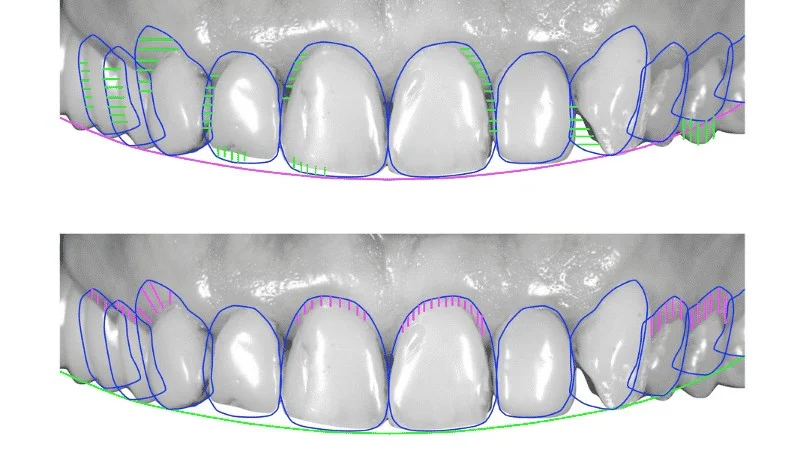
Special software then maps key reference lines on your face and teeth. These include your eye line, lip line, and midline. The program helps your dentist adjust tooth length, width, and shape on a digital model.
You can preview these changes on a screen before any dental work starts. Many dentists use this approach to design and simulate treatment outcomes with precision.
This process improves communication. You see the plan clearly, and your dentist can refine the smile design based on your feedback.
Digital Dentistry and Aesthetic Advancements
Digital dentistry has changed how dentists plan cosmetic and restorative care. Instead of relying only on stone models and hand sketches, your dentist uses digital scans and 3D software.
Some systems now use full 3D workflows, which improve accuracy compared to older 2D methods. These tools allow better treatment planning and visualization.
With these tools, your dentist can:
- Design veneers, crowns, or bonding with exact measurements
- Test different tooth shapes and sizes
- Plan gum sculpting with more control
- Share digital previews with dental labs
This digital workflow supports predictable results. It also helps your dentist coordinate complex cases that involve cosmetic, restorative, and even orthodontic steps.
The Role of Facial Analysis in Smile Planning
Your smile does not exist on its own. It must fit your face.
Facial analysis is a key part of digital smile design. Your dentist studies how your teeth relate to your lips, cheeks, and overall facial proportions. This step ensures your new smile looks balanced when you talk, laugh, and rest.
Digital tools help dentists plan treatment around both function and facial harmony.
During facial analysis, your dentist evaluates:
- Smile width compared to face width
- Tooth display when your lips are at rest
- Gum visibility when you smile
- Alignment of your dental midline with your facial midline
This careful review keeps the focus on you. The final smile design supports both appearance and bite function, not just straight white teeth.
Key Steps in the Digital Smile Design Process
Dentists follow a clear digital workflow to plan your smile with precision. They combine exams, scans, and visual previews so you can see and approve the plan before treatment begins.
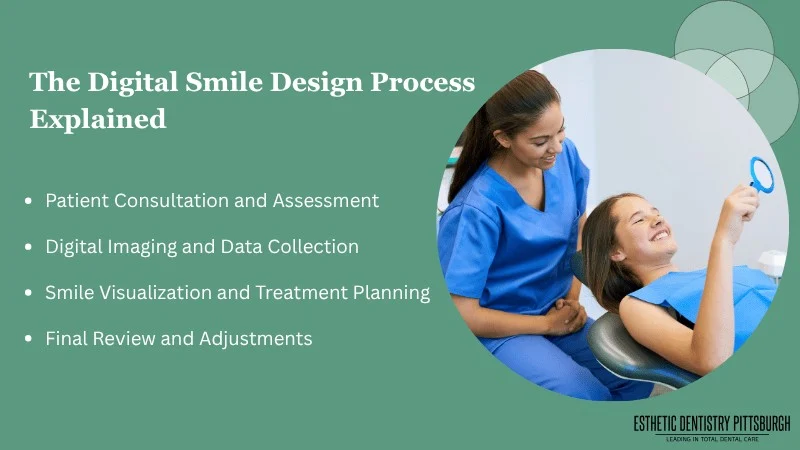
Patient Consultation and Assessment
Your dentist starts with a detailed conversation about your goals. You explain what you like and dislike about your teeth, such as gaps, chips, stains, or uneven edges.
They review your oral health to make sure your gums and teeth can support cosmetic or restorative work. This exam may include checking for decay, gum disease, bite problems, and worn enamel.
If needed, they recommend basic treatment before moving forward.
Photos and short videos of your face and smile help the dentist study how your teeth look when you talk and smile. This process uses visual records to guide planning and improve communication.
You stay involved from the start. Your preferences shape the direction of your smile transformation.
Digital Imaging and Data Collection
Next, your dentist gathers detailed digital records. An intraoral scan replaces messy impressions in most cases. The scanner creates a 3D model of your teeth and bite in minutes.
They may also use facial scanning or facial analysis software. This step maps how your teeth relate to your lips, jawline, and facial symmetry. Clear images help the dentist design a smile that fits your features, not just your mouth.
The system stores all files digitally. This reduces manual errors and helps the dental lab follow the exact design.
Smile Visualization and Treatment Planning
Once your records are ready, the dentist builds a digital model of your new smile. Specialized software adjusts tooth shape, size, and position on your 3D scan.
You can preview changes on a screen before any procedure begins. Many clinics use simulations to show how veneers, crowns, or other restorative dentistry treatments will look.
This preview helps you make informed decisions.
The digital smile design process lets dentists design and plan a patient’s new smile before treatment.
You and your dentist review details such as:
- Tooth length and width
- Smile line and symmetry
- Gum display
- Color and shade
This stage turns ideas into a clear, visual plan.
Final Review and Adjustments
Before treatment begins, you review the final design. Your dentist explains each step, timeline, and expected result.
Some clinics create a temporary mock-up that you can try in your mouth. This lets you test how the shape and length feel when you speak or bite.
If something feels off, your dentist adjusts the design.
You approve the plan only when you feel comfortable. Once you agree, the team moves forward with your personalized smile transformation.
Technological Innovations Enhancing Smile Makeovers
Modern digital dentistry uses detailed scans, smart software, and lifelike simulations to plan your smile makeover with precision. These tools help your dentist study your face, teeth, and bite before starting treatment.
3D Modeling and Simulation
3D modeling lets your dentist build a digital copy of your teeth and gums. They use intraoral scanners and facial scanning to capture exact shapes, angles, and proportions.
This data feeds into digital smile design software. The program creates a 3D model that shows how your new smile will fit your face, not just your mouth.
Traditional 2D photos can miss depth and contour. Newer workflows focus on 3D because they improve treatment planning and reduce guesswork.
Many experts now see this shift as a key step forward in aesthetic dentistry.
With 3D simulation, your dentist can adjust:
- Tooth length and width
- Gum levels
- Smile curve
- Tooth position
You see changes from different angles, which helps you understand how veneers, crowns, or aligners will look in real life.
AI-Driven Smile Analysis
Artificial intelligence adds another layer of precision to digital smile design. The software studies your facial features, tooth proportions, and symmetry in seconds.
AI tools can detect small imbalances in gum line height or tooth spacing that the eye might miss. Some systems also suggest ideal tooth shapes based on your face and lip movement.
A recent review on artificial intelligence in digital smile design explains how AI can improve workflow and treatment predictability.
These systems analyze photos, 3D scans, and sometimes video to support clinical decisions.
You still rely on your dentist’s judgment. AI does not replace skill. It supports it by organizing data and highlighting patterns.
This means your smile makeover plan is based on measurable details, not just visual opinion.
Virtual Treatment Visualization
Virtual visualization lets you see your new smile before treatment begins. Your dentist uses digital smile design software to place proposed restorations directly onto your photos or 3D model.
You can compare your current smile with the proposed result side by side. Some platforms even allow real-time adjustments during your visit.
Digital Smile Design has become a key communication tool in cosmetic dentistry because it improves patient involvement and clarity.
Research on Digital Smile Design in aesthetic dental practice highlights how this approach increases case acceptance and helps patients feel more confident about treatment.
When you see the plan clearly, you can ask questions and request changes.
That shared view reduces misunderstandings and helps you move forward with a smile makeover that matches your goals.

Applications in Modern Aesthetic and Restorative Dentistry
Digital Smile Design supports real treatment decisions, from simple whitening to complex restorative dentistry. You see your proposed results before treatment begins, which helps you choose the right option with confidence.
Teeth Whitening and Veneers

When you consider teeth whitening, your dentist can use digital images to test different shade changes on your actual smile. This preview shows how brighter teeth will look against your skin tone, lips, and face shape.
You avoid guessing. You see a clear comparison between your current shade and the planned result.
For veneers, Digital Smile Design allows your dentist to adjust:
- Tooth length
- Tooth width
- Shape and edge contour
- Smile symmetry
You can review these changes on a digital model before any enamel is prepared.
According to research on Digital Smile Design in aesthetic dentistry, this visual planning improves communication and helps patients understand expected outcomes.
In restorative dentistry, this planning step reduces surprises. You approve the design before treatment begins.
Orthodontics and Alignment Solutions
If you need orthodontics, digital smile planning shows how tooth movement will change your smile and facial balance. You see how straightening crowded or spaced teeth affects both function and appearance.
Dentists combine facial photos with digital scans to design a balanced result.\
A review on integrating digital smile design into restorative dentistry explains how digital visualization supports better treatment planning and precision.
You can compare options such as clear aligners or braces based on your final goal. The software helps map out tooth positions and bite alignment before appliances are placed.
This approach also supports restorative dentistry. If you need crowns or veneers after alignment, your dentist plans everything in one coordinated design.
Collaborative Treatment with Dental Labs
Digital Smile Design improves teamwork between your dentist and the dental lab. Your dentist shares high‑resolution photos, videos, and 3D scans instead of written descriptions alone.
Modern workflows often use advanced digital systems that combine facial analysis with 3D modeling. This helps labs create restorations that match the approved digital plan.
You benefit from:
- More accurate veneers and crowns
- Better color matching
- Fewer adjustments at delivery
In restorative dentistry, precision matters. When your dentist and lab work from the same digital blueprint, your final smile reflects the design you approved at the start.
The Importance of Oral Health in Smile Design
A beautiful smile starts with healthy teeth and gums. Dentists use digital tools to plan your look, but they first make sure your oral health can support the changes.
Oral Care Before Cosmetic Treatment
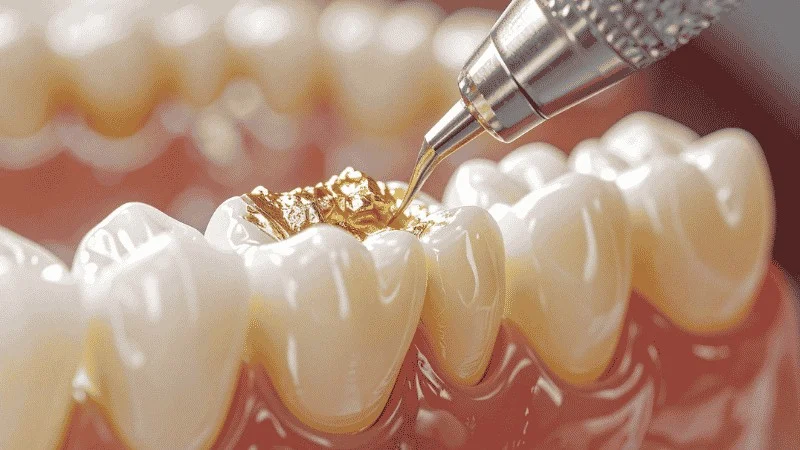
Before you move forward with veneers, crowns, or whitening, your dentist checks your teeth, gums, and bite.
If you have cavities, gum disease, or worn enamel, your dentist treats those problems first. Cosmetic work placed over unhealthy teeth can fail early. For example, veneers will not last if decay spreads under them.
You may need:
- A professional cleaning
- Fillings for cavities
- Gum treatment if you have bleeding or deep pockets
- Bite adjustment if your teeth do not align well
Strong oral health creates a stable base. It also helps digital scans and 3D images reflect your true tooth shape and gum line.
Ensuring Long-Term Results
Digital tools can design your ideal smile, but daily habits protect it. Digital Smile Design relies on scans, photos, and software to map your teeth and face. Still, the final result depends on how well you care for your mouth.
You protect your investment by brushing twice a day with fluoride toothpaste. You also floss daily to prevent plaque buildup around crowns, veneers, or implants.
Regular dental visits matter just as much. Your dentist checks:
| What They Check | Why It Matters |
| Gum health | Prevents recession around restorations |
| Bite balance | Reduces stress on cosmetic work |
| Early decay | Stops damage under veneers or crowns |
Good oral health keeps your new smile stable, functional, and easier to maintain for years.
Reliable Resources and Further Reading
You can review peer‑reviewed dental research online without paying for access. Trusted databases like PMC and NIH help you verify how Digital Smile Design works in real clinical settings.
Accessing Research on PMC and NIH
You can read many full dental studies for free on PMC (PubMed Central) at pmc.ncbi.nlm.nih.gov. PMC is managed by the National Institutes of Health (NIH), a U.S. government agency that supports medical research.
When you search for “Digital Smile Design,” you will find review articles and clinical studies. For example, you can explore this review on Digital Smile Design in aesthetic dentistry to understand its benefits and limits.
Use the search bar at the top of the page. You can filter results by:
- Article type (review, clinical study)
- Publication date
- Free full text
Look for sections labeled methods, results, and conclusion. These sections explain how researchers studied the technology and what they found. This helps you judge how reliable the information is before you accept it.
Overcoming Browser Issues While Accessing pmc.ncbi.nlm.nih.gov
Sometimes you may see a page that says “Checking your browser before accessing pmc.ncbi.nlm.nih.gov.” This security step protects the site from automated traffic.
If the page does not load after a few seconds, try these steps:
- Refresh the page.
- Make sure JavaScript is enabled in your browser.
- Clear your browser cache and cookies.
- Try a different browser like Chrome, Firefox, or Edge.
Public or work networks may also block access. If that happens, switch to a private home network.
If you still cannot open the article, search the article title directly in Google along with “PMC.” You can also check the journal’s website or look for a PDF link inside the search results.
Frequently Asked Questions
Digital Smile Design uses photos, scans, and software to map out your new smile before treatment starts. Dentists use it to plan tooth shape, size, and position while improving teamwork and cost clarity.
What is Digital Smile Design, and how does it help plan a new smile?
Digital Smile Design (DSD) is a digital planning method used in cosmetic dentistry. It combines photos, videos, facial measurements, and 3D scans to design your smile on a computer before any dental work begins.
Your dentist studies how your teeth relate to your lips, gums, and face. Then the software creates a visual model of your proposed results.
You get to see a preview, suggest changes, and approve the plan before treatment starts.
How does the Digital Smile Design photo protocol work during a consultation?
During your visit, your dentist takes a series of high-quality photos and short videos. These images capture your full face, profile, and close-ups of your smile.
The dental team follows a specific photo sequence to measure tooth display, lip movement, and facial balance. Some practices describe this process in detail.
Your dentist uploads the images into planning software. The program places digital lines and reference points over your face and teeth to guide the design.
This process helps ensure your new smile fits your facial features, not just your teeth alone.
Which Digital Smile Design software options do dentists commonly use?
Dentists use specialized DSD platforms along with 3D imaging and CAD/CAM systems. These tools allow them to design restorations like veneers, crowns, and implants with precise measurements.
Some systems integrate facial analysis and digital scanning. Your dentist may also connect the design software to an in-office scanner. This setup allows the lab to receive digital files instead of physical molds.
That digital workflow can improve accuracy and reduce delays.
How accurate are Digital Smile Design previews compared to the final results?
Digital previews aim to closely match your final outcome. Accuracy depends on detailed photos, precise scans, and careful lab work.
When dentists follow a full digital workflow, including 3D scanning and guided fabrication, the final restorations often reflect the approved design.
Small differences may occur due to material choices, healing response, or bite adjustments. Your dentist reviews these factors with you before treatment begins.
How does Digital Smile Design improve communication between the dentist, lab, and patient?
DSD creates a shared visual plan. You, your dentist, and the lab technician can all review the same digital mock-up.
Instead of relying on written notes alone, the team uses images, measurements, and 3D files. This makes expectations clear.
Digital files also allow the lab to fabricate restorations that match the approved design.
Clear communication reduces guesswork and lowers the chance of major changes later.
What factors can affect the cost of a Digital Smile Design treatment plan?
Several factors influence cost. These include the number of teeth treated, the type of restorations used, and whether you need additional procedures like orthodontics or gum contouring.
Digital planning itself may add a separate design fee. However, some practices include it as part of a full smile makeover package.
Technology investment can also affect pricing. Practices often see financial returns within 18–24 months, which may shape how they structure fees.
Your dentist should provide a written treatment plan that outlines all costs before you begin.