
When looking at options for replacing missing teeth, permanence and longevity are often major concerns. If you’re considering full-arch dental implants, you certainly want to be aware of how long they last and what you can do to keep them healthy for years to come.
At Esthetic Dentistry Pittsburgh, we help patients understand exactly what to expect from full-arch implant treatment and how to maximize the longevity of their investment. Continue reading for everything you need to know about the lifetime of full-arch dental implants.
What Are Full-Arch Implants?
First, let’s start by defining full-arch implants.
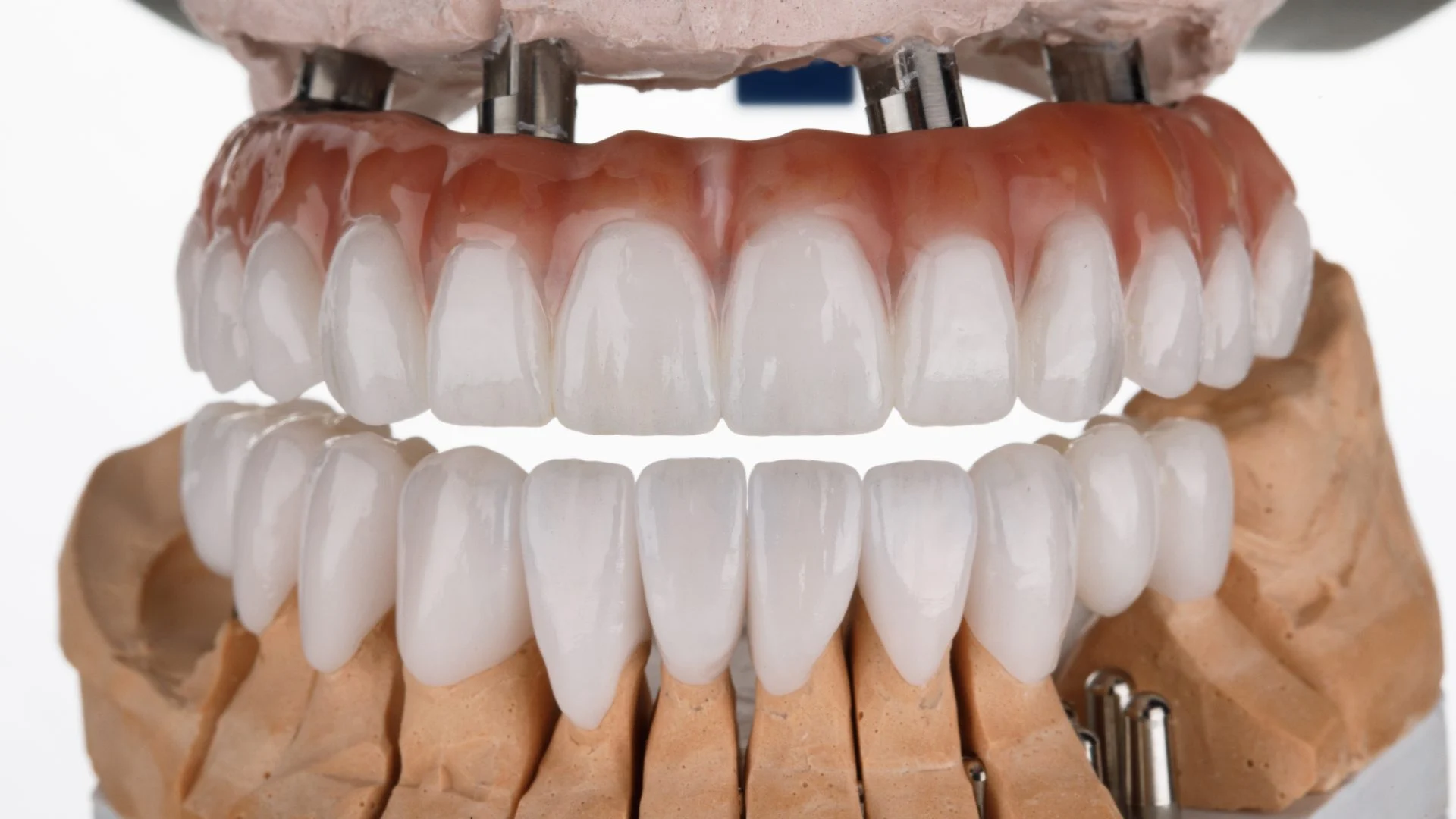
They are a comprehensive tooth replacement solution designed to restore an entire upper or lower arch of missing teeth. Unlike traditional dentures that rest on your gums, full-arch implants use four to six strategically placed titanium posts surgically anchored into your jawbone. These posts serve as a stable foundation for a complete set of prosthetic teeth, typically crafted from durable materials like zirconia.
The implants integrate with your jawbone through a natural process called osseointegration, where bone tissue fuses with the titanium posts over several months. This creates a secure, stable base that mimics your natural tooth roots. The result is a restoration that looks, feels, and functions like your original teeth, allowing you to eat, speak, and smile with complete confidence.
How Long Do Full-Arch Implants Last?
Now that you know what full-arch implants are, let’s get to the point of the blog.
When talking about the longevity of full-arch implants, you need to consider two things: the posts and the prosthetic teeth.
The titanium implant posts themselves can last a lifetime with proper care, as titanium is biocompatible and extraordinarily durable. The posts anchored in your jawbone are the most permanent component.
The prosthetic teeth, on the other hand, are attached to these implants and typically last 10 to 15 years, though many patients enjoy them much longer. Think of it like replacing the crown on a building while the foundation remains solid.
Factors That Affect the Permanence of Full-Arch Implants
Several factors influence how long your full-arch implants last.
Your oral hygiene habits play the most significant role. Regular brushing, flossing around the implants, and professional cleanings remove bacteria that can compromise the tissue and bone supporting your implants. Neglecting oral hygiene can lead to peri-implantitis, an infection that damages the bone around implants.
Your bone health directly impacts implant longevity. Full-arch implants help preserve jawbone density by stimulating the bone just like natural tooth roots. However, conditions like osteoporosis or uncontrolled diabetes can affect bone quality and healing. We evaluate your bone health before treatment and monitor it throughout your implant journey.
Lifestyle choices matter considerably. Smoking restricts blood flow and impairs healing, significantly increasing the risk of implant failure. Grinding or clenching your teeth can place excessive force on implants, potentially causing mechanical complications. If you have these habits, we can provide solutions, such as custom night guards to protect your investment.
Full-Arch Implants vs. Full-Mouth Implants: Understanding the Difference
These terms are often used interchangeably, but there’s a distinction worth noting. Full-arch implants replace all teeth in one arch (upper or lower) using four to six implants per arch. Full-mouth implants refer to replacing both arches, which would require implant placement in both your upper and lower jaws.
Some patients also confuse full-arch implants with individual implant placement for every missing tooth. Full-arch implants are often more efficient and cost-effective because we strategically place fewer implants in areas with optimal bone density, then attach a complete arch of teeth to these posts. This approach delivers exceptional stability without requiring an implant for every single tooth.
Caring for Your Full-Arch Implants
Maintaining your full-arch implants requires commitment but isn’t complicated. As previously stated, practicing good oral hygiene is crucial. Brush twice daily with a soft-bristle toothbrush, paying special attention to the gum line where the implants meet your tissue. Use floss threaders or water flossers designed for implants to clean between the prosthetic teeth and around the implant posts.
Schedule regular dental visits every six months for professional cleanings and examinations. This gives us the opportunity to check the stability of your implants, assess the health of surrounding tissue and bone, and identify any issues before they become serious problems. These appointments are your opportunity to address concerns and ensure your implants continue functioning optimally.
Avoid using your implants as tools to open packages or bite extremely hard objects like ice or hard candy. While full-arch implants are incredibly strong, treating them with the same care you’d give natural teeth helps prevent unnecessary stress and damage.
Your Path to a Permanent Smile Solution
Full-arch implants offer a near-permanent solution for missing teeth when you commit to proper care and maintenance. The implant posts can last your lifetime, while the prosthetic teeth provide years of reliable function and beautiful aesthetics.
At Esthetic Dentistry Pittsburgh, Dr. McMahon and our team use advanced technology and proven techniques to deliver implant restorations that stand the test of time. Ready to discover if full-arch implants are right for you? Contact Esthetic Dentistry Pittsburgh to schedule your consultation.