
Your smile says a lot about you, and if you’ve been thinking about making it brighter, you’ve probably wondered about teeth whitening vs veneers, which is the better choice.
Teeth whitening is best if you just want to brighten your natural teeth and remove surface stains, while veneers are the right option if you need to fix chips, gaps, deep discoloration, or uneven teeth all at once.
The two treatments work in completely different ways and solve different problems.
Understanding what each treatment can and can’t do will help you make the right decision for your smile. Whitening treatments focus only on color by using bleaching agents to lift stains from your tooth enamel.
Veneers are thin shells that cover the front of your teeth to change their shape, size, and color all at the same time.
The choice between these two options depends on your specific goals, your budget, and what your teeth actually need. This guide will walk you through everything you need to know about both treatments so you can pick the one that will give you the results you’re looking for.
Key Takeaways
- Whitening removes stains from natural teeth while veneers cover and reshape teeth completely
- Veneers last 10-15 years but cost more, while whitening is affordable but needs touch-ups every 6-12 months
- Your dentist can help you choose based on whether you need color improvement only or a full smile transformation
- Teeth Whitening vs Veneers: Key Differences
- Understanding Teeth Whitening
- Exploring Dental Veneers
- Who Should Consider Teeth Whitening?
- Who Should Consider Veneers?
- Making the Best Choice for Your Smile
- Frequently Asked Questions
Teeth Whitening vs Veneers: Key Differences
The choice between teeth whitening vs veneers depends on what you’re trying to fix and how long you want results to last. These two cosmetic dentistry options work in completely different ways to improve your smile.
What Each Treatment Addresses
Professional teeth whitening targets stains on your tooth surface. It works best for yellowing caused by coffee, tea, wine, or aging. The whitening treatment uses bleaching agents to lift surface stains and brighten your natural teeth by several shades.
Dental veneers solve a wider range of problems. They cover chips, gaps, misshapen teeth, and deep stains that whitening can’t fix. Veneers create a complete smile transformation by changing both the color and shape of your teeth.
If you only have mild discoloration, whitening is usually enough to brighten your smile. But if you have structural issues or severe staining, veneers might be your better option.
How the Procedures Compare
Teeth whitening is quick and non-invasive. An in-office treatment takes about an hour, while at-home kits work over several days or weeks. The dentist applies a bleaching gel to your teeth and may use a special light to speed up results.
Getting veneers requires multiple visits. Your dentist removes a thin layer of enamel, takes impressions, and places temporary veneers while your permanent ones are made.
At your final appointment, the custom veneers are bonded to your teeth with dental cement.
Key procedure differences:
- Whitening: No tooth removal, reversible, minimal time commitment
- Veneers: Permanent enamel removal, multiple visits, custom fabrication needed
Longevity and Maintenance
Whitening results typically last 6 to 12 months before you need a touch-up. Your results fade faster if you drink coffee, red wine, or smoke. You’ll need regular maintenance treatments to keep your teeth bright.
Veneers last much longer, typically 10 to 15 years with proper care and maintenance. Porcelain veneers resist stains better than your natural teeth. You care for them like regular teeth by brushing, flossing, and visiting your dentist regularly.
The cost reflects this difference in longevity. Professional teeth whitening costs $300 to $800 per session, while veneers range from $900 to $2,500 per tooth. Veneers cost more upfront but don’t require frequent retreatment like whitening does.

Understanding Teeth Whitening
Teeth whitening treatments come in different forms and strengths, with professional options delivering faster results than store-bought products. The treatment you choose affects how much brighter your teeth get and how long the results last.
Types of Whitening Treatments
You can choose from several teeth whitening options depending on your budget and goals. Whitening strips are thin plastic strips coated with peroxide gel that you apply to your teeth for about 30 minutes daily. These work well for mild surface stains from coffee or tea.
Whitening toothpaste contains gentle abrasives that polish away surface stains but won’t change your natural tooth color. Whitening gels come in trays that fit over your teeth and typically contain stronger bleaching agents than strips.
In-office whitening uses professional-grade bleaching agents applied directly to your teeth by a dentist. This whitening treatment often includes a special light or laser to activate the bleaching gel and speed up the process.
Professional vs At-Home Whitening
Professional teeth whitening at your dentist’s office gives you the fastest and most noticeable results. The teeth whitening procedure takes about 60 to 90 minutes, and you can see your teeth become several shades lighter in just one visit.
Your dentist can also create custom take-home trays that fit your teeth perfectly. These trays hold professional-strength whitening gel against your teeth more evenly than store-bought options.
Over-the-counter products like whitening strips cost less but take longer to show results. You’ll need to use them daily for two to four weeks to see a difference.
The bleaching agents in these products are weaker than what dentists use, which means they’re safer to use at home but less effective on deep stains.
What to Expect from Teeth Whitening Results
Your teeth whitening results depend on the type of stains you have and which treatment you choose. Professional in-office whitening can lighten your teeth by three to eight shades in one appointment.
Surface stains from food and drinks respond best to whitening treatments. Yellow-toned teeth typically whiten better than gray or brown discoloration.
Most teeth whitening results last six months to two years. Your results fade faster if you drink coffee, tea, or red wine regularly or if you smoke. Touch-up treatments every few months help maintain your brighter smile.
Managing Tooth Sensitivity
Tooth sensitivity is the most common side effect of whitening treatments. You might feel sharp pain when eating hot or cold foods during and right after your whitening procedure.
This sensitivity happens because the bleaching agents temporarily open up the pores in your tooth enamel. The good news is that this discomfort usually goes away within a few days after you stop treatment.
You can reduce sensitivity by using toothpaste made for sensitive teeth for two weeks before you start whitening. Take breaks between whitening sessions if your teeth feel uncomfortable.
Your dentist can also apply a desensitizing gel before your whitening treatment to protect your teeth.
Exploring Dental Veneers
Dental veneers come in different materials and styles, each with its own application process and expected lifespan. Understanding these options helps you choose the right type for your needs and budget.
Porcelain Veneers vs Composite Veneers
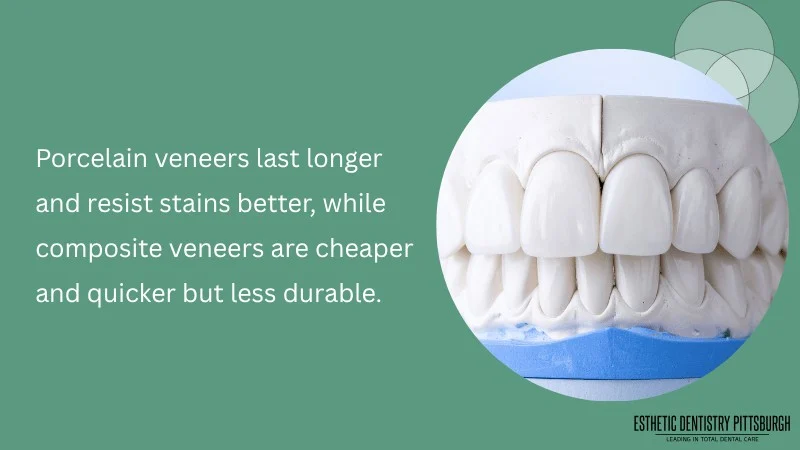
Porcelain veneers are made from high-quality materials that closely mimic natural tooth enamel. These thin porcelain shells resist stains better than composite materials and reflect light like real teeth.
They typically cost more upfront but offer superior durability.
Composite veneers use tooth-colored resin applied directly to your teeth. Your dentist sculpts the material right in the office, which means you can get them done in one visit. They cost less than porcelain but may stain more easily over time.
Key Differences:
- Material: Porcelain vs resin composite
- Application time: Multiple visits vs single visit
- Cost: Higher vs lower
- Stain resistance: Excellent vs moderate
- Lifespan: 10-15+ years vs 5-7 years
The Veneer Procedure Step by Step
The veneer procedure starts with a consultation where your dentist examines your teeth and discusses your goals. You’ll choose the shade and shape that works best for your smile.
During tooth preparation, your dentist removes a small amount of enamel from the front of your teeth. This creates room for the veneer and helps it bond properly. The amount removed is usually less than one millimeter.
Next, your dentist takes impressions of your prepared teeth. A dental lab uses these molds to create custom veneers that fit your teeth perfectly. This process takes one to two weeks.
At your final appointment, your dentist cleans and etches your teeth to help the veneers bond. They apply special cement to attach each veneer, then use a light to harden the adhesive quickly.
Temporary and Removable Veneers
Temporary veneers protect your teeth while you wait for permanent ones. Your dentist places these during the same appointment as tooth preparation. They keep your prepared teeth safe and maintain your appearance until your custom veneers arrive.
Removable veneers, also called snap-on veneers, fit over your existing teeth without any permanent changes. You can take them out whenever you want.
These options work for special occasions but don’t provide the same natural look or function as permanent veneers. They also require no tooth preparation at all.
Lifespan and Care of Veneers
Porcelain veneers can last 10 to 15 years or even longer with proper care. Composite veneers typically last five to seven years before needing replacement. Your daily habits directly affect how long your veneers will last.
Veneers require simple brushing and flossing like natural teeth. You should avoid biting hard objects or using your teeth as tools. Don’t chew ice, bite your nails, or open packages with your teeth.
Regular dental checkups help catch any issues early. Your dentist will check that your veneers remain properly bonded and look for signs of wear. Avoiding excessive force protects both your veneers and the teeth underneath them.
Who Should Consider Teeth Whitening?
Teeth whitening works best for people with healthy teeth and gums who want to brighten surface stains caused by everyday habits. Not everyone is a good candidate, and the type of discoloration you have plays a big role in whether whitening will give you the results you want.
Ideal Candidates
You’re a good candidate for teeth whitening if your teeth are generally healthy but have yellowed over time. People who drink coffee, tea, or red wine regularly often develop surface stains that respond well to whitening treatments.
Smokers and tobacco users also see good results because nicotine stains usually sit on the tooth surface. If you have good oral health with no cavities or gum disease, professional whitening treatments can safely brighten your smile.
Your age matters too. Adults with fully developed enamel typically get better results than younger patients, such as teens. If you’re looking for a quick cosmetic boost before a wedding, interview, or special event, whitening offers fast improvement without major dental work.
Types of Tooth Discoloration
Understanding your type of tooth discoloration helps you know if whitening will work. There are two main types:
Extrinsic Stains (Surface Stains)
- Caused by food, drinks, and smoking
- Sit on the outer layer of enamel
- Usually yellow or brown in color
- Respond well to whitening treatments
Intrinsic Stains (Deep Discoloration)
- Form inside the tooth structure
- Caused by medications, trauma, or aging
- Often gray or dark brown
- Don’t respond well to bleaching
If you have stained teeth from your diet or habits, whitening will likely work. But if your discoloration comes from antibiotics like tetracycline or from a tooth injury, you’ll need to consider other options.
When Whitening Works and When It Doesn’t
Whitening works best on natural teeth with yellow or brown surface stains. The main difference between teeth whitening vs veneers is that whitening only changes color while veneers can fix shape and alignment issues too.
Whitening won’t work if you have:
- Crowns, veneers, or fillings on front teeth (they don’t change color)
- Gray discoloration from medication
- Severe deep discoloration from tooth trauma
- Tooth decay or exposed roots
You should skip whitening if your teeth are sensitive or if you have damaged enamel. Whitening also can’t fix chips, gaps, or crooked teeth, those problems need different solutions.
Who Should Consider Veneers?
Veneers work best for people who want to fix problems that whitening alone cannot solve. They’re a good choice if you have deep stains, damaged teeth, or want to completely change how your smile looks.
Addressing Deep Discoloration
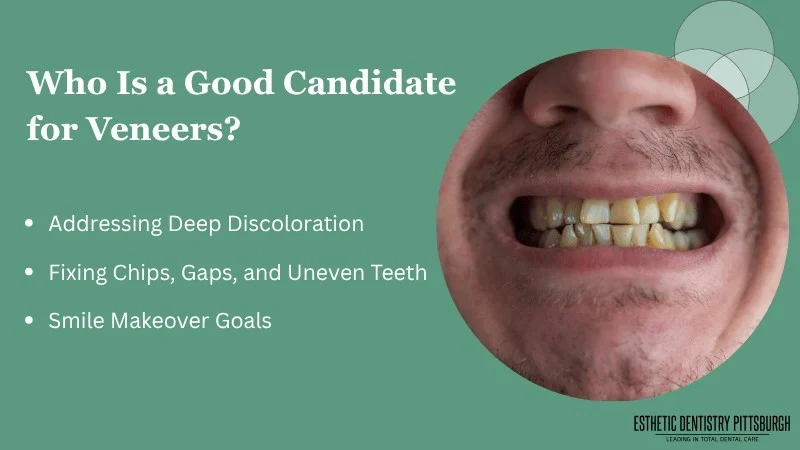
Some stains go too deep for whitening treatments to fix. If your teeth have dark stains from medications, injury, or worn enamel, porcelain veneers can cover these issues completely. This type of deep discoloration is called intrinsic staining.
Whitening products only work on surface stains. They can’t reach the inner layers of your teeth where deep discoloration occurs.
Veneers give you a fresh start. They place a new white surface over your natural teeth. Porcelain veneers resist stains from coffee, wine, and other foods that normally cause discoloration.
Composite veneers also work well for covering deep stains, though they may not last quite as long as porcelain.
Fixing Chips, Gaps, and Uneven Teeth
Veneers do more than just change color. They’re perfect if you have chipped teeth from an accident or injury. The thin shells cover the damaged area and make your tooth look whole again.
Gaps between teeth can also be closed with veneers. Your dentist makes the veneers slightly wider to fill in the spaces. This creates a more even appearance without needing braces.
Uneven teeth or misshapen teeth get reshaped with veneers too. If some of your teeth are too small, pointy, or oddly shaped, veneers create a uniform look. They give all your teeth the same size and shape for a balanced smile.
Smile Makeover Goals
A smile makeover involves fixing multiple issues at once. Veneers are ideal if you want to transform your entire smile rather than just brighten it. You might want to change the color, shape, and alignment all together.
Veneers let you design exactly how you want your smile to look. Your dentist can adjust the shade, size, and shape of each veneer. This gives you complete control over your final results.
The treatment works well if you’re willing to make a long-term investment in your smile. Veneers typically last 10 to 15 years with proper care, making them a lasting solution for people who want permanent improvements.
Making the Best Choice for Your Smile
A professional evaluation helps you understand which treatment fits your specific needs and budget. Your dental health status and personal goals both play important roles in deciding between whitening and veneers.

Consulting a Cosmetic Dentist
Your first step is booking a consultation with a cosmetic dentist who can examine your teeth and gums. They’ll check for cavities, gum disease, or other problems that need treatment before any cosmetic work begins.
During this visit, your dentist will ask about what bothers you most about your smile. Be honest about whether you just want whiter teeth or if you also want to fix chips, gaps, or crooked teeth.
They can show you photos of previous patients to help you picture possible results.
Your dentist will also evaluate your tooth enamel thickness. This matters because veneers require removing a thin layer of enamel, so you need enough to work with.
They’ll explain the veneers cost compared to whitening options and help you understand what each treatment involves.
A good cosmetic dentist won’t push you toward the most expensive option. They’ll recommend what actually solves your specific concerns.
Factors: Budget, Goals, and Oral Health
Your budget plays a big role in which treatment you choose. Professional whitening typically costs $300-800 per session, while porcelain veneers range from $800-2,500 per tooth.
Think about your oral health status first. You can’t get either treatment if you have active gum disease or untreated cavities. Whitening works best when you have healthy teeth with surface stains from coffee, tea, or tobacco.
Your goals matter just as much as cost. Whitening only changes tooth color and lasts 1-3 years before needing touch-ups. Veneers address multiple issues at once and last 10-15 years.
Consider veneers if you want to:
- Fix chips, cracks, or gaps
- Change tooth shape or length
- Address stains that won’t respond to bleaching
- Get long-lasting results
Choose whitening if you:
- Only need brighter teeth
- Have healthy enamel and surface stains
- Want a less expensive option
- Prefer a non-permanent treatment
Combining Treatments for Optimal Results
You don’t always have to pick just one treatment. Many people combine both for the best smile transformation.
Some patients whiten their natural teeth first, then get veneers on just their front teeth. This creates a uniform bright smile while keeping costs lower than veneers on all teeth.
Your dentist might suggest whitening before veneers to match the veneer color to your newly brightened natural teeth. This approach works well if you only need veneers on a few problem teeth but want your whole smile to look cohesive.
Another option is getting veneers now and whitening later if your back teeth start looking darker over time. Just remember that whitening won’t change the color of your veneers themselves.
Talk to your dentist about staging treatments over time if budget is a concern. You might start with professional whitening and add veneers to specific teeth later when you’re ready.
Frequently Asked Questions
People often have similar questions when deciding between these two smile treatments. The answers depend on your specific dental needs, budget, and how long you want results to last.
How do I know whether whitening will fix my tooth color issues or if I need veneers instead?
The best way to know is to look at what’s causing your discoloration. Professional teeth whitening works well for yellowing and stains caused by coffee, tea, wine, and aging.
If your teeth have gray or brown discoloration, whitening might not give you the results you want. Your dentist can examine your teeth and tell you which treatment will work best for your specific situation.
What kinds of stains or discoloration won’t respond well to teeth whitening?
Some types of discoloration are harder to remove with bleaching treatments. Gray or brown stains often don’t respond as well as yellow stains to whitening products.
Discoloration from certain medications, tooth injuries, or excessive fluoride exposure typically won’t improve much with whitening. In these cases, veneers might be a better option since they cover the tooth completely.
How long do professional whitening results usually last, and what affects how long they stay bright?
Professional whitening results can last for a few years, but this varies from person to person. Your habits play a big role in how long your teeth stay white.
If you drink coffee, tea, or red wine regularly, your teeth will stain faster. Smoking also causes teeth to yellow quickly. Your dentist might give you whitening trays to use at home to help maintain your results longer.
What’s the typical cost difference between professional teeth whitening and veneers?
Professional teeth whitening costs about $650 on average. This makes it a more affordable option for many people.
Veneers cost much more because they’re custom-made for each tooth. Composite veneers range from $200 to $1,500 per tooth. Porcelain veneers cost between $950 and $2,500 per tooth.
What’s the difference between porcelain veneers and composite veneers, and which looks more natural?
Porcelain veneers are made in a lab from impressions of your teeth. Your dentist removes some enamel, makes impressions, and you wear temporary veneers until the permanent ones are ready.
Composite veneers are applied and shaped directly on your teeth by your dentist. They usually require less enamel removal than porcelain veneers. Both types can look natural, but porcelain veneers often have a more lifelike appearance and resist staining better.
Can veneers improve things whitening can’t, like chips, gaps, or uneven tooth shape?
Yes, veneers can fix multiple cosmetic issues at once. They work for chipped or cracked teeth, gaps between teeth, and crooked or uneven teeth.
Veneers are custom-made covers that reshape your entire tooth. This means you can fix the color, shape, and spacing all in one treatment. Whitening only changes tooth color and can’t address structural problems.