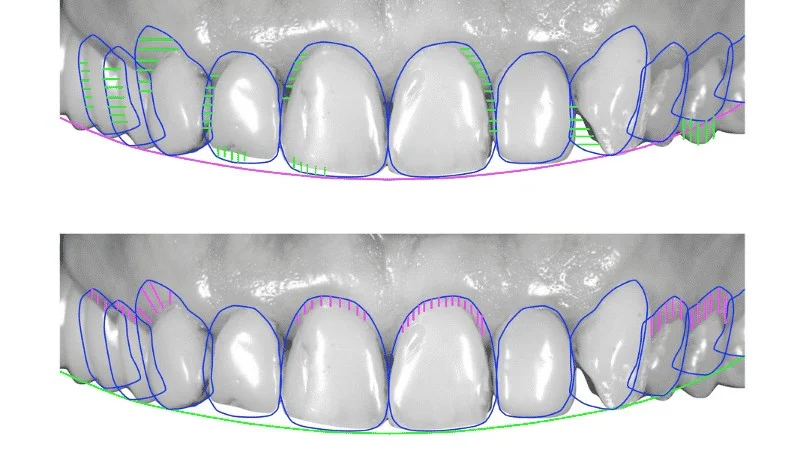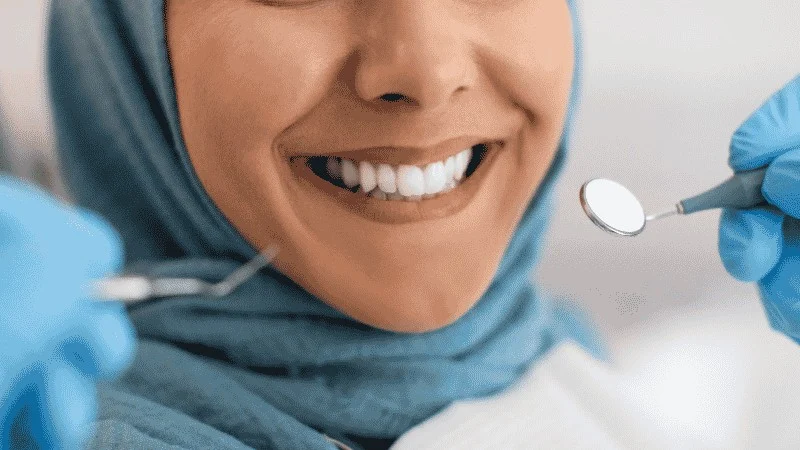

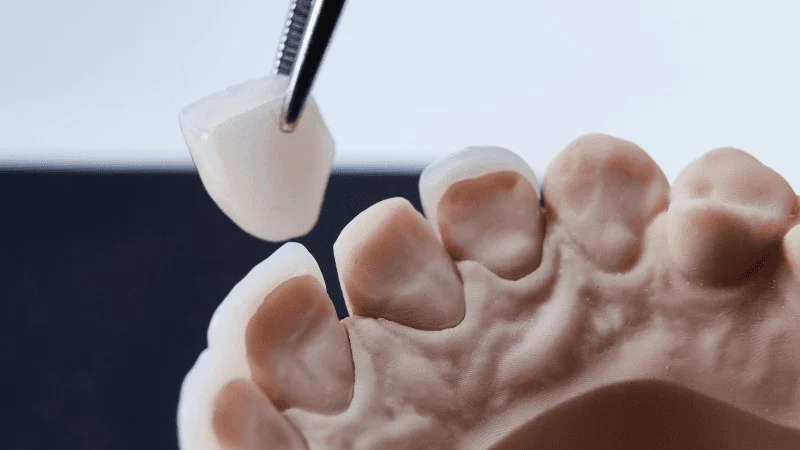
You’ve probably seen them before, smiles that look too white, too perfect, or somehow just “off.” Maybe the teeth look like Chiclets, or they’re so bright they seem to glow. When cosmetic dentistry goes wrong, it’s obvious to everyone.
The most common reasons smiles look fake include choosing teeth that are too white for your skin tone, making every tooth the same size and shape, and ignoring how your smile fits with the rest of your face.
These mistakes happen when dentists use a one-size-fits-all approach instead of customizing treatment to match your unique features.
The good news is that cosmetic dentistry doesn’t have to look artificial. When done right, fake-looking veneers enhance your natural beauty instead of announcing themselves.
Understanding what goes wrong and how to avoid those pitfalls helps you get results that make people notice your confidence, not your dental work.
Key Takeaways
- Natural teeth have subtle variations in color, shape, and size that fake-looking smiles lack
- Choosing the right shade and material quality prevents the overly bright, opaque appearance
- Working with an experienced dentist who plans your smile around your facial features ensures authentic results
What Makes a Smile Look “Fake”?
A smile looks fake when it doesn’t match your natural features or when cosmetic work is too obvious. Several specific problems can make cosmetic dentistry results appear artificial instead of enhancing your appearance.
Common Signs of an Artificial Smile
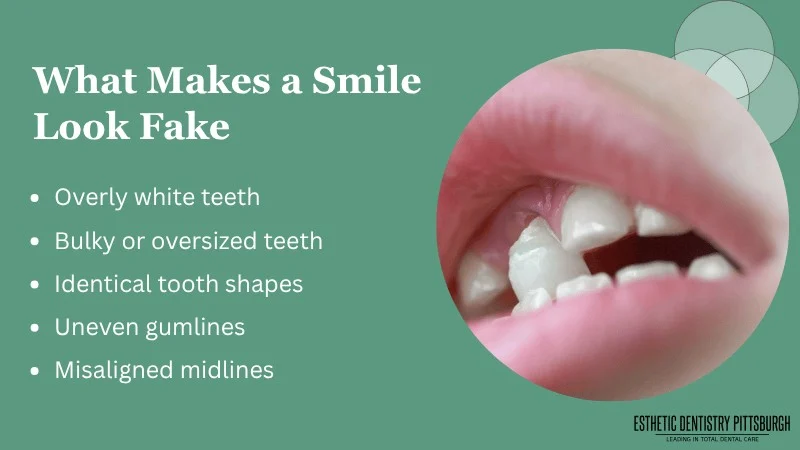
Overly white teeth are one of the biggest giveaways of fake-looking veneers. When your teeth are too bright for your skin tone, they stand out in an unnatural way. This problem gets worse as you age because very white teeth don’t match mature facial features.
Bulky or oversized teeth create another obvious issue. When veneers add too much volume to your teeth, they can make your mouth look crowded or push your lips out in an unnatural position.
Identical tooth shapes signal poor cosmetic work. Natural teeth have subtle differences in size and shape. When every tooth looks exactly the same, your smile loses the small variations that make it look real.
Uneven gumlines throw off the balance of your smile. Your gums should follow a smooth, symmetrical curve across your teeth.
Misaligned midlines happen when the center of your front teeth doesn’t line up with the center of your face. This creates an off-center appearance that people notice right away.
Why Do People Notice Fake Smiles?
Your brain recognizes patterns and can spot when something looks wrong even if you can’t explain why. A natural-looking smile works in harmony with your facial features rather than fighting against them.
The proportions matter more than you might think. Your teeth should fit the width of your face, the shape of your lips, and your overall facial structure.
When dentists ignore these relationships, the results look imposed on your face instead of growing naturally from it.
People also notice when teeth don’t match the person wearing them. A 60-year-old with blindingly white, perfectly uniform teeth raises questions because it doesn’t fit what we expect to see.
The disconnect between age and tooth appearance creates an uncanny valley effect that draws attention for the wrong reasons.
Impact of Poor Cosmetic Dentistry Planning
When dentists design smiles in isolation without considering your whole face, the results rarely look natural. They might create technically perfect teeth that still look wrong on you.
One-size-fits-all approaches fail because every face is different. Using the same tooth shapes, sizes, and shades for every patient ignores individual features. This cookie-cutter method produces generic results that lack personality.
Skipping trial phases means you don’t see your new smile before it becomes permanent. Without previewing the results, you can’t provide feedback or request adjustments.
Ignoring your input leads to smiles that don’t match your vision. Even if the dentist thinks the work looks good, you’re the one who has to live with it every day.
Poor planning also affects function, not just appearance. Teeth that don’t align properly with your bite can cause long-term discomfort and damage.
Fundamental Cosmetic Dentistry Mistakes to Avoid
Several key errors lead to artificial-looking dental work, including choosing shades that are too bright, creating identical tooth shapes, placing bulky restorations, and overlooking how teeth work together when you bite.
Overly White or Opaque Teeth
Teeth that look too white stand out in an unnatural way. Natural teeth have slight color variations and aren’t pure white like paper or bathroom tiles.
When dentists choose shades that are too white or opaque, the results don’t match your skin tone or age. A bright white shade might look good on a 25-year-old but appear artificial on someone older.
Your natural teeth also have some translucency, especially at the edges, which allows light to pass through slightly.
Porcelain veneers without proper translucency look flat and lifeless. Quality materials should mimic how real enamel interacts with light. The best results use shades that complement your complexion rather than overpower your face.
Uniform Tooth Shapes and Sizes
Real teeth vary slightly in size and shape. Your central incisors are naturally larger than your lateral incisors, which are larger than your canines.
When every tooth looks identical, you end up with what’s called the “chiclet” look. This happens when dentists apply a one-size-fits-all approach instead of customizing each tooth shape.
Natural teeth also have subtle texture, tiny imperfections, and varied edges that reflect your personality and age.
Fake-looking veneers ignore these natural proportions. They create perfectly uniform rows that don’t follow the gentle curve your top teeth should make when you smile. The width, length, and shape of each tooth should relate to your facial features and lip line.
Bulky Veneers and Crowns
Veneers and crowns that are too thick make your teeth look oversized. This creates a bulky appearance that pushes out your lips unnaturally.
Proper dental work should feel comfortable and look proportional to your mouth. Dental crowns that are too large affect your bite and speech. They can make your profile look different because your lips sit further forward than before.
Skilled dentists prepare teeth carefully and use thin materials when possible. Modern porcelain can be very thin while still being strong. The goal is to improve your smile without making your teeth look too big for your face.
Ignoring Bite and Function
Beautiful teeth need to work properly when you eat and speak. Cosmetic work that only focuses on appearance can cause problems.
Your bite determines how your upper and lower teeth meet. If crowns or veneers change this relationship without proper planning, you might experience jaw pain, tooth wear, or difficulty chewing. Some teeth might hit too hard while others don’t touch at all.
Good cosmetic dentistry considers both beauty and function. Your dentist should check how your teeth come together and ensure the final result supports healthy jaw movement. Pretty teeth that don’t function correctly will cause long-term problems.
The Importance of Facial Harmony and Smile Design
A smile that looks natural fits your unique face shape, skin tone, and personal style. The best smile design takes into account how your teeth relate to your lips, gums, and overall facial features rather than following a one-size-fits-all approach.
Balancing Tooth Proportion and Facial Features
Your teeth need to match the size and scale of your face to look authentic. If your veneers are too large or too long for your facial structure, they’ll stand out as artificial. Tooth width should typically align with the width of your nose and eyes to create balance.
The ratio between your teeth also matters. Your two front teeth should be the most prominent, with the side teeth gradually getting smaller. This creates a gentle curve that follows your lower lip when you smile.
Your gums play a big role too. The amount of gum tissue that shows when you smile should complement your lip line and tooth length. Too much or too little gum exposure can throw off the entire look.
Achieving Facial Symmetry Through Smile Planning
Orthodontics with digital technology allows you to preview how your new smile will look before any work begins. This technology helps ensure your dental midline (the center point between your two front teeth) aligns with your facial midline.
Your dentist should analyze your facial anatomy from multiple angles. They’ll look at how your teeth appear when you talk, laugh, and smile naturally. Not properly aligning veneers with the facial axis is a common mistake that creates an unbalanced appearance.
The angle and position of each tooth affects facial symmetry. Even small adjustments in tooth placement can make a big difference in how harmonious your smile looks with the rest of your face.
Incorporating Personal Preferences
Your smile should reflect who you are, not just current trends. While it’s fine to bring inspiration photos to your consultation, your dentist should customize the design to fit your unique characteristics.
Patient collaboration throughout the planning process helps avoid disappointment. You should have input on the shade, shape, and overall style of your new smile.
A good dentist will listen to your goals while also providing professional guidance on what will look most natural on you.
Your age, profession, and lifestyle matter when designing your smile. What works for a 25-year-old model might not suit a 50-year-old professional, even if both want cosmetic improvements.
Getting Shade and Material Selection Right
Choosing the right shade and material determines whether your dental work blends seamlessly or stands out for the wrong reasons.
Natural teeth have warmth, depth, and subtle color variations that modern materials and techniques can replicate when done correctly.
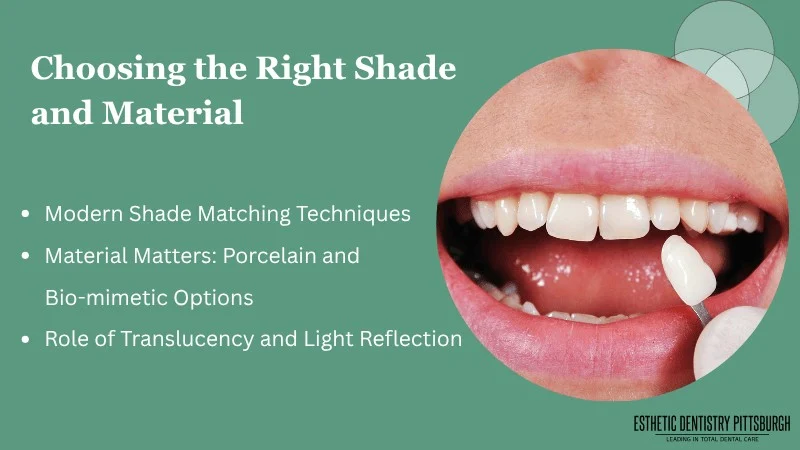
Modern Shade Matching Techniques
Your dentist should never rely on a single shade tab held up to your teeth in overhead office lighting. Modern shade matching uses calibrated shade guides assessed under multiple lighting conditions.
Natural light reveals the true color of your teeth better than fluorescent bulbs.
The Vita shade guide includes natural shades from A1 to A3 that look convincing on most people. Bleach shades like BL1 and BL2 rarely appear natural.
A good benchmark is comparing the shade to the whites of your eyes. If your teeth would be brighter than your eyes, the shade is too white.
Digital planning tools photograph your teeth under different lighting and map ideal shades against your skin tone and age. A 25-year-old and 55-year-old should not have the same tooth color.
Your dentist should also consider how the shade will look in ten or twenty years, not just today.
Material Matters: Porcelain and Bio-mimetic Options
Not all dental materials create the same results. Porcelain veneers made from feldspathic porcelain or IPS e.max lithium disilicate can replicate the layered structure of natural teeth. These materials allow light to pass through them similar to real enamel.
Older porcelain from 15 to 25 years ago lacked the color stability and translucency of modern ceramics. Bio-glass crowns and advanced porcelain options now offer better optical properties.
The material should be built in layers by a skilled ceramist rather than mass-produced from a mold.
Crowns require the same attention to material selection. The difference between crowns that look fake and those that blend in often comes down to the quality of materials and craftsmanship used.
Role of Translucency and Light Reflection
Real teeth are not solid white blocks. Light enters the enamel, bounces off the dentin underneath, and creates depth. Overly opaque veneers skip this natural process and look flat.
The edges of natural teeth are most translucent. When you look at someone’s smile, you should see subtle light passing through the tips. Veneers that lack translucency appear one-dimensional no matter how expensive they were.
Modern materials can be layered to create this effect. A master ceramist builds each veneer with varying opacity levels. The result catches light naturally instead of reflecting it like a bathroom tile.
This attention to how light interacts with the material separates natural-looking veneers from obvious dental work.
Critical Techniques for Achieving a Natural-Looking Smile
Getting a natural result requires careful planning and the right tools before any permanent work begins. Smart dentists use advanced technology and temporary options to help you preview your new smile.
Gum Contouring and Gingival Health
Your gums frame your teeth like a picture frame. If they’re uneven or cover too much of your teeth, even perfect veneers will look off.
Gum contouring reshapes your gum line to create better proportions. This procedure removes excess gum tissue or reshapes it to show more of your natural tooth structure. When done right, it makes your teeth look longer and more balanced.
Healthy gums are just as important as their shape. You need professional cleanings before any cosmetic work to ensure your gums are in good condition. Inflamed or diseased gums can change position after treatment, which throws off the whole look.
Your dentist should evaluate your gum health and symmetry during your first visit. They’ll determine if contouring is needed to complement your veneers or other cosmetic work.
Using Digital Tools and Trial Smiles
Digital smile design lets you see your potential results before anyone touches your teeth. Dentists use intraoral scanners to create detailed 3D images of your mouth. These scans capture every angle and measurement with extreme accuracy.
The software then shows you what your smile will look like with different options. You can try various tooth shapes, sizes, and arrangements on screen. This removes the guesswork and helps you communicate exactly what you want.
A trial smile takes this further by creating a temporary mock-up in your mouth. Your dentist applies composite material over your teeth to simulate the final result.
You can see and feel how your new smile will look in real time, then make changes before committing.
The Value of Temporary Veneers and Previews
Temporary veneers give you a real-world test drive of your new smile. You wear them for several days or weeks while going about your normal life. This lets you check how they look in different lighting, when you talk, and when you smile naturally.
During this trial period, you can request adjustments to the shape, length, or color. Maybe the teeth feel too bulky when you speak, or the shade looks too bright in natural sunlight.
These are easy fixes at the temporary stage but expensive problems after permanent veneers are bonded.
Temporaries also protect your prepared teeth while the lab creates your final veneers. They maintain your appearance and function during the waiting period.
This preview phase is worth the extra time because it prevents cosmetic dentistry from looking fake or unnatural.
Long-Term Success: Maintenance and Collaboration
A natural-looking smile requires proper care after your initial treatment and open communication with your dental team. Regular maintenance appointments and personalized care plans help preserve your results for years to come.
Personalized Treatment and Ongoing Care
Your cosmetic dentistry results need individualized attention to stay looking their best. Each person’s teeth respond differently to treatments, so your dentist should create a care plan tailored to your specific needs.
Professional cleanings every six months help maintain the appearance of veneers, crowns, and bonding work. These appointments allow your dentist to check for any wear, discoloration, or damage that could make your smile look less natural over time.
Key maintenance activities include:
- Attending scheduled checkups
- Following prescribed home care routines
- Reporting any discomfort or changes immediately
- Updating your treatment plan as needed
Your dentist may recommend specific toothpaste, brushes, or rinses based on your restoration materials. Some products can scratch or stain certain cosmetic work, making it look dull or artificial.
Teeth Whitening and Smile Makeovers
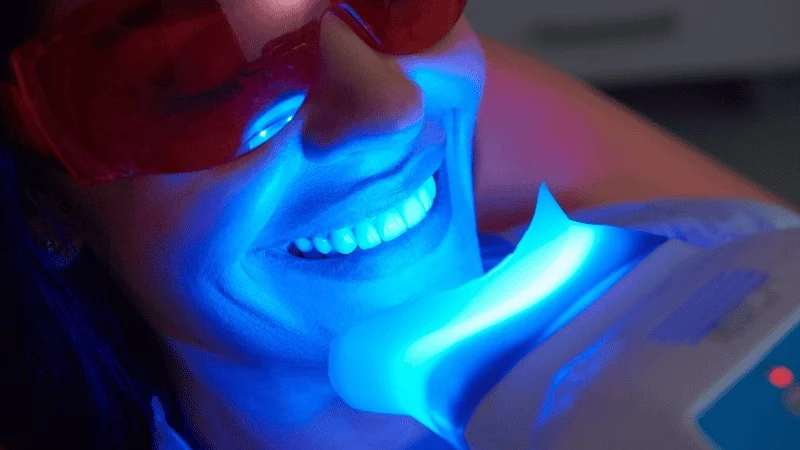
Teeth whitening needs careful coordination with other cosmetic work to avoid mismatched shades. Natural teeth continue to stain from coffee, tea, and food, while veneers and crowns maintain their original color.
A smile makeover works best when you plan your whitening before getting permanent restorations. This lets your dentist match crowns or veneers to your newly whitened shade.
If you whiten after getting cosmetic work, your natural teeth may become lighter than your restorations.
Touch-up whitening treatments every 12-18 months help maintain color consistency. Your dentist can recommend professional or at-home options that won’t damage your existing cosmetic work.
Patient-Dentist Communication
Patient collaboration makes the difference between a natural smile and one that looks fake. You need to share your concerns, expectations, and lifestyle habits openly with your dental team.
Tell your dentist if you grind your teeth, play contact sports, or have habits that affect your smile. These details help them choose materials and designs that last longer and look more natural.
Ask questions during consultations about color choices, tooth proportions, and how your smile will look when you talk or laugh. Your dentist should welcome your input and make adjustments based on your feedback.
Bring reference photos of smiles you like, but discuss realistic outcomes for your facial features. Good patient collaboration means working together to achieve results that enhance your natural appearance rather than creating an obvious cosmetic look.
Frequently Asked Questions
Most people considering cosmetic dentistry have the same worries about ending up with teeth that look obviously fake. Understanding what causes unnatural results helps you make better decisions and communicate your concerns to your dentist.
What are the most common signs that a cosmetic smile looks unnatural?
The biggest giveaway is teeth that are too white for your age or complexion. When your smile is brighter than the whites of your eyes, it crosses into unnatural territory.
Uniformity is another red flag. Natural teeth have slight variations in color, texture, and even positioning.
Overly thick or bulky veneers push your lips forward and can make your upper lip look strained. You might also notice dark lines where the veneer meets your gumline, which signals poor margin placement.
Flat, opaque teeth that don’t let light pass through also look artificial. Real teeth have translucency, especially at the biting edges.
How do veneers end up looking too big, too white, or too uniform?
The “too white” problem usually happens when patients request bleach shades like BL1 or BL2 instead of staying within the A1 to A3 range on the Vita guide. These ultra-bright shades rarely look convincing on anyone.
Veneers look too big when your dentist doesn’t properly prepare your natural teeth to accommodate them. This creates an over-contoured result that resembles dentures more than natural teeth.
The uniform look comes from mass-produced veneers made from standardized molds. A skilled ceramist builds veneers layer by layer, adding surface texture and color variation that makes each tooth unique.
What tooth shape and size details make a smile look more natural?
Your two front teeth should be slightly dominant but not dramatically larger than the teeth beside them. The golden proportion serves as a starting point, but someone with a broad face needs different proportions than someone with delicate features.
Natural teeth have subtle imperfections. One incisor might sit slightly warmer in tone than its neighbor.
The edges of your teeth shouldn’t form a perfectly straight line. They should follow the arc of your lower lip with gentle variation. Surface texture matters too, micro-ridges catch light naturally, while a high-gloss finish looks artificial.
How important is matching veneer color to your skin tone and the whites of your eyes?
Your veneer color needs to work with your natural coloring, not against it. A shade that looks great on someone with olive skin might look jarring on someone with fair or deep skin tones.
The whites of your eyes provide a natural benchmark. If your teeth are brighter than this reference point, they’ll draw attention for the wrong reasons.
Age also plays a role in shade selection. A 25-year-old and a 55-year-old shouldn’t have the same tooth shade because natural enamel changes over time. Choosing a shade that will still look appropriate in 10 to 20 years helps your results age gracefully.
What is the 3-3-3 rule in dentistry, and how does it affect smile design?
The 3-3-3 rule helps dentists create balanced smile proportions. It states that your upper front teeth should show about 3mm of tooth structure above your lower lip when you smile naturally.
Your gums should show no more than 3mm above your upper front teeth. Showing more creates what’s called a “gummy smile.”
The width of your smile should extend about 3 teeth back on each side when you smile naturally. This creates a full, balanced appearance without looking forced. When dentists ignore facial proportions, they end up creating smiles that don’t harmonize with your other features.
How can gumline shape and tooth length make a cosmetic smile look “fake”?
Your gumline should follow a smooth, symmetrical curve across all your front teeth. When the margins are uneven or show dark lines, it signals poor craftsmanship.
Swollen or inflamed gums around new veneers suggest an overcontoured fit. Left unaddressed, this can lead to gum recession over time.
Tooth length needs to match your facial proportions. Teeth that are too long can make you look older, while teeth that are too short look stubby and childlike.
The ratio between tooth length and width affects how natural your smile appears, teeth that are too square or too rectangular both look artificial in different ways.