

A smile makeover isn’t just one treatment. It’s a custom plan that brings together different dental procedures to fix the specific issues with your teeth and gums.
You might need teeth whitening, veneers, crowns, or alignment work depending on what you want to change about your smile.
A comprehensive smile makeover combines cosmetic dental treatments in a specific order to create lasting results while keeping your teeth and gums healthy.
The process starts with fixing any dental problems first, then moves to cosmetic dentistry procedures that improve how your smile looks.
Understanding what’s included helps you know what to expect and how long the whole process will take.
Your personalized treatment plan determines your smile makeover cost breakdown based on your goals, current oral health, and the treatments you need.
Some people only need whitening and minor adjustments, while others benefit from a full transformation that includes multiple cosmetic dental treatments.
This guide walks you through each phase so you can make informed choices about your smile.
Key Takeaways
- A smile makeover combines multiple dental procedures tailored to your specific needs and goals
- Healthy teeth and gums must be addressed before any cosmetic work begins
- The complete process can take weeks to months depending on which treatments you need
Table of Content
- Understanding Smile Makeovers
- Initial Consultation and Custom Smile Design
- Establishing Oral Health Foundations
- Sequencing Cosmetic Procedures
- Treatment Timeline, Costs, and Aftercare
- Frequently Asked Questions
Understanding Smile Makeovers
A smile makeover combines multiple dental treatments to improve how your teeth look while keeping your mouth healthy.
The right mix of procedures depends on your specific concerns, from discoloration to gaps to missing teeth.
What Is a Smile Makeover?
A smile makeover is a personalized plan that uses different cosmetic dentistry procedures to transform your smile. Unlike getting a single treatment like whitening, a makeover addresses multiple issues at once.
Your dentist creates a custom plan based on what bothers you about your smile. Some people need just two or three treatments. Others need more work to get the results they want.
The process focuses on both appearance and function. Your teeth need to look good and work properly when you bite and chew. Most makeovers take three to six months from start to finish.
Who Is an Ideal Candidate?
You’re a good candidate if you have multiple concerns about your smile and your oral health is generally stable. The best results come when your gums are healthy and you don’t have active tooth decay.
People who benefit most from smile makeovers often have several issues like stained teeth, chips, gaps, or crooked teeth. You should have realistic goals about what cosmetic treatments can do.
Good candidates are committed to maintaining their results. This means brushing twice daily, flossing, and visiting your dentist regularly.
If you grind your teeth at night, you’ll need to wear a guard to protect your investment.
Your overall dental health matters more than age. Both younger and older adults can get excellent results from a makeover.
Common Smile Concerns Addressed
Smile makeovers fix a wide range of problems that affect how your teeth look and feel. Here are the most common issues:
Color and staining problems:
- Yellow or stained teeth from coffee, wine, or aging
- Discolored teeth that don’t respond to regular whitening
- Uneven coloring across different teeth
Shape and size issues:
- Chipped or cracked teeth
- Worn down teeth from grinding
- Uneven tooth shape or length
- A gummy smile that shows too much gum tissue
Alignment and spacing concerns:
- Gaps between teeth
- Misaligned teeth or crowding
- Missing teeth that create gaps
- Bite problems that affect appearance
Each of these concerns needs specific cosmetic treatments. Your dentist will recommend the right combination based on what you want to change.
Initial Consultation and Custom Smile Design
Your dentist will meet with you to discuss your smile goals and examine your teeth, gums, and bite. They’ll use digital tools to show you what your new smile could look like before any work begins.
Smile Makeover Consultation Process
The first appointment is mainly for planning and discussion rather than treatment. You’ll talk with your cosmetic dentist about what bothers you most about your smile.
This might include stained teeth, chips, gaps, crooked teeth, or missing teeth.
Your dentist will listen to your concerns and ask questions about what you want to achieve. Some people want a dramatic change, while others prefer subtle improvements.
Being clear about your expectations helps your dentist create a personalized treatment plan that matches your vision.
This meeting also gives you a chance to ask questions about the process, timeline, and costs. Most consultations take 30 to 60 minutes.
Assessing Dental and Medical History
Your cosmetic dentist needs to know about your overall health and past dental work. They’ll ask about medications you take, allergies, and any medical conditions that could affect treatment.
This includes habits like teeth grinding or clenching.
You’ll receive a full examination of your teeth, gums, bite, and jaw. Your dentist will look for cavities, gum disease, cracks, or worn teeth. These problems must be fixed before any cosmetic work starts.
The dentist will also take digital scans, X-rays, and close-up photos of your teeth. These images help create an accurate picture of your current dental health and form the foundation for your smile design.
Digital Smile Design and Mock-Ups
Many dental offices use digital smile design tools to show you how your teeth may look after treatment. Your dentist combines your scans and photos to create a visual preview of changes in shape, size, and color.
You might also get a physical mock-up, which is a temporary preview you can actually see and touch in your mouth. This lets you approve the look and feel before any permanent work happens.
The mock-up stage is your opportunity to request changes. If something doesn’t feel right, tell your dentist exactly what you’d like adjusted.
Once you’re happy with the design, your dentist will create a detailed treatment plan showing each procedure, the order they’ll happen, how long everything will take, and what it will cost.
Establishing Oral Health Foundations
Before cosmetic treatments begin, your dentist needs to ensure your mouth is healthy enough to support long-lasting results.
This means checking for gum disease, tooth decay, and structural problems that could compromise your makeover.
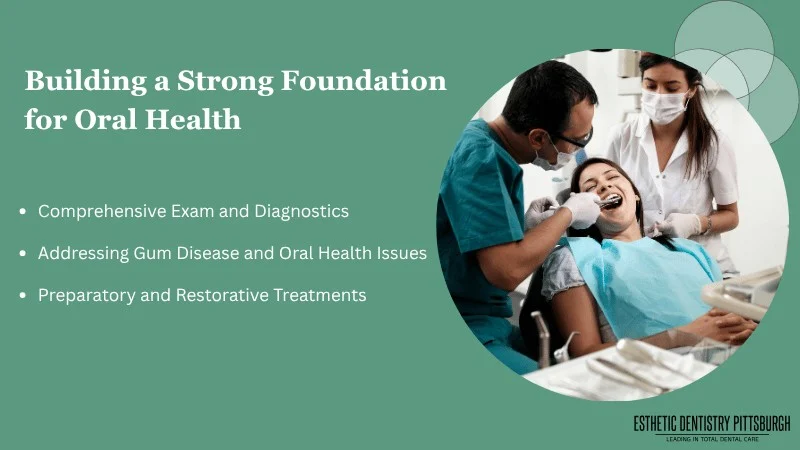
Comprehensive Exam and Diagnostics
Your smile makeover starts with a thorough examination of your dental health. Your dentist will check each tooth for decay, cracks, and worn enamel that might need repair before cosmetic work begins.
X-rays help reveal hidden problems beneath the surface. These images show bone levels around your teeth, infections near tooth roots, and the condition of existing fillings or crowns.
A gum assessment measures pocket depths and checks for bleeding or inflammation. Healthy gums are essential because swollen or unstable gum tissue can affect how veneers and crowns fit at the gumline.
Your bite pattern gets evaluated too. Your dentist watches how your upper and lower teeth come together to spot grinding wear, uneven contact points, or jaw tension that could damage future restorations.
Addressing Gum Disease and Oral Health Issues
If your exam reveals gum disease, treatment must happen before cosmetic procedures. Inflamed gums bleed easily and can pull away from teeth, which makes it hard to place accurate margins on veneers or crowns.
Gum treatment typically involves professional cleanings to remove plaque and tartar buildup below the gumline. Deep cleanings help gum tissue heal and reattach to teeth, creating stable conditions for restorations.
Untreated cavities also need filling before your makeover continues. Decay spreads quickly and can cause pain or infection that delays your entire treatment plan.
Preparatory and Restorative Treatments
Some smiles need significant repair work before cosmetic enhancement makes sense. Missing teeth create gaps that shift surrounding teeth and change your bite over time.
Dental implants replace missing teeth with a titanium post placed in your jawbone. This option preserves bone structure and provides a stable foundation for crowns or bridges as part of your makeover.
Worn or heavily filled teeth may need crowns to restore their shape and strength. These restorative treatments protect damaged teeth while improving appearance at the same time.
Full-mouth reconstruction becomes necessary when multiple teeth have severe decay, fractures, or bite problems.
This comprehensive approach rebuilds both function and aesthetics before final cosmetic refinements are added.

Sequencing Cosmetic Procedures
The order in which treatments happen affects both the final look and how long results last.
Whitening typically comes before permanent restorations, alignment may need to happen before veneers, and gum work often wraps up the finishing touches.

Professional Teeth Whitening Options
Teeth whitening usually happens first in your treatment plan because porcelain veneers and dental crowns won’t change color once they’re placed.
Your dentist needs to match these permanent restorations to your whitened shade, not the other way around.
Professional whitening gives you better control over results than store-bought products. In-office whitening can lighten teeth several shades in one visit, while take-home trays from your dentist let you whiten gradually over a few weeks.
Your dentist will check for sensitivity issues before starting. If you have existing fillings or crowns on front teeth, those will stay their current color even after professional teeth whitening.
This might mean replacing older restorations later so everything matches your new shade.
Aligners, Braces, and Orthodontic Treatments
Orthodontic treatment often comes before veneers or other cosmetic work because straightening teeth first can reduce how much tooth structure needs to be removed.
Clear aligners like Invisalign work well for mild to moderate spacing or rotation issues. Traditional braces handle more complex bite problems.
Moving teeth into better positions before adding veneers means your dentist can use more conservative preparations.
When teeth overlap or sit at odd angles, covering them without orthodontics requires removing more enamel to create a straight-looking result.
The timeline varies. Clear aligners might take 6 to 18 months depending on your needs. Braces can take 12 to 24 months or longer for complex cases.
Your dentist will wait until your teeth are stable in their new positions before placing permanent restorations.
Veneers, Crowns, and Dental Bonding
Once your teeth are the right shade and position, your dentist can focus on shape and surface appearance. Veneers cover the front surface of teeth to fix chips, gaps, or worn edges.
Dental crowns wrap around the entire tooth when more coverage is needed for strength.
Composite bonding uses tooth-colored resin applied directly to your teeth. It’s faster and more affordable than veneers but doesn’t last as long.
Your dentist might use bonding for small fixes and save veneers for teeth that show most when you smile.
Planning which teeth get which treatment depends on your bite, how much tooth structure remains, and your budget. Same-day crowns make sense for teeth with large fillings or root canals.
Veneers work better when you mainly want to improve color or minor shape issues on otherwise healthy teeth.
Gum Contouring and Final Adjustments
Gum contouring reshapes your gum line so teeth look more balanced and even. This procedure usually happens after orthodontics but can come before or after veneers depending on your situation.
If you show a lot of gum when you smile, reshaping the tissue can make teeth appear longer.
Your dentist uses a laser or surgical tools to remove excess gum tissue and reshape the edges. Healing takes about a week, though you’ll see the new gum line right away.
Sometimes minor gum work happens at the end to perfect margins where veneers or crowns meet your tissue.
Final adjustments include checking your bite, polishing restorations, and making sure everything feels comfortable.
Your dentist will have you bite down on special paper to find any high spots that need smoothing.
These last steps ensure your smile looks natural and functions properly for everyday eating and speaking.
Treatment Timeline, Costs, and Aftercare
The time needed for your smile makeover and the total cost will depend on which procedures you need. Understanding the financial commitment and how to care for your results will help you plan effectively.
Typical Treatment Timeline
Simple smile makeovers take 2 to 6 months when you only need cleaning, whitening, and minor adjustments. These shorter treatments work well if your teeth are already in good condition.
Moderate cases that combine Invisalign with crowns or veneers usually take 6 to 12 months. You’ll need time for your teeth to shift into position before your dentist adds the cosmetic restorations.
Complex makeovers that replace missing teeth with implants can take 12 to 18 months or longer. The implant process requires healing time between appointments as the metal posts fuse with your jawbone.
Your dentist may give you temporaries to wear while your permanent restorations are being made. These protect your prepared teeth and let you see a preview of your new smile.
Smile Makeover Cost and Payment Plans
The total cost depends on which procedures are included and how many teeth need treatment. Basic makeovers with whitening and bonding may cost a few thousand dollars.
Full makeovers with veneers, crowns, or implants typically range from $15,000 to $40,000 or more. Each veneer costs between $1,000 and $2,500, while dental implants run $3,000 to $6,000 per tooth.
Most dental offices offer financing options that let you split the cost into monthly installments. Some practices work with financing companies that provide low-interest or interest-free options for qualified patients.
Dental insurance usually doesn’t cover cosmetic procedures, but it may pay for parts of your treatment that improve function. Ask your provider about coverage for crowns, implants, or orthodontics.
Aftercare, Maintenance, and Longevity
You’ll need to brush twice daily and floss regularly to protect your investment. Good oral hygiene prevents staining, decay, and gum disease that can damage your new smile.
Schedule dental cleanings every six months so your dentist can check your restorations. Professional cleanings remove buildup that regular brushing misses.
If you grind your teeth at night, wear a night guard to protect your veneers or crowns from cracking. Teeth grinding puts excessive pressure on dental work and can cause premature failure.
Your dentist will give you retainers after orthodontic treatment to keep your teeth from shifting back. Wear them as directed to maintain your alignment.
Veneers typically last 10 to 15 years with proper care, while crowns can last 15 to 20 years. Dental implants often last a lifetime if you maintain good oral health.
Frequently Asked Questions
People considering a smile makeover often want to know which specific treatments they’ll need, how dentists customize plans based on individual concerns, and what the actual timeline and cost look like from consultation to completion.
What treatments are usually part of a smile makeover?
A smile makeover can include teeth whitening, porcelain veneers, dental bonding, crowns, clear aligners, dental implants, and gum contouring. The specific treatments you need depend on your unique dental concerns and goals.
Common smile makeover treatments combine both cosmetic and restorative procedures. For example, you might get whitening to brighten your teeth, veneers to reshape them, and gum contouring to create better symmetry.
Not every smile makeover includes the same procedures. Your dentist will recommend only the treatments that address your specific issues.
How do dentists create a personalized plan for improving someone’s smile?
Dentists create your personalized plan by analyzing your facial features, teeth alignment, gum health, and bite function alongside your aesthetic goals.
They use digital imaging and smile design software to show you what your results will look like before treatment begins.
Modern smile makeover planning considers how your teeth relate to your lips, face shape, and natural expressions. This ensures your new smile looks balanced and natural rather than artificial.
Your dentist will also evaluate any underlying dental health issues that need to be addressed first. This foundation work protects your investment and helps cosmetic treatments last longer.
What happens during the first consultation for a smile makeover?
During your first consultation, your dentist examines your teeth and gums, takes digital photographs and scans, and discusses what you want to change about your smile.
They’ll assess your oral health to identify any issues that need treatment before cosmetic work begins.
You’ll see a digital preview of your potential results using advanced imaging technology. This lets you provide feedback and make adjustments to the plan before any actual treatment starts.
Your dentist will also explain which treatments are recommended, the expected timeline, and estimated costs. This consultation focuses on understanding your needs and creating clarity about what’s possible.
How long does the full treatment process typically take from start to finish?
The timeline depends on which treatments you need and whether any preliminary dental work is required. Simple procedures like whitening and bonding can be completed in one or two visits over several weeks.
More comprehensive makeovers involving veneers, orthodontics, or implants typically take several months to complete. Each treatment needs to be performed in a specific sequence to achieve the best results.
The duration of your smile makeover also depends on healing time between procedures and how quickly dental lab work is completed. Your dentist will give you a personalized timeline during your consultation.
What cosmetic and dental issues can a smile makeover fix (like stains, chips, gaps, or crooked teeth)?
A smile makeover can fix discolored or stained teeth, chips and cracks, gaps between teeth, crooked or misaligned teeth, worn or short teeth, uneven gum lines, and missing teeth.
It can also address bite problems that affect both function and appearance.
Multiple concerns can often be corrected at the same time through a coordinated treatment plan. For example, you might get whitening for stains, veneers for chips and gaps, and minor gum reshaping for symmetry.
The key is addressing both aesthetic concerns and underlying dental health issues. This comprehensive approach ensures your results look natural and last for many years.
How much does a smile makeover usually cost, and what factors affect the price?
Smile makeover costs vary widely based on which treatments you need, how many teeth require work, and the materials used.
A basic makeover might cost a few thousand dollars, while comprehensive transformations can reach tens of thousands.
Factors that affect price include the number and type of procedures, the quality of materials like porcelain for veneers or crowns, your dentist’s experience and location, and whether you need preliminary dental work.
Lab fees for custom restorations also contribute to the total cost.
Many dental offices offer payment plans or financing options to make treatment more manageable. Your dentist will provide a detailed cost breakdown during your consultation so you know exactly what to expect.