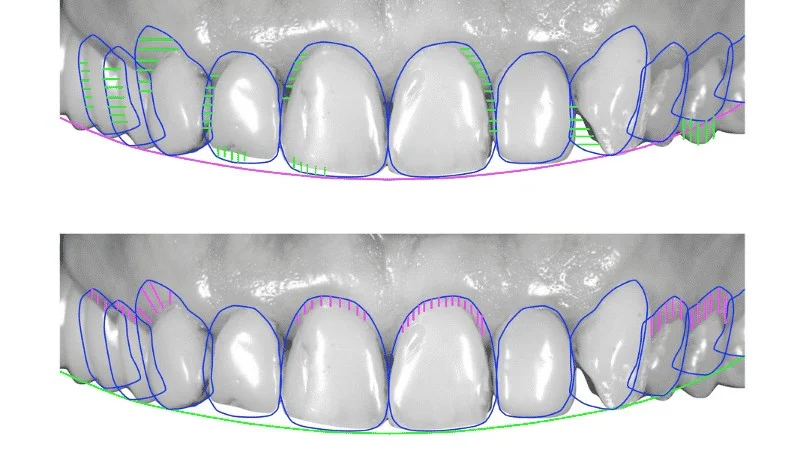


Do you ever look at a photo and notice more gum than teeth in your smile? You are not alone, and you do not need surgery to change it.
Small doses of botulinum toxin can relax the muscles that pull your upper lip too high, so less gum shows when you smile and both sides move more evenly.
Excess gum display, also called a gummy smile, affects up to 14% of adults and often comes from an overactive lip muscle.
The treatment takes just a few minutes and usually calls for 2 to 8 units of botox placed near the muscle that lifts the lip.
Results are not permanent, which some people see as a plus, since effects normally last three to four months.
Of course, botox is not right for every case. Below, you will learn how to tell what is causing your gum show, how injectors plan around the muscles near your mouth for natural-looking results, what recovery feels like, and when a dental or surgical option makes more sense for your smile makeover.
Key Takeaways
- Relaxing overactive lip muscles with a few units of botulinum toxin can reduce gum show and even out an uneven smile.
- Your results depend on the cause of the gum display, so a careful exam and smart injection placement matter.
- The effect wears off in a few months, and cases caused by tooth or jaw structure may need dental or surgical care instead.
How Botox Can Refine a Gummy or Uneven Smile
Small doses of botulinum toxin type A can relax the muscles that pull your upper lip too high or tug one corner of your mouth farther than the other.
The results are temporary, and they only work when muscle activity (not bone or gum tissue) is causing the problem.
What Botox Changes During Smiling
Your smile is powered by several small muscles that lift, pull, and stretch your lips. One of the main players is the levator labii superioris alaeque nasi (LLSAN), a thin muscle running from beside your nose down to your upper lip.
When a tiny amount of neuromodulator is placed into that muscle, it lifts with less force. Your lip settles a few millimeters lower during a full smile, which covers more gum.
You keep normal movement in the rest of your face. Most people notice softening in 3 to 5 days, with the full effect around two weeks.
Results typically fade after three to four months, since the muscle slowly regains its usual strength.
When Botox Helps a Gummy Smile
Excessive gingival display shows up in up to 14% of adults and can come from lip hyperactivity, teeth that have over-erupted, or excess vertical growth of the upper jaw.
Botox works best for the first cause. A hyperactive upper lip that snaps up sharply when you smile responds well, because the treatment simply limits how far that muscle can pull.
Typical dosing is small. Injectors often use 2 to 8 units total, split between both sides, and the cost usually falls in the $100 to $300 range.
Good candidates usually show 3 mm or more of gum above the front teeth, with healthy gum tissue and normal tooth proportions. Careful patient selection matters more than the injection itself here.
Using Neuromodulators for a Crooked Smile
A crooked smile often comes down to one side working harder than the other. Sometimes it’s a stronger lip elevator; other times a depressor muscle pulls one corner down.
Your injector’s job is to find the overactive muscle, not to add more strength to the weaker side. That means studying the anatomy behind the asymmetry before placing a single unit.
Common targets include:
| Muscle | What it does | Why it’s treated |
| LLSAN | Lifts the lip near the nose | Softens a lopsided lift |
| Levator labii superioris | Raises the upper lip | Balances uneven gum show on one side |
| Depressor anguli oris (DAO) | Pulls the mouth corner down | Releases a downturned corner |
| Mentalis | Tightens the chin | Reduces chin pull that flattens a smile |
Doses are often uneven by design; maybe 2 units on one side and 1 on the other.
What Botox Cannot Correct
Botox relaxes muscles. It does not move teeth, reshape bone, or remove extra gum tissue.
If your gum display has another cause, your dentist can recommend other gummy smile treatment options based on your teeth, gums, and jaw structure.
So it won’t fix these causes:
- Vertical maxillary excess (an upper jaw that grew too tall); usually needs orthognathic surgery
- Altered passive eruption, where gum covers too much of the tooth; treated with a gingivectomy or crown lengthening
- Short or worn teeth; handled with veneers or bonding
- Over-erupted front teeth; often needs orthodontics
Trying Botox alone in these cases gives little visible change. Some clinics pair injections with braces or aligners when more than one factor is at play.
Also keep in mind that too much product, or placement that’s slightly off, can leave you with a stiff upper lip, trouble whistling, or a temporarily flat smile.
Those effects wear off as the product fades, but they’re a good reason to start conservatively.
Finding the Cause of Excess Gum Display
Before anyone picks up a syringe, the real question is why your gums show when you smile.
Some gummy smiles come from busy lip muscles, others from tooth size, gum position, or the way your upper jaw sits; and each one responds differently to treatment.

Muscle-Driven Lip Elevation
Your upper lip is lifted by a small group of muscles, including the levator labii superioris and the levator labii superioris alaeque nasi.
When those lip elevator muscles pull harder or higher than average, the lip rides up past the gum line.
Researchers point to hyperfunction of the upper lip muscles as the most commonly reported cause of excess gingival display.
A short upper lip can add to the effect, since there is simply less tissue to cover the gums at full smile.
This is the group that tends to do best with neuromodulators. A hyperactive upper lip is the cause most responsive to Botox, and lip mobility often runs in families.
Gum and Tooth Proportions
Sometimes the muscles behave normally and the issue is the teeth themselves.
With altered passive eruption, the gum tissue never finishes moving up the tooth during development. Your teeth look short and square, and extra gum tissue stays visible even in a relaxed smile.
Dentoalveolar extrusion is another version, where front teeth drift down further than they should.
A quick way to think about it:
| What you see | Likely factor |
| Short, boxy teeth with thick gums | Altered passive eruption |
| Normal tooth length, high lip lift | Muscle activity |
| Long front teeth that hang lower | Dentoalveolar extrusion |
Botox will not lengthen a tooth. These cases usually call for cosmetic dentistry options like gum contouring or crown lengthening.
Jaw Position and Skeletal Factors
Vertical maxillary excess (VME) means the upper jaw has grown longer than average from top to bottom.
That extra height pushes the whole tooth-and-gum unit down, so gums show no matter how your lip moves. You may also notice a longer mid-face or lips that do not meet comfortably at rest.
Mild VME sometimes improves with injections or a lip repositioning procedure.
More significant cases are usually handled with lip repositioning surgery, sometimes combined with Botox, or with orthodontics and jaw surgery guided by an orthodontist and oral surgeon.
Facial volume loss with age can shift things too, changing how much support your mid-face gives the lip.
Why a Full Smile Assessment Matters
Excessive gingival display shows up in as many as 14% of adults, and more than one cause can be present at the same time.
A good assessment looks at several things:
- How many millimeters of gum show at a full smile
- Your lip length at rest and how far it travels
- Tooth height, shape, and gum line position
- Mid-face anatomy and upper jaw height
- Which facial muscles are doing the most work
What counts as “too much” also depends on facial proportions, tooth shape, lip movement, and your own preference.
Careful patient selection is what separates a natural result from a flat or uneven one, which is why experienced injectors stress treatment indications and anatomy before dosing.
Muscles and Treatment Planning Around the Mouth
The muscles around your mouth are small, layered, and constantly working together, so a smile treatment depends on picking the right target and the right dose.
Small shifts in placement can change whether you get a softer gum display or a smile that feels stiff.
Upper-Lip Elevators and Gummy Smile Treatment
Your upper lip is lifted by a group of muscles working as a team. The main players are the levator labii superioris, the levator labii superioris alaeque nasi (LLSAN), and the zygomaticus minor.
When these muscles pull harder than average, more gum tissue shows above your teeth. That is why the LLSAN is the primary target for most gummy smile injections.
Studies on treating gummy smiles with botulinum toxin type A describe injecting the LLSAN and levator labii superioris to reduce that lift.
One thing to know: this works when muscle activity is the cause. If your gum display comes from extra gum tissue or your jaw structure, Botox will not be the fix and you’ll need dental or surgical options instead.
The Yonsei Point and Individual Anatomy
The Yonsei point is a well-known injection landmark where the LLSAN, levator labii superioris, and zygomaticus minor come close together.
It sits roughly in the middle of a triangle formed by the nostril base, the outer edge of the nose, and the nasolabial fold.
Injecting there lets a single small dose per side soften all three lifters at once.
Still, no two faces are identical. Your muscle strength, lip length, and how high your smile pulls all change the plan, which is why careful patient selection matters for a gummy smile fix.
A good injector watches you smile, talk, and laugh before marking anything.
Balancing Mouth Corners Without Weakening the Smile
Uneven smiles often come from a stronger pull on one side by the zygomaticus major, risorius, or depressor anguli oris (DAO).
For downturned corners, treating the DAO muscle lets the lip elevators win the tug-of-war, so the corners sit a little higher. Understanding the anatomy behind a crooked smile is what keeps the correction subtle.
Lower-face plans sometimes pair this with masseter muscle slimming for jaw contouring, and lower-face work is often grouped together in one treatment plan.
Why Conservative Dosing Protects Expression
Doses around the mouth are tiny compared to the forehead. Many gummy smile treatments use only about 2 units per side, and lip flip work on the orbicularis oris uses even less.
Too much product, or placement that drifts, can lead to an uneven smile, trouble with straws, or a flat look when you laugh.
Because the risk of side effects rises with volume, starting low and reviewing in two weeks is the safer path.
What to Expect From Treatment and Recovery
A gummy smile appointment usually takes less than 20 minutes, with just a few small injections above your upper lip. Results show up within a few days, peak around two weeks, and fade gradually over a few months.
Consultation and Candidacy
Your first visit starts with a conversation and a simple test: your provider asks you to smile naturally and watches how far your upper lip travels.
This matters because Botox works best when a hyperactive lip muscle is the cause. The main target is the levator labii superioris alaeque nasi (LLSAN), a muscle that pulls the lip up too far.
You are likely a good fit if you have a mild to moderate gummy smile showing roughly 2–4 mm of gum. If the cause is a short upper lip, excess gum tissue, or jaw position, other treatment options may suit you better.
Tell your provider about pregnancy, breastfeeding, neuromuscular conditions, or past reactions to botulinum toxin. Also mention blood thinners, fish oil, or aspirin, since those raise your chance of bruising.
Appointment Timeline and Onset of Results
The injection part is quick. Most providers place 2–4 tiny injections near the base of the nose, using only a few units per side because this area responds strongly to small doses.
Here is a rough timeline:
| When | What happens |
| Day of visit | 10–20 minutes total, including numbing cream if you want it |
| Days 2–4 | Lip starts to move less; gum display begins to soften |
| Days 10–14 | Full effect, and the best time to judge results |
| Week 2 | Touch-up visit if one side lifts more than the other |
You can go back to work or errands right away. Most people notice mild redness or small bumps at the injection points that settle within an hour or two.
How Long Results Last
Plan on three to four months for most people. Some see effects fade closer to 10 weeks, especially with strong lip muscles or a fast metabolism.
Repeat treatments often last a bit longer, since the muscle gets used to working less. Many patients settle into a schedule of three visits per year.
Patient satisfaction is high when expectations are clear from the start. The goal is a smaller gum show and natural-looking results, not a frozen or flat smile.
Cost usually runs $100–$300 per session, depending on units used and where you live.
Aftercare and Follow-Up
Aftercare is simple, and most of it involves what not to do for the first day.
- Stay upright for 4 hours, so the product stays where it was placed
- Skip rubbing, massaging, or facials on the treated area for 24 hours
- Hold off on hard workouts, saunas, and hot yoga for a day
- Avoid alcohol the day of your appointment to reduce bruising
- Use a cold pack briefly if you notice swelling
Light swelling or a small bruise typically clears in 2–5 days. Arnica gel or concealer helps in the meantime.
Book a check-in at the two-week mark with your provider. That visit is when small adjustments to your gummy smile correction are easiest to make, and when you can plan your next Botox treatment date.
Call your provider if you notice a drooping lip, trouble drinking from a straw, or speech changes that do not improve. These effects are uncommon and temporary, but worth reporting.
Risks, Limitations, and Alternative Solutions
Botox can soften a gummy smile or even out lip movement, but it isn’t right for everyone, and it doesn’t fix every cause.
Understanding other cosmetic dentistry treatments along with surgical options can help you find an approach that addresses the actual cause of your gummy smile.

Possible Side Effects and When to Seek Care
Most people tolerate these injections well, but a few issues can show up in the first week or two.
The most common problem is asymmetry, which usually happens when one side gets more product than the other or when muscle anatomy differs slightly between sides.
Too much weakening of the lip elevators can also leave you with a stiff or flattened smile, trouble whistling, or difficulty pronouncing certain sounds.
Other possible reactions include:
- Bruising, swelling, or tenderness at the injection points
- Mild headache
- Redness or, rarely, infection at the needle site
- Allergic reactions, which are uncommon but can cause rash, itching, or trouble breathing
Call your injector if swelling gets worse after a few days, if you notice pus or a fever, or if drooping makes eating and speaking hard. Get emergency help for any breathing or swallowing problems.
Adverse effects and limitations tend to fade as the product wears off.
Who Should Avoid or Delay Treatment
Skip or postpone treatment if any of these apply to you:
| Situation | Why it matters |
| Pregnancy or breastfeeding | Safety hasn’t been established |
| Neuromuscular disorders like myasthenia gravis or ALS | Muscle weakness can be worse and last longer |
| Active skin infection or cold sore near the lip | Injecting through infected tissue risks spread |
| Known allergy to botulinum toxin or albumin | Risk of a reaction |
| Certain antibiotics, such as aminoglycosides | May increase the toxin’s effect |
Also mention any past facial surgery, bleeding disorders, or blood thinners. If you’ve had a full result you didn’t like before, tell your provider so they can lower the dose.
Reviewing risks and safety tips with a qualified injector helps you avoid surprises.
Dental Options for Gum-Related Causes
If excess gum tissue is the real reason your smile looks gummy, relaxing a muscle won’t change much.
Your dentist may instead recommend minimally invasive cosmetic dentistry options based on what is causing the excess gum display.
Gum contouring, also called a gingivectomy, trims and reshapes the gum line so more tooth shows.
When bone sits too high along the roots, crown lengthening removes a small amount of gum and bone together for a lasting result.
Short or worn teeth can also make gums look bigger by comparison. In that case, veneers or bonding may help improve tooth proportions and create a more balanced smile.
Orthodontic treatment helps when teeth have drifted downward or the bite is off.
Braces or clear aligners can move teeth up into better position, and orthodontics is one of the common non-surgical approaches used alongside or instead of injections.
Structural and Surgical Approaches
Botox lasts roughly three to six months, so repeat visits are part of the deal. Surgery is worth discussing if you want a permanent change.
Lip repositioning surgery shortens how far your upper lip can rise by adjusting the tissue inside the lip.
For vertical maxillary excess, where the upper jaw is simply too long, orthognathic surgery repositions the jaw itself. This jaw surgery is the most involved option and usually pairs with braces before and after.
Dermal fillers offer a middle ground. Lip fillers add volume to the upper lip so it covers more gum, and a lip flip uses a tiny amount of toxin to roll the lip outward.
Both support lip enhancement goals without an operation, though a dermal filler result also fades over time.
Frequently Asked Questions
Botox for a gummy smile works by relaxing the small muscles that lift your upper lip, and most people see results for about three to four months.
Below you’ll find answers about cost, injection spots, side effects, and whether the same approach can even out a lopsided smile.
Can Botox help reduce the appearance of a gummy smile?
Yes, in many cases. Botox works best when strong upper lip muscles are the main reason for excess gum display. If excess gum tissue or jaw structure is the cause, a dental or surgical treatment may be more appropriate.
How long do Botox results for a gummy smile usually last?
You can expect results to last about three to four months. Most people start noticing a change within three to seven days, with the full effect around two weeks.
After that, the muscle slowly regains its normal strength. Many people schedule touch-ups two or three times a year to keep the look consistent.
How much does Botox for a gummy smile typically cost?
The cost depends on the number of units needed and your individual treatment plan. Your provider can give you a personalized estimate after evaluating your smile and determining the appropriate dosage.
Where are Botox injections placed to treat a gummy smile?
The main target is the levator labii superioris alaeque nasi, a thin muscle that runs along the side of your nose and pulls your lip upward. Small amounts are placed on each side, near the base of the nose in the crease next to your nostril.
Careful, low dosing matters here. Many injectors begin with roughly two units per side and add more later if needed, since it’s easier to build up than to undo.
What are the possible side effects of Botox for a gummy smile?
Mild swelling, redness, or a small bruise at the injection spot is common and fades within a few days. You might also feel slight tightness in your upper lip for a week or so.
The bigger concern is getting too much product. Overtreatment can leave you with a stiff or strange-looking smile, a longer-looking space between your nose and lip, or trouble making certain expressions.
Some people also find that even a good result feels odd at first, because their smile moves differently than it used to. That feeling usually settles as the effect wears off or as you adjust.
Can Botox help correct an uneven or asymmetrical smile?
Often, yes. If one side of your mouth lifts higher than the other, a small dose on the stronger side can help balance the pull.
Botox can also soften the muscles that tug the corners of your mouth downward, which is part of a broader set of smile enhancement treatments.
Keep in mind that no face is perfectly symmetrical, so the goal is a more even look rather than an exact match.