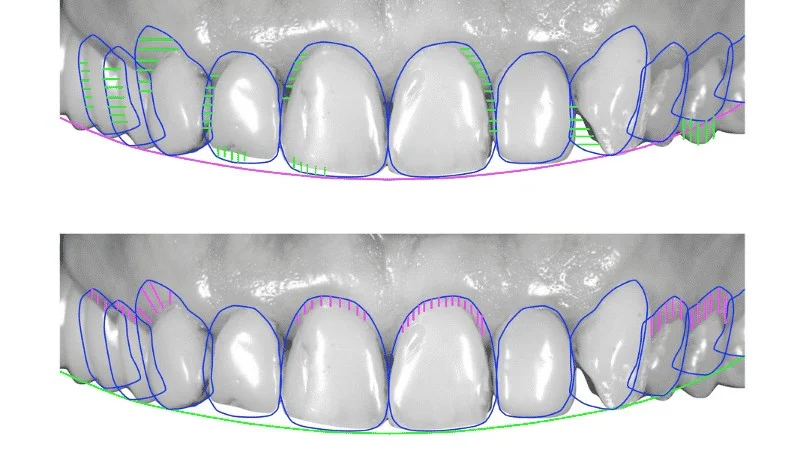


If you feel like your smile shows too much gum, you are not alone. A gummy smile is common, and cosmetic dentistry offers more than one way to treat it. The key is knowing what causes the extra gum display in your case.
If excess gum tissue causes your gummy smile, gum contouring may fix it, but if tooth position or bite issues are the cause, orthodontics often works better.
Gum contouring reshapes the gumline to show more of your teeth. Orthodontic treatment, such as braces or clear aligners, moves your teeth into better positions to reduce gum exposure.
When you understand the gummy smile treatment options, you can choose one that fits your goals, comfort level, and long-term dental health. The right option depends on your gums, teeth, and jaw structure.
Key Takeaways
- A gummy smile can result from gum tissue, tooth position, or jaw structure.
- Gum contouring reshapes excess gum tissue to reveal more tooth surface.
- Orthodontics moves teeth and corrects bite issues to reduce gum display.
Understanding Gummy Smiles
A gummy smile happens for clear physical reasons, not by chance. The amount of gum you show depends on your teeth, gums, lips, and jaw working together during a smile.
What Is a Gummy Smile?
You have a gummy smile when too much gum tissue shows above your top teeth as you smile. Dentists call this excessive gingival display.
Most people show about 1–4 millimeters of gum when they smile naturally. If you show more than that, others may notice a wide band of pink tissue above your teeth. A high lip line often makes this more visible.
This is not always a medical problem. Many people simply feel their smile looks uneven.
The key issue is the tooth-to-gum ratio. When your teeth look short compared to the amount of gum exposure, your smile may seem less balanced.
The goal is not to remove all gum show, but to create a balanced smile where teeth and gums appear in proper proportion.
Causes of Excessive Gingival Display
Several factors can cause excessive gingival display. In many cases, more than one factor plays a role.
Common causes include:
- Vertical maxillary excess – your upper jaw grows too long downward, which increases gum exposure.
- Hyperactive upper lip – your lip lifts higher than normal due to strong muscle activity.
- High lip line – your lip naturally rests higher when you smile.
- Short or worn teeth that make gums look more prominent.
- Excess gum tissue covering part of your tooth crowns.
Your lip movement also matters. If your upper lip rises more than 6–8 mm when you smile, your gums will show more clearly.
The exact cause determines the right treatment. Gum contouring helps when gum tissue is the issue. Orthodontics or surgery may work better when jaw position or tooth alignment causes the problem.
Impact on Smile Balance and Oral Health

A gummy smile mainly affects appearance, but it can also relate to oral health.
When excess gum tissue covers your teeth, it may create deeper pockets around them. These areas can trap plaque and make brushing harder. Over time, this can increase your risk of gum inflammation.
From a cosmetic view, gum exposure changes how your smile looks in photos and daily life. Too much visible gum can make teeth appear small, even when they are normal size. This shifts the tooth-to-gum ratio and affects smile balance.
If the cause involves jaw growth or tooth position, it can also affect your bite. That may lead to uneven wear on teeth over time.
Understanding what causes your gummy smile helps you choose the safest and most effective way to correct it.
Book your consultation today and discover the best gummy smile treatment options for your smile.
Gum Contouring and Related Procedures
You can fix a gummy smile by reshaping your gums, removing extra tissue, or adjusting the bone around your teeth. Each option targets excess gum tissue and improves how much tooth shows when you smile.
Gum Contouring Explained
Gum contouring, also called gum reshaping or a gum lift, changes the shape of your gum line. A cosmetic dentist or periodontist removes excess gum tissue so your teeth look longer and more even.
Providers often recommend this treatment if you have excessive gingival display, which means too much gum shows when you smile. It can also help if your gum line looks uneven or makes your teeth appear short.
During the procedure, your dentist numbs your gums and carefully trims the extra tissue. In some cases, they also adjust a small amount of bone to keep the gums from growing back.
Best for:
- Gummy smile treatment
- Uneven gum line
- Teeth that look small due to gum exposure
Gingivectomy and Laser Gum Contouring
A gingivectomy removes excess gum tissue to improve your smile or treat gum problems. Dentists often use this method when your gums cover too much of your teeth.
Laser gum contouring uses a dental laser instead of a scalpel. The laser cuts and seals the tissue at the same time, which can reduce bleeding and swelling.
Both methods reshape your gum line. The main difference is the tool your provider uses.
Many cosmetic dentists choose lasers for comfort and precision. A traditional gingivectomy may work better if you need to remove more tissue.
You might choose this if you:
- Have mild to moderate gum exposure
- Want a faster cosmetic fix
- Do not need tooth movement
Crown Lengthening and Gum Lifts
Crown lengthening goes beyond a simple gum lift. Your dentist removes gum tissue and may also reshape the bone around your tooth.
You may need this procedure if your tooth does not have enough visible structure for a dental crown. Dentists also use it to treat a gummy smile when bone plays a role.
Unlike basic gum contouring, crown lengthening often supports restorative care. It helps expose more of your natural tooth so a dental crown can fit securely.
This procedure usually takes longer and may involve a short healing period. A periodontist often performs it when bone adjustment is required.
Key difference:
- Gum contouring: removes soft tissue only
- Crown lengthening: removes soft tissue and sometimes bone
Orthodontic Approaches to Reducing Gum Exposure
Orthodontic treatment can reduce gum show by moving your teeth and jaws into better positions. It works best when tooth position, jaw alignment, or bite issues cause your gummy smile.
How Braces and Invisalign Help
Braces and Invisalign shift your teeth to lower gum exposure when you smile. If your teeth sit too low or your bite pushes your upper teeth down, controlled movement can improve how much gum shows.
Metal or clear braces use steady pressure to guide teeth into place. Clear trays like Invisalign do the same job with removable aligners. Many orthodontists use these tools to reduce visible gum tissue.
Treatment often focuses on:
- Intruding upper front teeth
- Correcting deep bites
- Improving overall jaw alignment
You wear braces or aligners for months or years, depending on how much movement you need. The goal is to create a balanced smile without removing healthy gum tissue.
Clear Aligners and Modern Treatments
Clear aligners offer a less visible way to correct mild to moderate gummy smiles. You wear custom trays that move your teeth in small steps.
Many practices offer Invisalign, metal braces, and clear braces to address gum exposure. Your orthodontist checks your bite, lip movement, and tooth position before planning treatment.
Clear aligners work well if your gummy smile is linked to:
- A high lip line
- Mild vertical tooth overeruption
- Minor bite imbalance
They may not fix severe vertical maxillary excess on their own. In those cases, you may need a combined plan that includes other procedures.
Bite Correction and Jaw Alignment
Some gummy smiles result from skeletal issues, such as vertical maxillary excess. This means your upper jaw grew too long downward, which exposes more gum when you smile.
Braces can prepare your teeth for jaw correction, but they cannot shorten the upper jaw by themselves. Severe cases may require orthognathic surgery to reposition the jaw.
Older methods relied mainly on surgery, but modern care often combines orthodontic treatment with other options.
Your treatment plan may include:
| Issue | Possible Approach |
| Deep bite | Braces or clear aligners |
| Vertical maxillary excess | Orthognathic surgery + braces |
| Uneven gum display | Orthodontics with restorative treatment |
In complex cases, your orthodontist may work with a surgeon or cosmetic dentist as part of a larger smile makeover.
Non-Surgical and Surgical Alternatives
You have options beyond gum contouring and braces when correcting a gummy smile. Some treatments relax the upper lip, while others adjust the lip or gum tissue to reduce how much gum shows when you smile.

Botox Injections for Gummy Smiles
Botox injections offer a quick, non-surgical way to treat a gummy smile caused by a hyperactive upper lip. If your lip lifts too high when you smile, small doses of botulinum toxin can limit that movement.
A dentist injects Botox into muscles such as the levator labii superioris. This muscle raises your upper lip. When it relaxes, your lip does not rise as far, so less gum shows.
Many offices now offer non-surgical options for gummy smiles like Botox because treatment takes only a few minutes. You may see results within a few days.
Results usually last three to four months. You will need repeat treatments to maintain the effect.
Botox works best if your gummy smile comes from a hyperactive lip, not from excess gum tissue or jaw position.
Lip Repositioning Surgery Explained
Lip repositioning surgery provides a longer-term solution if your upper lip lifts too high. This procedure changes how far your lip can move when you smile.
During lip repositioning, a dentist removes a small strip of tissue from inside your upper lip. Then they secure the lip in a slightly lower position. This limits the pull of muscles like the levator labii superioris.
You stay awake during the procedure with local anesthesia. Swelling and mild discomfort are common for about one to two weeks.
Unlike Botox, lip repositioning surgery does not require repeat treatments every few months. It can offer stable results if your concern is muscle-related and not due to excess bone or gum tissue.
This approach focuses on controlling lip movement rather than reshaping your gums.
Other Surgical Interventions
If your gummy smile results from excess gum tissue, your dentist may suggest gum reshaping. Procedures like laser contouring or surgical trimming remove extra tissue and create a balanced gum line.
You can learn more about how gum contouring changes the appearance of your gums. This method works well when your teeth look short because too much gum covers them.
In some cases, jaw position causes the problem. Orthognathic surgery may help if your upper jaw sits too low and shows too much gum.
Each option targets a different cause:
- Hyperactive lip: Botox or lip repositioning
- Excess gum tissue: Gum contouring
- Jaw alignment issues: Jaw surgery
Your dentist or specialist will examine your smile, lip movement, and bite before recommending the right gummy smile correction for you.
Choosing the Right Gummy Smile Treatment
You need a clear diagnosis before you choose between gum contouring and orthodontics. The right plan depends on your teeth, gums, lip movement, and jaw position.
Professional Consultation and Diagnosis
Start with a full exam from a cosmetic dentist, orthodontist, or periodontist. Each specialist looks at a different part of the problem.
A provider will measure how much gum shows when you smile. Many experts consider more than 3–4 millimeters of visible gum to be excessive.
They will check for:
- Excess gum tissue
- Short or worn teeth
- A deep bite or over‑erupted teeth
- A hyperactive upper lip
- Jaw growth issues
Digital scans or X‑rays may help them study tooth position and jaw structure.
If tooth alignment causes the problem, braces or clear aligners may help. If excess gum tissue is the main issue, a periodontist may suggest reshaping the gumline.
A clear diagnosis keeps you from choosing the wrong gummy smile treatment and wasting time or money.
Combining Procedures for Best Results
Sometimes you need more than one procedure to fix the issue. A single treatment may not fully correct your smile.
For example, orthodontics can move teeth into better position. This works well when over‑erupted teeth or a deep bite increase gum display. Many orthodontic offices explain how braces or clear aligners can reposition teeth to improve gum balance.
If thick or uneven gum tissue remains after alignment, a periodontist can perform gum contouring. In cases where the upper jaw grows too far downward, jaw surgery may also be part of treatment.
A combined plan often creates a more balanced smile. Your providers may coordinate care to support both cosmetic goals and long‑term oral health. This approach is common in a full smile makeover.
Maintaining a Healthy and Confident Smile

After treatment, you need to protect your results. Good daily care supports both appearance and oral health.
Brush twice a day with a soft toothbrush. Floss daily to prevent gum inflammation. Swollen gums can make your smile look uneven again.
If you had orthodontic treatment, wear your retainer as directed. Teeth can shift without it.
Schedule regular cleanings with your dentist. They will check your gum levels, bite stability, and overall healing. Healthy gums frame your teeth and help maintain the results of your gummy smile treatments.
When you stay consistent with care, you protect your investment and keep your smile looking natural and confident.
Frequently Asked Questions
A gummy smile can come from excess gum tissue, jaw position, tooth size, or how your upper lip moves. The right treatment depends on the exact cause, the amount of gum showing, and your long-term goals.
What causes a gummy smile, and how can I tell which type I have?
Several things can cause a gummy smile. You may have extra gum tissue covering part of your teeth, small teeth that did not fully erupt, or an upper jaw that sits too low.
Sometimes your upper lip lifts higher than normal when you smile. In other cases, your teeth may look short because of how they developed.
A dentist or orthodontist can measure how much gum shows when you smile. They may take photos, X-rays, or digital scans to see if the issue involves your gums, teeth, or jaw. The cause guides the treatment plan.
Can braces or clear aligners fix a gummy smile, or will I need another treatment too?
Braces or clear aligners can help if your gummy smile relates to tooth position or jaw alignment. They can move teeth and adjust how your bite fits together.
If excess gum tissue causes the problem, you may need gum reshaping in addition to orthodontic care. Some patients combine treatments for the best result.
Your provider will explain whether tooth movement alone will reduce gum show or if another step makes sense.
What’s the difference between laser gum contouring and a traditional gingivectomy?
Laser gum contouring uses a focused light beam to remove extra gum tissue. It can reduce bleeding and may speed up healing.
A traditional gingivectomy uses surgical tools to trim and reshape the gum line. Both methods aim to create a more balanced look between your teeth and gums.
This type of reshaping is also called a gum lift or gum reshaping. Your dentist will choose the method based on your gum health and the amount of tissue involved.
How long do gum contouring results typically last, and is it considered permanent?
In most cases, gum contouring results last a long time. Once excess gum tissue is removed, it usually does not grow back.
Some people may need small touch-ups, but that is not common. Many providers consider the results long-lasting or permanent.
Your long-term results depend on good oral hygiene and regular dental visits.
When is Botox a good option for a gummy smile, and how often does it need to be repeated?
Botox works best if your upper lip lifts too high when you smile. It relaxes the muscles that raise your lip.
This option does not change your gums or teeth. It simply lowers how far your lip moves.
Botox is temporary. Results often last a few months before you need another treatment, which makes it different from surgical options like laser contouring.
What are TADs (temporary anchorage devices), and how do they help reduce a gummy smile?
TADs are small titanium screws placed in the jaw to support tooth movement. Orthodontists use them as stable anchors.
They can help move teeth upward to reduce how much gum shows when you smile. This approach may avoid jaw surgery in some cases.
TADs stay in place during treatment and are removed when they are no longer needed. Your orthodontist will decide if they fit your specific case.