
Getting professional teeth whitening gives you a noticeably brighter smile, but keeping those results takes the right care.
Your newly whitened teeth need protection from staining foods and drinks, along with good daily habits to stay bright.
Professional teeth whitening results can last between 1 to 3 years with proper maintenance, while at-home whitening products can help keep teeth bright for up to 4 months with regular use.
The first two days after your whitening treatment are the most critical for your results. Your teeth are more sensitive to stains right after whitening, so what you eat and drink matters more than usual during this time.
You don’t need complicated routines to learn how to maintain teeth whitening. Simple daily habits and smart choices about food and drinks can protect your investment and keep your smile looking its best for months or even years.
Key Takeaways
- The first 48 hours after professional whitening are critical for avoiding foods and drinks that can stain your teeth
- Daily habits like proper brushing, flossing, and using the right toothpaste help extend your whitening results
- Avoiding common staining substances and scheduling regular dental checkups keeps your smile bright for 1 to 3 years
Crucial Steps in the First 48 Hours
The first 48 hours after whitening are when your teeth are most vulnerable to staining and sensitivity. Following specific guidelines during this window will protect your investment and help your results last longer.
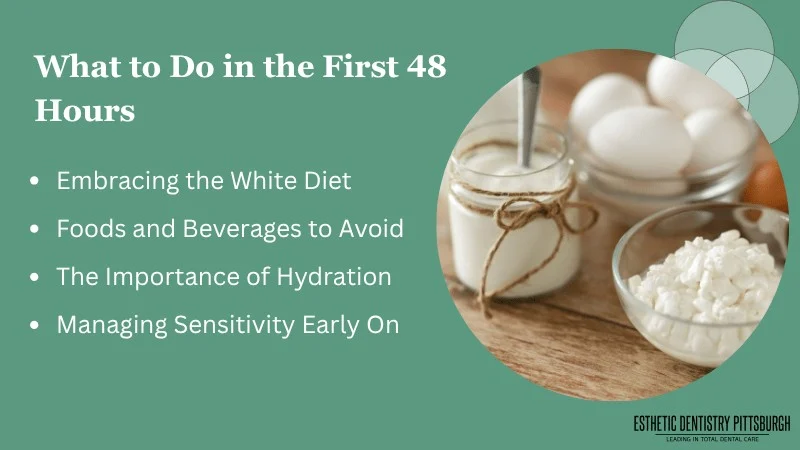
Embracing the White Diet
The white diet is your roadmap for eating safely after professional whitening. This approach is simple: stick to foods and drinks that are white or light in color.
Your teeth are more porous right now, which means they absorb colors more easily than usual. Think of your enamel like a sponge that’s been opened up. Anything you eat or drink can seep into those open pores.
Safe foods include white fish, chicken breast without skin, white rice, plain pasta, cauliflower, and potatoes.
You can also enjoy white cheese, plain yogurt, bananas, and white bread. These choices won’t interfere with your newly whitened smile.
This strict dietary approach only lasts for two days. After that, you can gradually bring back your favorite foods while still being mindful of your choices.
Foods and Beverages to Avoid
Coffee and tea top the list of drinks to skip during the first 48 hours after whitening. Both contain tannins that stick to your teeth and cause staining quickly.
Red wine combines dark pigments with acidity, making it a double threat to your bright smile. Dark sodas, berry juices, and even tomato-based sauces should stay off your plate.
Staining foods to avoid:
- Berries (blueberries, blackberries, strawberries)
- Dark chocolate
- Soy sauce and balsamic vinegar
- Mustard and ketchup
- Curry and other heavily pigmented spices
You should also avoid acidic foods like citrus fruits and pickled items. These can weaken your enamel and make sensitivity worse. Managing dietary restrictions carefully during this period protects your results.
The Importance of Hydration
Drinking plenty of water helps your teeth recover from the whitening process. Water rehydrates your enamel and helps close those tiny pores that opened during treatment.
Your body needs water to produce saliva, which naturally remineralizes your teeth. This process strengthens your enamel and reduces sensitivity over time.
Make it a habit to rinse with water after eating anything. This washes away food particles and prevents them from settling on your teeth. Even when you’re following the white diet, rinsing adds an extra layer of protection.
Water is the only completely safe beverage during these crucial first days. It won’t stain, won’t cause sensitivity, and actually helps your teeth heal faster.
Managing Sensitivity Early On
Tooth sensitivity is common in the first 48 hours after whitening. You might feel sharp zingers or a dull ache when your teeth are exposed to hot or cold temperatures.
Use a desensitizing toothpaste to block those uncomfortable sensations. These products contain ingredients that seal the tiny tubules in your teeth and prevent pain signals from reaching your nerves.
Avoid extreme temperatures in both food and drinks. Stick to room temperature or lukewarm options until your sensitivity calms down. This simple change can make a big difference in your comfort level.
Wait 30 to 60 minutes before brushing your teeth after the whitening treatment. Your enamel is temporarily softened, and brushing too soon could damage it. When you do brush, use a soft-bristled toothbrush and gentle pressure.
Smart Daily Habits for Long-Term Brightness
Building simple daily habits protects your investment in professional whitening and keeps your smile looking its best.
The right oral care routine, proper brushing methods, smart product choices, and small lifestyle changes work together to prevent new stains from forming.
Developing a Consistent Oral Care Routine
Your oral care routine is the foundation for maintaining your whitened teeth. You need to brush twice a day, once in the morning and once before bed, to remove food particles and prevent stains from setting in.
Make flossing part of your daily habit. When you floss daily, you clean between teeth where your toothbrush can’t reach. This step matters because plaque and stains build up in these tight spaces.
Set specific times for your oral hygiene tasks so they become automatic. Many people find success by brushing right after breakfast and before bed. Keep your toothbrush and floss in plain sight as a reminder.
Consistency matters more than perfection. Missing one session won’t ruin your results, but skipping regularly allows stains to accumulate faster.
Brushing and Flossing Techniques
The way you brush affects how well you maintain your bright smile. Hold your toothbrush at a 45-degree angle to your gums and use gentle circular motions.
Brush for two full minutes, spending about 30 seconds on each quarter of your mouth.
Don’t brush too hard. Aggressive brushing can damage your enamel and make your teeth more prone to staining. A soft-bristled toothbrush works best for protecting your investment in professional teeth whitening.
For flossing, use about 18 inches of floss and wrap it around your middle fingers. Slide it gently between each tooth, curving it around the base in a C-shape. This technique removes plaque that causes discoloration.
Replace your toothbrush every three months. Worn bristles don’t clean as effectively and can harbor bacteria that contributes to staining.
Choosing the Right Whitening Products
Not all whitening products are safe for maintaining your results. Whitening toothpaste designed for maintenance can help, but avoid products with harsh abrasives that scratch enamel.
Look for toothpaste with fluoride as the main ingredient. The fluoride strengthens your enamel while gentle whitening agents prevent new stains. Use it as part of your regular routine rather than as a quick fix.
A whitening mouthwash can complement your routine by reaching areas your brush misses. Choose alcohol-free versions to avoid drying out your mouth, which can actually increase staining risk.
Products to consider:
- Fluoride toothpaste with mild whitening agents
- Alcohol-free whitening mouthwash
- Soft-bristled toothbrushes
- Electric toothbrushes with pressure sensors
Talk to your dentist before adding new products. They can recommend options that won’t damage your enamel or cause sensitivity.
Helpful Diet and Lifestyle Adjustments
Small changes to your eating and drinking habits make a big difference. When you drink coffee, tea, or red wine, use a straw to minimize contact with your front teeth. This simple trick reduces staining significantly.
Rinse your mouth with water after consuming foods that stain. This quick action washes away pigments before they bond to your enamel. You don’t need to brush immediately, which can actually spread stains.
Certain foods help keep teeth white after whitening. Crunchy fruits and vegetables like apples and carrots naturally clean your teeth while you eat them. Cheese and dairy products reduce bacteria and strengthen enamel.
Stay hydrated throughout the day. Water helps your mouth produce saliva, which is your natural defense against stains. Saliva washes away food particles and neutralizes acids that can dull your smile.
Stain-causing items to limit:
- Coffee and dark tea
- Red wine and cola
- Tomato sauce and curry
- Dark berries and soy sauce
Professional and At-Home Whitening Maintenance
Regular dental visits and strategic touch-up treatments work together to extend your whitening results for months or even years.
Combining professional care with safe at-home products gives you the best chance of keeping that bright smile without overdoing it.
Professional Dental Cleanings and Checkups
You should schedule professional dental cleanings every six months to keep your whitened teeth looking their best. These visits remove surface stains and tartar that regular brushing can’t tackle on its own.
During a professional dental cleaning, your hygienist uses special tools to polish away early coffee or tea stains before they set in. The ultrasonic scaler breaks down hardened plaque that traps pigments against your enamel.
Your hygienist can also apply fluoride varnish to strengthen your teeth and seal microscopic pores that opened during whitening.
Regular dental checkups let your dentist monitor how well your whitening is holding up. They can spot problem areas early and recommend adjustments to your maintenance routine.
These appointments also give you a chance to ask about newer whitening options or professional touch-ups when your shade starts to fade.
Touch-Up Whitening Treatments
Your professional teeth whitening results typically last between six months and a year depending on your habits. Touch-up whitening sessions help maintain brightness without over-bleaching your teeth.
In-office touch-ups use stronger gel formulas that restore whiteness in a single appointment. These professional touch-ups work well if you need quick results before a special event or if it’s been about 12 months since your last treatment.
The procedure takes less time than your initial whitening because you’re maintaining existing results rather than starting from scratch.
At-home touch-up kits from your dentist offer a gentler approach. You can use them every four to six months for gradual brightening over three to five nights.
Compare your current tooth color to your original shade guide to know when it’s time. If you’re drinking more coffee or eating curry regularly, you’ll probably need touch-ups closer to the six-month mark.
Using At-Home Whitening Trays Safely
Custom whitening trays from your dentist fit precisely over your teeth for even gel distribution. Clean your trays immediately after each use by rinsing them under cold water and gently brushing with a soft children’s toothbrush.
Never scrub at-home whitening trays with regular toothpaste because the abrasives can scratch the plastic. Let your trays air-dry upside down on a clean tissue before storing them in their ventilated case.
Keep the case away from heat sources like windowsills or car dashboards that can warp the plastic.
Only use the whitening gel your dentist provides with your custom trays. Over-the-counter products may have unknown peroxide levels that irritate your gums or damage enamel.
Follow your dentist’s instructions exactly for how long to wear the trays and how often to do touch-ups.
Safe Tray Usage Guidelines:
- Wear time: Follow dentist’s recommendation (usually 30-60 minutes)
- Frequency: Every 4-6 months for maintenance
- Gel amount: Rice grain-sized drop per tooth compartment
- Storage: Ventilated case in cool, dry place
When to Seek Professional Guidance
Call your dentist if you notice sensitivity lasting longer than 48 hours after whitening maintenance. Persistent pain or sharp zingers when drinking cold water might mean your enamel needs extra protection before your next touch-up.
White spots or uneven coloring that appear after using whitening trays require professional evaluation. These patches can indicate over-bleaching or existing tooth issues that weren’t visible before treatment.
Your dentist can adjust your gel strength or recommend remineralizing treatments to fix the problem.
Reach out for professional guidance if stains return faster than expected despite good oral care. Early yellowing might signal that you need different whitening maintenance products or that underlying dental issues need attention.
Don’t try random products from social media or drugstore shelves without checking with your dental team first.
Protecting Your Bright Smile from Stains
Your newly whitened teeth need protection from foods, drinks, and habits that can bring back stains. The first 48 hours after whitening are especially important because your teeth are more porous and vulnerable to discoloration.
Reducing Stain Risks in Everyday Life
Simple daily choices make a big difference in keeping your smile white. When you drink dark beverages like coffee, tea, or red wine, use a straw to minimize contact with your front teeth.
This keeps staining liquids away from the most visible parts of your smile.
Rinse with water immediately after consuming anything that could stain your teeth. This quick rinse washes away pigments before they have time to settle into your enamel.
Drinking plenty of water throughout the day also helps maintain brightness by naturally cleaning your teeth between brushings.
Wait about 30 minutes after eating before you brush your teeth. This waiting period is especially important if you’ve consumed acidic foods, which temporarily soften your enamel.
Brushing too soon can damage the weakened surface. The water rinse gives you protection while you wait to brush properly.
Limiting Staining Foods and Drinks
Certain foods and drinks are notorious for causing tooth discoloration. Anything that would stain a white shirt can also stain your teeth.
Drinks to limit or avoid:
- Coffee and black tea
- Red wine
- Dark sodas and colas
- Grape juice and cranberry juice
- Sports drinks with artificial colors
Foods that commonly cause stains:
- Dark sauces (soy sauce, balsamic vinegar, tomato sauce)
- Berries (blueberries, blackberries, raspberries)
- Beets and other deeply colored vegetables
- Curry and turmeric-based dishes
- Dark chocolate
You don’t need to eliminate these foods completely. Moderation is key. When you do enjoy them, rinse with water right away and consider using a straw for beverages.
Some people follow a “white diet” during the first 48 hours after whitening, eating only light-colored foods to protect their results.
Habits That Can Undo Whitening Results
Smoking and tobacco use are among the worst habits for stained teeth. Nicotine and tar create yellow and brown stains that are difficult to remove.
Quitting tobacco not only protects your whitening results but also improves your overall oral health.
Poor oral hygiene allows plaque to build up on your teeth. This sticky film traps staining particles and makes discoloration worse. Brush at least twice daily and floss once a day to reduce bacteria and prevent stains from setting in.
Drinking acidic beverages frequently can wear down your enamel over time. Avoid acidic foods like citrus fruits and vinegar-based dressings when possible, or consume them with meals rather than by themselves.
Exposed or thinned enamel shows more of the yellowish dentin underneath, making your teeth appear less white even without new stains.
Avoiding Common Post-Whitening Mistakes
Many people accidentally damage their whitening results by using too many products or trying risky home remedies. Understanding what to avoid helps protect your teeth and keeps your smile bright longer.
Overusing Whitening Products
Using whitening toothpaste and whitening mouthwash too frequently can wear down your enamel over time. Your teeth need a break after professional treatment, not more bleaching agents right away.
Stick to regular fluoride toothpaste for at least a week after your whitening appointment. When you do start using whitening products again, limit them to 2-3 times per week instead of daily. Your dentist can recommend safe products that won’t damage your teeth.
Watch out for sensitivity as a warning sign. If your teeth hurt when you eat cold foods or drink hot beverages, you’re probably overdoing it with whitening products.
Give your teeth time to recover and switch back to a gentle, non-whitening toothpaste until the sensitivity goes away.
Remember that professional whitening already gave you great results. You don’t need to pile on extra products to maintain your smile.
Harmful DIY Methods to Skip
Charcoal toothpaste and baking soda scrubs can seriously damage your enamel even though they’re marketed as natural whitening solutions. These abrasive materials scratch the surface of your teeth, making them more likely to stain in the future.
Avoid these risky DIY whitening methods:
- Charcoal powder or toothpaste
- Straight baking soda scrubs
- Lemon juice or apple cider vinegar rinses
- Over-the-counter whitening strips used more often than directed
The abrasive nature of these products wears away the protective layer of your teeth. Once your enamel is gone, it doesn’t grow back. Stick to products approved by your dentist to protect your investment in professional whitening.
Smoking, Vaping, and Their Effects

Tobacco products are one of the fastest ways to reverse the effects of teeth whitening. Nicotine and tar create yellow and brown stains that are tough to remove.
Even e-cigarettes introduce staining chemicals into your mouth. The vapor might seem harmless, but it still contains substances that discolor your teeth over time.
If you want your whitening results to last, quitting tobacco products is essential.
Your oral hygiene routine can’t fight against daily smoking or vaping. The stains build up faster than brushing and flossing can remove them. Consider nicotine replacement therapy if you’re having trouble quitting.
Your oral care routine will be much more effective once you stop using tobacco products.
Frequently Asked Questions
Professional whitening results can last anywhere from several months to over a year depending on your habits. The foods you choose and how you care for your teeth play a big role in keeping your smile bright.
How long do teeth usually stay white after professional whitening?
Professional teeth whitening results can last up to a year or longer if you take good care of your teeth. The exact length depends on what you eat and drink and how well you stick to good oral hygiene habits.
Some people notice their teeth start to lose brightness after six months. Others keep their white smile much longer by avoiding staining foods and using touch-up treatments.
What foods and drinks should I avoid right after whitening to prevent staining?
Coffee, red wine, tea, and dark berries are common foods that can stain your teeth, especially in the first 24 hours after treatment. A good rule is that if something stains your tongue, it can stain your teeth too.
You should also stay away from dark sauces like soy sauce and tomato sauce. Colored sodas and sports drinks can cause staining as well.
For the first 48 hours, avoid foods and drinks high in acid like citrus fruits or vinegar. These acidic items can weaken your enamel and make your teeth more likely to stain.
When is it safe to eat and drink normally again after whitening?
You need to wait at least 30 minutes before eating or drinking anything after your whitening treatment. This gives the whitening gel time to settle on your teeth properly.
The most critical period is the first 24 hours when your teeth are most vulnerable to staining. After that, you still need to be careful for the next 24 to 48 hours.
You can gradually return to your normal diet after the first two days. However, continuing to limit staining foods and drinks will help your results last longer.
What are some tooth-friendly meals I can eat during the first 24–48 hours after whitening?
Plain yogurt, chicken, rice, and eggs are good food choices that won’t stain your teeth. White fish, pasta with white sauce, and mashed potatoes also work well during this time.
For drinks, stick with water, milk, and clear sodas. White wine is a better choice than red wine if you want an alcoholic beverage.
Bananas, white cheese, and oatmeal make safe breakfast options. You can also eat bread, crackers, and other light-colored foods without worrying about stains.
Are certain snacks like apples or white chocolate okay to eat after whitening?
White chocolate is generally safe to eat after whitening since it doesn’t contain the dark compounds found in regular chocolate. It won’t stain your teeth like milk or dark chocolate can.
Apples can be tricky because while they’re healthy, they contain acid that might make your teeth more sensitive right after treatment. It’s best to wait a day or two before eating acidic fruits.
Nuts, white cheddar cheese, and cauliflower are good snack options. These foods are light in color and won’t cause staining or sensitivity issues.
What daily habits and do’s and don’ts help keep a bright smile after whitening?
Brush your teeth two to three times daily with a soft-bristled toothbrush. If you eat or drink something that could stain, try to brush soon after or at least rinse your mouth with water.
Switch to a whitening toothpaste to help maintain your results. This type of toothpaste can gently remove surface stains and keep your smile looking bright.
Use touch-up kits every six months to maintain your white teeth between professional treatments. Don’t overuse whitening products though, as this can damage your enamel.
Visit your dentist regularly for cleanings every six to twelve months. Professional cleanings help remove stains and keep your teeth healthy.
If you smoke or use tobacco, consider quitting to protect your newly whitened teeth. Tobacco stains teeth quickly and can undo all the effects of your whitening treatment.